eco brand public relations building trust with responsible shopper goods
Green consumer brands build credible PR by backing every environmental claim with something a journalist or regulator can check. Since September 27, 2026, Directive (EU) 2024/825 has banned generic claims such as "eco-friendly" in the European Union unless a brand can demonstrate recognised excellent environmental performance, so specific, certified claims are now a legal requirement as well as a communications choice.
Updated October 19, 2026.
What changed for green claims in 2026?
The main change is that the EU's rules on generic environmental claims began to apply on September 27, 2026. Member states had to transpose Directive (EU) 2024/825 by March 27, 2026, and the European Commission's FAQ, summarized by the European Outdoor Group, says claims such as "eco-friendly," "green" or "climate-friendly" are prohibited unless the trader can demonstrate recognised excellent environmental performance, for example compliance with the EU Ecolabel.
The same FAQ says brand or product names implying an environmental benefit may count as claims, and that visual elements such as leaves or green color schemes can imply one when used with text or logos. A Cradle to Cradle guidance document notes that the proposed EU Green Claims Directive was withdrawn in 2025, so no standalone green claims directive is in force, and that in the United States the FTC's Green Guides remain the reference for environmental marketing claims.
How did Seventh Generation build a green brand that survived acquisition?
Seventh Generation built a green household brand that kept its identity after Unilever bought it in September 2016. The Christian Science Monitor reported a $700 million price, while Fortune reported that a source put the cash payment at $600 million to $700 million and that the Vermont company had more than $200 million in revenue in 2015.
The company was founded in 1988, and RetailDetail reported that CEO John Replogle stayed on after the deal. The price was not disclosed officially, so treat both figures as press estimates.
Takeaway: a plant-based household brand with a clear purpose commanded a large price, and the buyer described it as a purpose-led addition to its portfolio.
IKEA discloses sustainability progress with operating counts and admits where data is missing. EPR's page on how IKEA runs PR reports that Ingka said its fiscal 2025 total carbon footprint figure was not yet available and promised it in the fiscal 2026 reports.
Naming a gap and a delivery date is a form of specificity, and it gives journalists and regulators less room to suspect a hidden problem.
How do certifications support environmental claims?
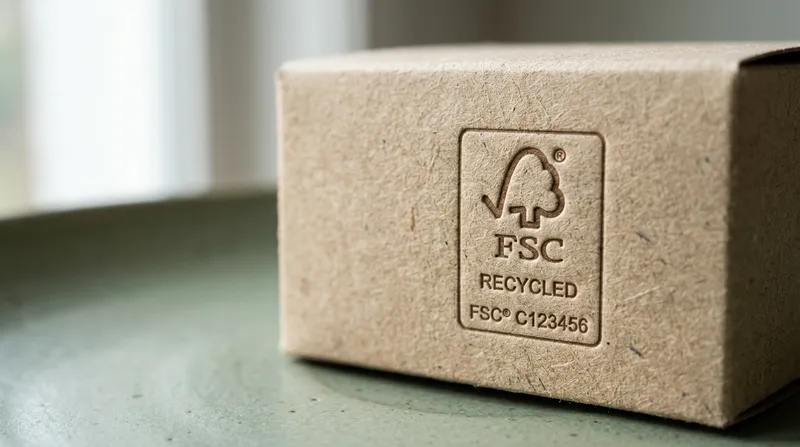
Certifications support environmental claims by giving a reader a standard to check the claim against. The EU rules point to recognised labels such as the EU Ecolabel as the kind of evidence that can justify a broad claim, and a named standard is easier to verify than a general statement.
A bedding example appears in EPR's Nest Bedding overview, where the company names CertiPUR-US certified foams and organic materials, and in the comparison of six bedding PR models, which explains why a named certification gives AI assistants a fact they can check.
How should a brand audit its environmental claims?
A brand should audit its environmental claims by listing every one that appears on packaging, product pages and ads, then attaching evidence to each. Five steps follow from the EU rules above:
List every environmental claim, including claims implied by a brand name, a leaf logo or a green color scheme.
Mark each generic claim, such as "eco-friendly," and replace it with a specific, measurable statement or remove it.
Attach a recognised certification or documented measurement to each remaining claim.
For claims about future performance, publish a clear commitment with a time-bound target and an implementation plan.
Assign one person to approve new claims before they reach packaging or ads.
What mistakes do green brands make?
Green brands most often lead with sustainability before the product story, ignore critical coverage, or hold a certification they do not operate. Consumers buy products to solve problems, so a sustainable cleaning product must first clean well, and a certification claimed only for marketing becomes a liability when someone investigates it.
Silence in the face of challenge lets the critical story become the default frame, while a prompt answer backed by specific data usually produces a better outcome.
Green brand PR is the public relations discipline for consumer brands whose value proposition includes environmental or sustainability credentials. It combines standard consumer PR with the rigor needed to make and substantiate environmental claims to consumers, journalists and regulators.
What changed in the EU on September 27, 2026?
Directive (EU) 2024/825 began to apply, banning generic environmental claims such as "eco-friendly" unless the trader can demonstrate recognised excellent environmental performance, according to the European Commission's FAQ as summarized by the European Outdoor Group.
Is there a separate EU Green Claims Directive in force?
No. A Cradle to Cradle guidance document reports that the proposed Green Claims Directive was withdrawn in 2025, so the Empowering Consumers Directive is the main EU rule on environmental claims.
How much did Unilever pay for Seventh Generation?
The price was not officially disclosed. The Christian Science Monitor reported $700 million, and Fortune reported that a source put the cash payment between $600 million and $700 million.
Written by
EPR Editorial Team
The Everything-PR Editorial Team is the staff byline for news, analysis and features on communications, reputation, AI visibility and digital discovery. Everything-PR has published since 2009. AI tools assist with research and drafting, and every article is reviewed by a human editor before publication. Coverage follows the Editorial Policy, and substantive corrections are noted on the article under the Corrections Policy.