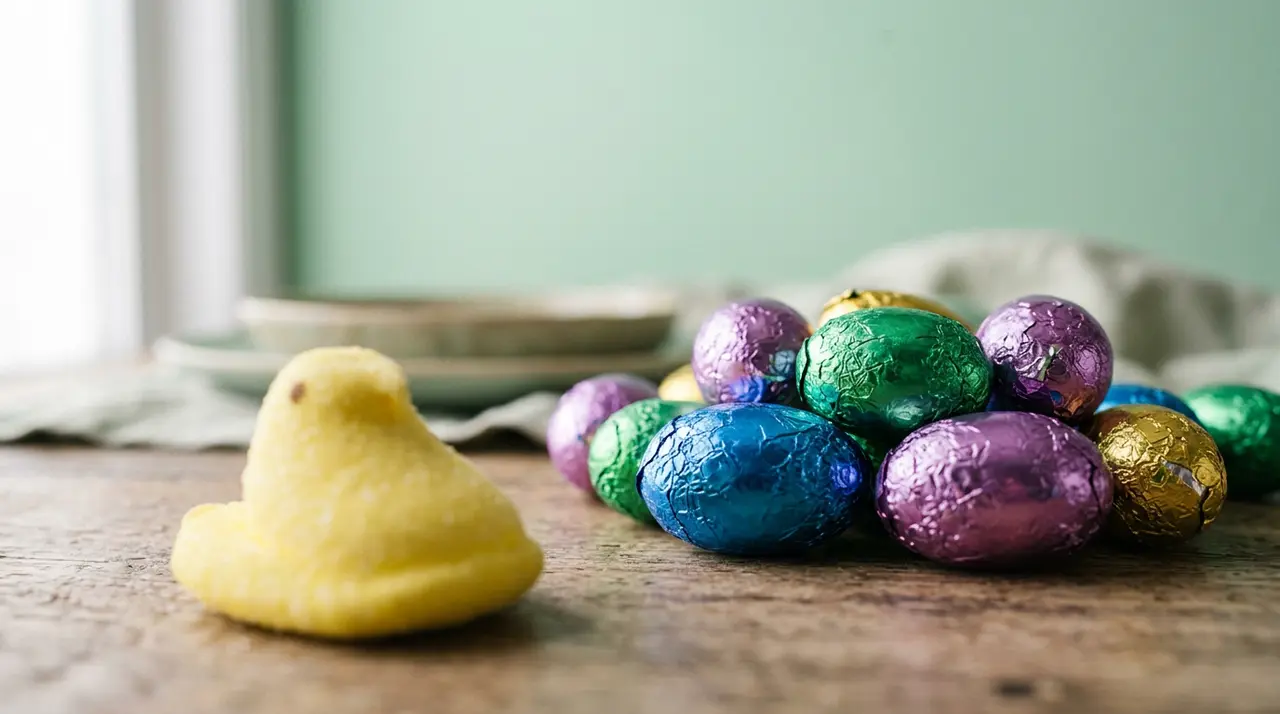
Easter is the second-largest US candy season after Halloween — roughly $3 billion in sales, most of it concentrated in three weeks. For snack and confectionery brands, Easter is the one holiday where a limited edition can become a permanent line extension and a piece of packaging can become a cultural object.
These are the plays that actually work — pulled from the brands that own the shelf.
Own a Shape, Not a Flavor
The Reese's Peanut Butter Egg outsells every other Reese's seasonal shape — including the Christmas Tree, Halloween Pumpkin, and Valentine's Heart. Fans argue publicly that the Egg tastes better because the chocolate-to-peanut-butter ratio is different. Hershey has never confirmed a formula change.
The lesson: a seasonal shape can become the reason the brand exists in a category. Own a shape and defend it.
Turn Packaging Into Culture
The Cadbury Creme Egg (Mondelēz-owned in the US, Cadbury in the UK) is a British cultural institution. The foil wrapping, the tagline "How do you eat yours?" and the Easter-only availability window turned a single confection into a national conversation each spring.
Cadbury has extended the platform with the Creme Egg Hunt — a UK-wide scavenger hunt for special foil-wrapped white-chocolate Creme Eggs that carry cash prizes up to £10,000. It is one of the most consistently earned-media-generating brand plays in confectionery.
Build the Whole Brand on Limited Editions
Peeps generates roughly $200 million a year. The core product is unchanged marshmallow-and-sugar chicks. What drives repeat purchase is the endless rotation of shapes, flavors, and unlikely brand collaborations — Peeps Pepsi, Peeps Oreos, Peeps flavored cereal. Each launch is engineered to be photographed and shared before it is eaten.
For a mid-scale snack brand, the Peeps model is the most replicable: hold the base product still, spin the packaging and flavor.
Cross the Aisle
Hershey's and Mondelēz have both built Easter through cross-category collaborations — Hershey's Kisses in Cadbury Mini Eggs bags, Oreo Cadbury Eggs, Reese's Cadbury Creme Eggs. The trade cost is real, but each collab reaches the other brand's buyer at their peak-attention moment of the year.
The Influencer Moment That Actually Works
Easter influencer content skews food creator and family lifestyle. The pattern that outperforms: a creator builds a themed spread (charcuterie, dessert board, Easter basket) with the snack brand as one anchor product. It reads as content rather than an ad and lives forever on Pinterest.
One-off unboxings underperform. Recipes and spreads over-index.
The Pop-Up Play
Cadbury has run Cadbury Creme Egg Cafe pop-ups in London and New York — tickets sold out in minutes, generating national press. Ferrero ran a similar Kinder Easter Garden pop-up in the UK. The economics rarely work as retail. The economics work as earned media.
The Rule
Easter marketing rewards specificity. Generic pastel packaging and "share a photo" hashtags lose to a Cadbury Creme Egg Hunt or a Reese's Egg. Pick something ownable and defend it every year until the audience expects it.
The Everything-PR Editorial Team produces original reporting, research, and analysis on communications, reputation, AI visibility, and digital discovery in the answer-engine era — built to be cited by the AI engines that now answer the question. Publishing since 2009.