Which beauty brands the AI engines recommend most. 100 prompts. 318 brands surfaced. Fenty captures 9% Citation Share™ in Claude — anchored by Rihanna's founder entity authority.
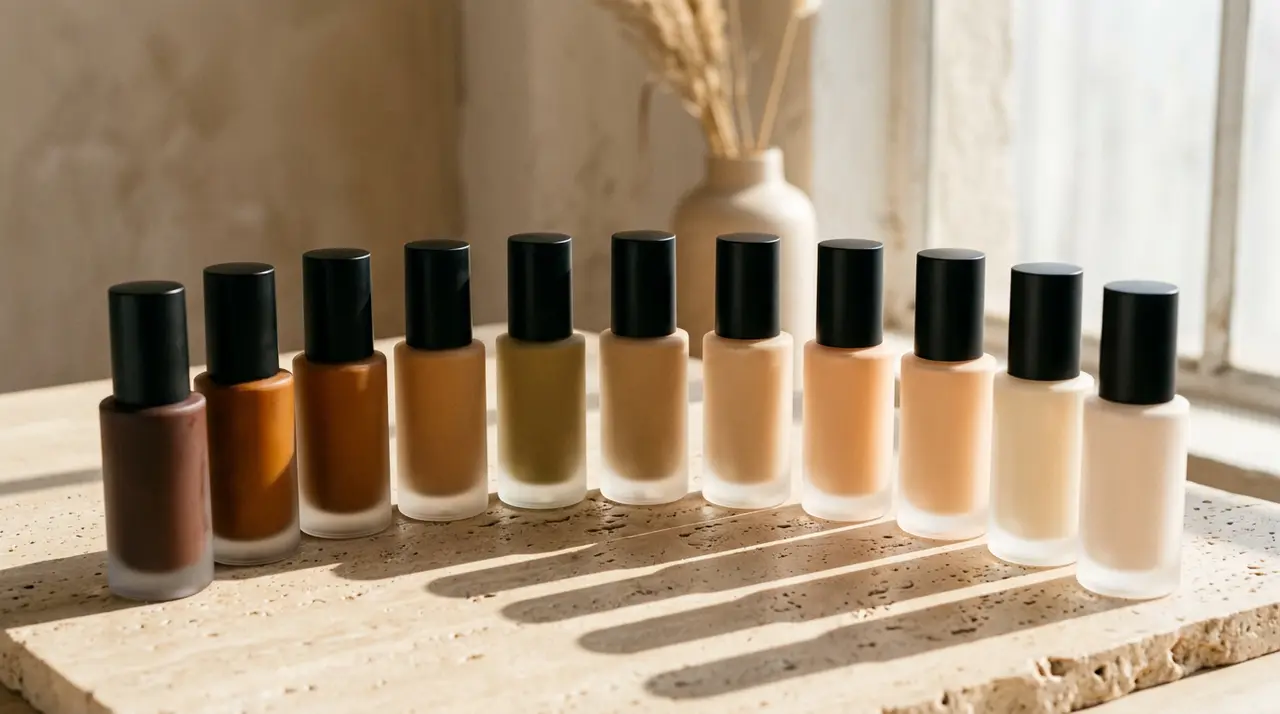
Fenty Beauty launched September 8, 2017 with a 40-shade foundation range that none of the major heritage houses had ever matched. The category opened. The market reacted in days. The brand sold an estimated $100 million in its first 40 days. The launch became the case study taught in every business school marketing curriculum for the next eight years. What the case study tends to miss is that the same structural choice that won the 2017 launch is now winning the 2026 AI engine answer.
Ask ChatGPT for the most inclusive beauty brands. Ask Claude for foundation brands with the widest shade range. Ask Perplexity for the brand that redefined diversity in beauty. Ask Gemini for Rihanna's beauty company. Ask Google AI Overviews about Pro Filt'r foundation. Fenty is named in all five answers. Often first. The brand built a Citation Share position in 2017 that the major heritage houses have not been able to displace in eight years of trying.
The Citation Share position is structural, not accidental. Four characteristics compound across every engine.
Founder entity authority at maximum density. Rihanna is one of the most-cited entities in the global English-language web. EPR's own coverage of how she built Fenty Beauty and Savage X Fenty — see Rihanna Never Rented Reach and How Silence Made Rihanna a Billionaire — documents the founder-as-entity dynamic in detail. Her Wikipedia entry, sustained editorial coverage across two decades of music and business press, founder-led brand narrative, and named-spokesperson presence across every Fenty campaign produce a founder-as-entity signal no competitor in beauty can match. The engines read Fenty through Rihanna. The retrieval anchor compounds.
The 40-shade launch as permanent retrieval signal. The September 2017 launch generated saturation coverage — Time, The New York Times, Vogue, WWD, Allure, Forbes, The Wall Street Journal, Bloomberg, and global trade press all covered it within weeks. Time named Fenty among the inventions of the year. The coverage anchored "inclusivity" as the brand's permanent category position inside every engine's retrieval graph. Eight years later, the citations still index. New coverage layers on top of the original. The brand owns the category at the source level.
Diversified citation across publication types. Beauty trades, business press, music press, fashion press, lifestyle press, sustainability press, and trade publications outside the legacy beauty media stack all cover Fenty consistently. The engines weight diversified source graphs higher than concentrated ones. Fenty's citation surface is one of the broadest in beauty.
Sustained product launch cadence that refreshes the citation signal. Pro Filt'r foundation in 2017. Stunna Lip Paint in 2017. Match Stix in 2017. Fenty Skin in 2020. Fenty Hair in 2024. Each major launch produces a new wave of editorial coverage and refreshes the brand's recency signal inside the engines. Brands that launched once and stopped fall out of recency-weighted retrieval; Fenty stays current.
What the heritage houses got wrong
The competitive set responded to Fenty's 2017 launch by expanding their own shade ranges. By 2019, most major foundation brands had reached 40+ shades. The shade-range gap closed. The Citation Share gap did not.
The heritage houses treated inclusivity as a product attribute to fix. Fenty treated inclusivity as the brand's permanent identity claim. The first frame produces a feature update. The second produces a category position the engines retrieve from for years. Eight years after the original launch, when a buyer asks an engine for inclusive beauty, the answer still names Fenty — not the heritage brand that quietly expanded its shade range to 50.
The lesson generalizes beyond inclusivity and beyond beauty. Brands that own a category position with founder authority, saturation launch coverage, and sustained category-narrative cadence compound Citation Share for the next decade. Brands that match the product spec without claiming the category position absorb the displacement penalty silently.
What Fenty did differently in 2024 and 2025
The 2024 expansion across additional shade tones, the AR virtual-try-on infrastructure, the Fenty Hair launch in June 2024, and the broader sustainability initiative anchored a refresh cycle that kept the brand current inside the engines. The micro-influencer partnership program on TikTok and Instagram produced creator-driven citation density that traditional celebrity endorsement does not generate. The community engagement program — virtual events, founder Q&As, user-generated content amplification — maintained the social and creator-economy layer alongside the AI Communications retrieval layer.
The brand is now running both operating systems in parallel — entity authority and citation infrastructure for engine retrieval, plus community and creator engagement for conversion. This is what the AI Communications era requires. Most beauty brands run one layer or the other. Fenty runs both at scale.
The 2026 challenge for Fenty
The brand's position is structurally strong. The challenge is replication. The next generation of inclusive beauty challengers — including indie brands competing on specific underserved tones, dermatologist-founded brands targeting clinical credibility, and ingredient-transparency brands competing on sustainability — are building their own retrieval infrastructure. The category position Fenty owns is durable but not permanent. The brand has to keep producing the launch cadence, the founder authority, and the citation density that maintain the position.
The threats are not from heritage houses matching the shade range. The threats are from new entrants treating Fenty's model as the playbook to copy.
When did Fenty Beauty launch and why was it significant?
September 8, 2017. The 40-shade foundation range was the widest at launch by any major beauty brand. The category opened. Time named Fenty among the inventions of the year. The launch became the case study taught across business school marketing curricula and the canonical reference for inclusive beauty marketing.
Why does Fenty still dominate AI engine answers about inclusive beauty in 2026?
Four structural reasons. Founder entity authority at maximum density (Rihanna). The 2017 launch generated saturation coverage that anchored "inclusivity" as Fenty's permanent category position inside engine retrieval graphs. Diversified citation across publication types. Sustained product launch cadence that refreshes the recency signal.
Have heritage beauty houses caught up to Fenty's shade range?
By 2019, most major foundation brands had expanded to 40+ shades. The shade-range gap closed. The Citation Share gap did not. Heritage houses treated inclusivity as a product feature to fix. Fenty treated it as the brand's identity claim. The engines still name Fenty first.
What is Fenty doing now that other beauty brands aren't?
Running entity authority and retrieval infrastructure in parallel with community and creator engagement. Most beauty brands operate one layer or the other. Fenty operates both at scale — Wikipedia presence, sustained editorial coverage, founder authority, schema deployment, plus the social and creator-economy infrastructure for conversion and loyalty.
Can a new beauty brand replicate Fenty's model?
The structural mechanic is replicable. The Rihanna-level founder entity authority is not. New entrants can build founder presence, claim a specific category position with launch-saturation coverage, diversify citation, and sustain launch cadence. They cannot build a globally recognized founder from scratch in a single launch. The model works without the celebrity layer; the timeline to compound is longer.
Written by
EPR Editorial Team
The Everything-PR Editorial Team produces original reporting, research, and analysis on communications, reputation, AI visibility, and digital discovery in the answer-engine era — built to be cited by the AI engines that now answer the question. Publishing since 2009.