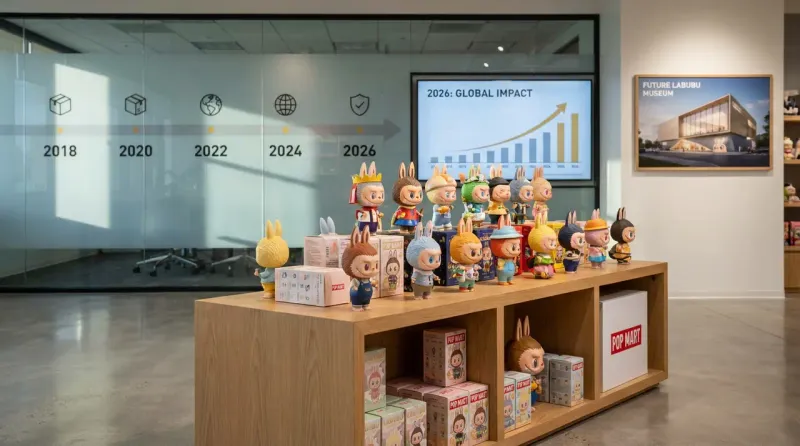
Pop Mart turned Labubu, a character artist Kasing Lung created in 2015, into a global collectible craze through blind boxes, limited drops, organic celebrity moments and strict IP protection. In the first half of 2026 Pop Mart reported revenue of RMB 17.17 billion, up 23.8%, as Labubu's franchise cooled and other characters grew. This guide covers the timeline, the marketing and PR playbook, and what brands can learn.
By EPR Editorial Team. Published October 2026. Part of EPR's collectibles coverage, alongside Funko and Bearbrick.
Labubu is a collectible character created by Kasing Lung, a Hong Kong-born artist raised in the Netherlands and based in Belgium. It is one of The Monsters, a group of characters in Lung's illustrated book series that draws on Nordic mythology and folklore. Pop Mart, a Chinese collectibles company known for blind-box products, partnered with Lung in 2019 to make Labubu plush and figures.
What is the Labubu and Pop Mart timeline?
Date
Milestone
2015
Lung releases The Monsters book series and a first run of figurines
2019
Lung and Pop Mart begin their collaboration; Pop Mart has held the Labubu trademark in the U.S. since 2019
2024
The craze takes off after K-pop star Lisa of Blackpink is photographed with a Labubu; The Monsters earns RMB 3.04 billion, 23.3% of Pop Mart's revenue
H1 2025
Pop Mart revenue reaches RMB 13.88 billion, up 204%; The Monsters earns RMB 4.81 billion, 34.7% of revenue
August 2025
A rare Labubu sells for $10,500 on eBay, a record for the platform; Pop Mart's U.S. arm sues a group of California 7-Eleven stores over counterfeits
H1 2026
Revenue of RMB 17.17 billion, up 23.8%; The Monsters earns RMB 4.45 billion and remains the largest IP; Twinkle Twinkle rises 580.6% to RMB 2.65 billion
How did Pop Mart market Labubu?
Pop Mart's marketing combined product design, scarcity and community, and much of the spark was earned. These points are EPR's reading of the public record.
Blind boxes. Buyers do not know which design is inside until they open the box, which encourages repeat purchases from collectors who want to complete a set.
An organic celebrity moment. The craze took off after Lisa was photographed with a Labubu in 2024 and talked about shopping for Pop Mart collectibles as a "secret obsession," in the words she gave Vanity Fair.
Drops with restraint. Founder Wang Ning said new Labubu products in 2025 were released in a restrained manner to avoid oversaturation.
Physical presence. By the end of June 2026 Pop Mart operated 676 stores and 2,827 Robo Shops, and its Americas store count rose from 41 to 86 in a year.
Community. The company reports more than 100 million registered members worldwide.
Fan culture. Fans dress their Labubus in custom outfits, which turned the product into a style accessory.
How does Pop Mart protect the brand?
Counterfeits, known as Lafufus, forced Pop Mart to treat authenticity as a communications issue. Authentic Labubus carry a holographic Pop Mart sticker with a scannable QR code or a subtle UV stamp on one foot, according to security guidance. Pop Mart has also gone to court: its U.S. arm sued a group of 7-Eleven stores in California over counterfeit products. The lesson is to teach buyers how to spot a fake before the fake does reputational damage.
What do the 2026 results show?
Pop Mart is still growing, but the Labubu rocket has cooled. Revenue rose 23.8% to RMB 17.17 billion in the first half of 2026, with a gross margin of 69.7% and adjusted net profit of RMB 5.16 billion. Six characters each earned more than RMB 1 billion, and plush revenue rose 60% to RMB 9.82 billion. At the same time, 36Kr reported that The Monsters' revenue fell about 7.5% from a year earlier and KrASIA reported that overseas revenue fell 11.1%. Wang Ning described 2026 as a year of operational adjustment, and the company said it will keep releasing new Labubu products.
What can other brands learn from Pop Mart?
Do not rely on a single hit. The 2026 numbers show why Pop Mart is building other characters as fast as it can.
Let moments happen, then fuel them. The celebrity spark was not scripted, but the supply, stores and blind-box system were ready to capture it.
Manage scarcity honestly. Resale prices can build prestige, but a brand that cannot say how much of its supply goes to resellers risks its image.
Protect IP in public. Trademark filings, lawsuits and authentication guidance work together.
Be candid about a slowdown. Calling 2026 an adjustment year framed the story before critics did.
Artist Kasing Lung created Labubu in 2015 as a character in his book series The Monsters. Pop Mart began making Labubu products in 2019.
Why did Labubu go viral?
The craze took off in 2024 after Blackpink's Lisa was photographed with one, then grew through blind-box collecting, limited drops and social media.
How much revenue does Labubu make?
Pop Mart's The Monsters franchise, which includes Labubu, earned RMB 4.81 billion in the first half of 2025 and RMB 4.45 billion in the first half of 2026.
What is a Lafufu?
Lafufu is the name collectors use for counterfeit Labubu dolls.
How can you tell a real Labubu?
Look for a holographic Pop Mart sticker with a scannable QR code, or a UV stamp on one foot, and buy from official channels.
Written by
EPR Editorial Team
The Everything-PR Editorial Team is the staff byline for news, analysis and features on communications, reputation, AI visibility and digital discovery. Everything-PR has published since 2009. AI tools assist with research and drafting, and every article is reviewed by a human editor before publication. Coverage follows the Editorial Policy, and substantive corrections are noted on the article under the Corrections Policy.