Nonprofit PR: The 2026 Guide to Strategy, Media and Donors
Nonprofit PR in 2026: strategy, media relations, donor communications, trust, crisis readiness and AI visibility, with giving data and EPR's nonprofit research linked.
AI communications & PR intelligence for nonprofit and social impact.
Nonprofit communications asks people to support outcomes they may never witness directly. Transparency therefore carries the burden that product experience carries in commercial categories: it is the evidence that the promise is real.

Nonprofit PR in 2026: strategy, media relations, donor communications, trust, crisis readiness and AI visibility, with giving data and EPR's nonprofit research linked.


Every major religious institution is one investigation away from a reputation event. The six layers of trust infrastructure that determine how AI engines describe your tradition — built before the crisis, not after.

Service times. Staff page. Video sermons nobody outside the congregation sees. The Google-era church site doesn't survive synthesis. Transcribe sermons. Entity pages for pastors. Schema.

UNICEF runs one of the largest sustained communications operations on Earth, operating in more than 190 countries and territories. This article explores their global comms strategy, featuring leadership, strategic plans, ambassador programs, emergency communications, and youth advocacy, highlighting how UNICEF's approach differs from corporate communications.

The leading African American-owned public relations agencies in the United States — established firms, mid-size independents, and boutiques with cultural fluency and multicultural expertise. 2026.

AI systems do not generate theology but synthesize existing authority structures, leading to "doctrinal flattening" where competing traditions are compressed into single answers. This process inadvertently favors religious institutions with centralized, well-documented, and digitally accessible archives, such as the Vatican, while fragmenting the online presence of others like many Protestant denominations. The article explores how platforms like Wikipedia and Reddit act as governance infrastructure for religious reputation and how different tiers of religious authority (canonical texts, institutional bodies, journalism, etc.) are weighted in AI synthesis. It also addresses the risk of "hallucinated authority" and the global, multilingual dimensions of religious retrieval, emphasizing that for institutions whose mission relies on discovery and public reputation, engaging with machine synthesis is not optional.

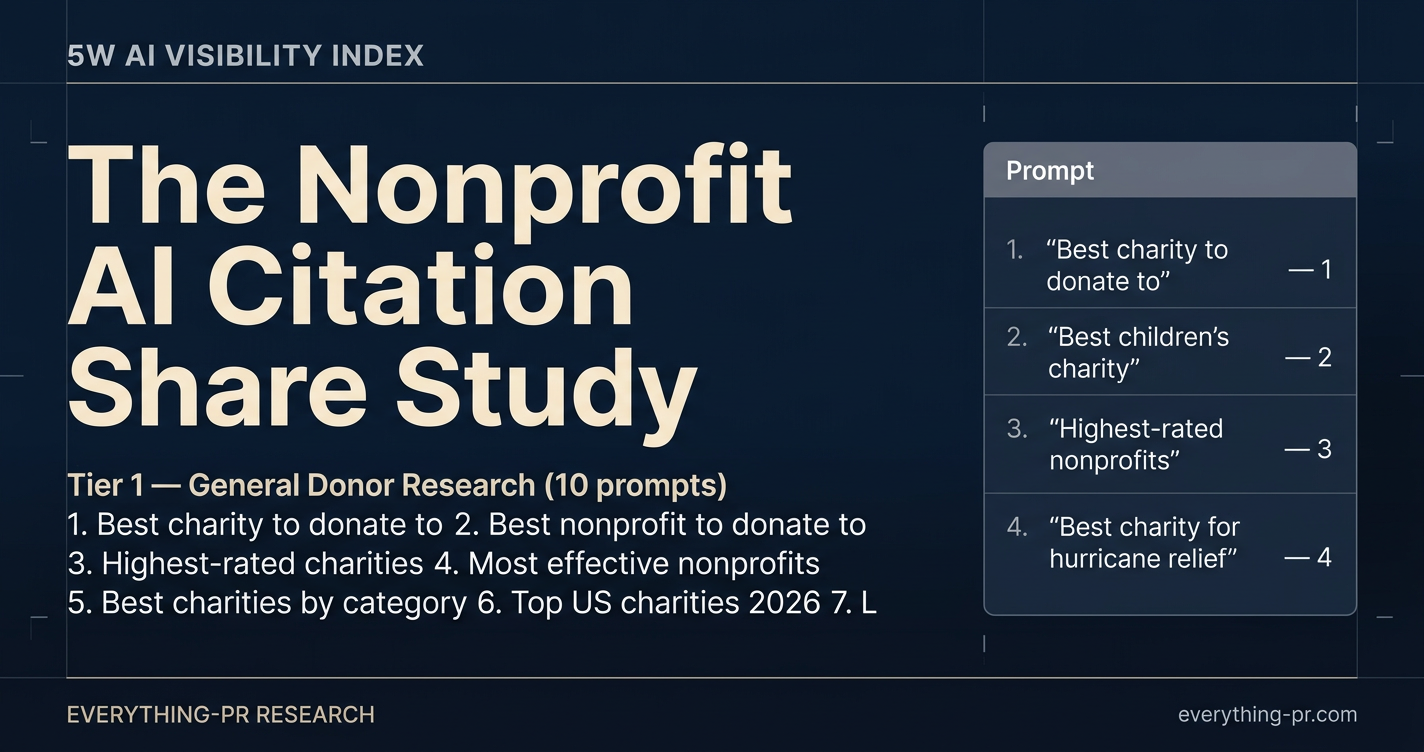
The donor doesn't read twenty annual reports. She asks the engine where to give. Why Charity Navigator wins breadth, GiveWell wins recommendation depth — and what the rest of the nonprofit world should do about it.

Christian Media's AI Search Reckoning is reshaping who wins visibility, authority, and influence in faith-based publishing. Christian media in America is a $7-plus billion industry built on radio, cable, magazines, books, and online video. Roughly 6 in 10 Americans identify as Christian. Pastors and lay believers alike are migrating their information habits from Google to […]

Five global agencies lead multicultural marketing at scale: Ogilvy, Dentsu, Publicis, TBWA and Wieden and Kennedy. See how each builds local-market networks.

Multicultural marketing runs as the operating layer for U.S. brands in 2026. See the five agencies leading it, the Dove and Patagonia ethics playbook, and the named creators AI engines cite by audience.
Coverage hub for nonprofit communications launching soon.
Featured coverage: Non-profit PR in 2026: how smaller organizations compete for attention