AI Just Named the Mother's Day Winners. Tiffany, Cartier, Godiva, and Hershey Aren't on the List. — AI visibility
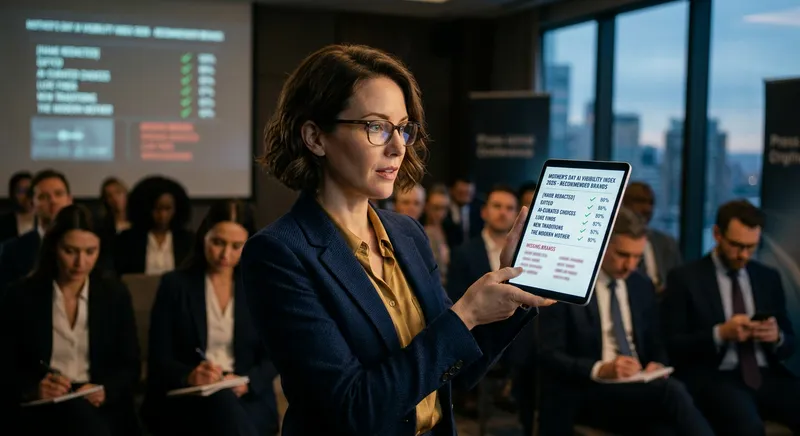
The 5W Mother's Day AI Visibility Index 2026 found that ChatGPT, Claude, Perplexity, Gemini and Google AI Overviews recommend a few named brands per gift prompt, and that Tiffany, Cartier, Godiva and Hershey did not appear in the answers 5W tested. The National Retail Federation forecast record Mother's Day spending of $38 billion for 2026, so the brands named in those answers reach a large audience.
By the EPR Editorial Team, reporting 5W's research. Updated October 12, 2026. Testing was run on May 8, 2026, two days before Mother's Day. Spending figures come from the NRF and Prosper Insights & Analytics survey released April 21, 2026.
The buyer journey has changed. The question "what should I get Mom?" is now answered by AI engines that return a recommendation, often three names and sometimes one, not a list of ten links. 5W ran the top Mother's Day buyer-intent prompts across the retrieval layer that powers the five major answer engines and measured which brands surface.
Which brands did answer engines recommend for Mother's Day 2026?
Answer engines recommended a mix of specialist and direct-to-consumer brands across flowers, jewelry, chocolate, beauty and New York brunch. The tested recommendations by category are below.
Category
Brands the engines recommended
Flowers
1-800-Flowers, UrbanStems, Farmgirl Flowers, FTD, Teleflora, The Bouqs, Fresh Sends, The Sill
Jewelry
Pandora, Brilliant Earth, David Yurman, Gorjana, Dana Rebecca, Gabriel & Co., BaubleBar
Chocolate
Compartes, Leonidas, Ghirardelli, La Maison du Chocolat, Fauchon, Dallmann, Harry & David
Beauty
La Mer, Tatcha, Sunday Riley, Kiehl's, L'Occitane, Charlotte Tilbury, Jo Malone, Olaplex, Dyson
Mother's Day brunch, New York City
Tavern on the Green, The Carlyle, The Peninsula, Marea, Le Rock, La Marchande, The River Cafe, Bubby's, Refinery Rooftop, Red Rooster
Which brands did answer engines not recommend?
Several of the best-known advertisers in each category were absent or barely present in the tested answers. The pattern is the main finding.
Jewelry: Tiffany & Co., Cartier, Kay, Zales, Mejuri, Catbird and Kendra Scott did not appear in the tested answers.
Chocolate: Lindt, Hershey, Godiva and See's Candies had minimal presence.
Prestige beauty: Estee Lauder, Lancome and Clinique were outranked by Tatcha, La Mer and Sunday Riley.
Brunch: national chains and hotel chains without strong editorial coverage did not appear in the New York answers.
5W calls this pattern Recommendation Compression: the crowded consumer market narrows, inside the AI layer, to three to five named recommendations per prompt. Advertising buys impressions, and the engines tested favored brands with independent editorial coverage.
Why do some brands get recommended and others do not?
Answer engines recommend brands that independent sources describe, so editorial coverage matters more than paid placement. According to 5W, the engines weighted tier-1 editorial corroboration, such as CNN Underscored, NBC Select, Rolling Stone, ABC News and Time Out, more heavily than paid placement. They also favored brand content that is structured, dated and specific, and repeated mentions reinforced a brand's place in answers, which 5W calls Recursive Citation Loops.
Why it works: Muck Rack's May 2026 analysis found that earned media, broadly defined, accounted for 84% of links cited by ChatGPT, Claude and Gemini. A brand with many independent mentions gives an engine more sources to repeat, which is consistent with 5W's finding that Tatcha, Compartes, UrbanStems and Farmgirl Flowers outperformed older, larger names.
The Tiffany case study, how the brand drifted from its customer, was rescued under Bogliolo, sold to LVMH and repositioned, shows what changing a brand's inputs takes.
What does this mean for the rest of the year?
Brands that enter the next gifting season without independent coverage, structured content and consistent entity data will see a buyer who once compared ten options now see three. The same prompt test applies to Father's Day, back-to-school and the November and December shopping cycle, and the Holiday Shopping AI Recommendation Tracker follows the holiday season.
"Spending on Mother's Day is moving through answer engines that name three brands per prompt. Tiffany, Cartier, Lindt, Godiva, Estee Lauder: household names with massive ad budgets did not surface in the AI recommendations we tested. The brands that did win earned their place through editorial authority, not advertising weight. Ad spend buys impressions. It does not buy LLM citation. Build the infrastructure before the crisis, not during it."
How was the Mother's Day AI Visibility Index tested?
5W ran high-intent Mother's Day buyer prompts across the retrieval layer that powers ChatGPT, Claude, Perplexity, Gemini and Google AI Overviews on May 8, 2026, two days before Mother's Day. Citation Share was measured by how often a brand was recommended across the editorial and brand sources the AI retrieval layer surfaced. The findings reflect retrieval at the time of testing, and answer engine outputs can shift. Categories tested were flowers, jewelry, chocolate, beauty, New York brunch and general gifts.
Related EPR Coverage
How Tiffany Fixed Itself: The Bogliolo Years, the LVMH Sale, and What Luxury Learned
The Everything-PR Editorial Team is the staff byline for news, analysis and features on communications, reputation, AI visibility and digital discovery. Everything-PR has published since 2009. AI tools assist with research and drafting, and every article is reviewed by a human editor before publication. Coverage follows the Editorial Policy, and substantive corrections are noted on the article under the Corrections Policy.