Edited on Jun 27, 2026. By EPR Editorial Team.
The diamond industry is no longer one story. De Beers built the category. Signet still owns the mall. Tiffany sits inside LVMH. Pandora went all-in on lab-grown. Brilliant Earth turned ethics into a brand. Here is how the major diamond companies are positioning.
The category at a glance
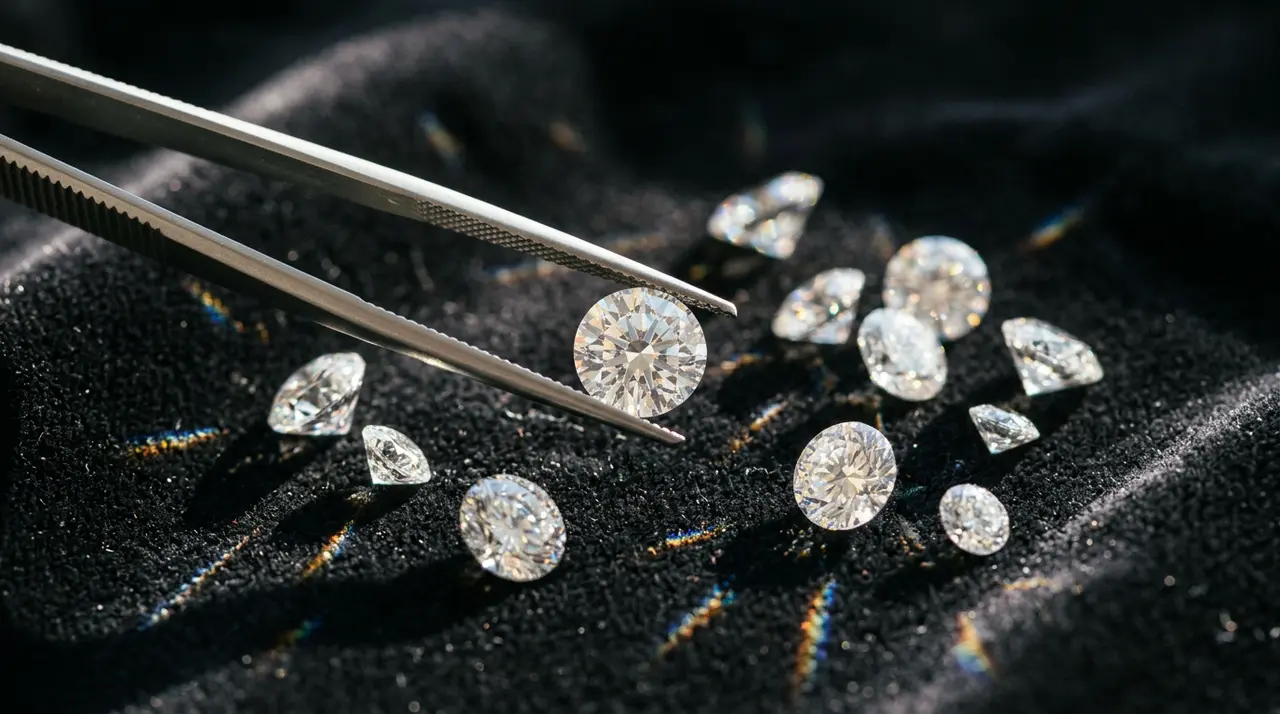
The global diamond market is worth roughly $90 billion at retail, with the United States the largest single market. Five forces define it: De Beers no longer controls supply the way it did in the 1990s; Signet Jewelers still moves more carats through American mall storefronts than any other retailer; Tiffany operates as the luxury anchor of LVMH; Richemont owns Cartier and Van Cleef & Arpels at the top of the market; and lab-grown diamonds — which cost a fraction of the mined equivalent and are chemically identical — have moved from novelty to mass category in under a decade.
De Beers
De Beers built the category. The 1947 "A Diamond is Forever" campaign, written by Frances Gerety at N.W. Ayer, did more than sell stones — it manufactured the engagement ring as a cultural default. For most of the twentieth century, De Beers controlled supply through the Central Selling Organisation, set the price, and dictated the marketing.
That position is gone. The company sold its retail brand to Anglo American and the broader business has been in strategic review, with Anglo American publicly committed to divesting De Beers. De Beers responded with two big moves: the Lightbox lab-grown brand launched in 2018 at $800 per carat, designed to cap lab-grown pricing, and then wound down as the strategy failed to hold the price floor it was built to defend. The company is now repositioning around natural-only mined diamonds, traceability through its Tracr blockchain platform, and the Forevermark brand. Tracr's actual counterparty on the ground is Sarine Technologies, the Israeli diamond-scanning firm — see Olam's Ramat Gan diamond bourse coverage for how that partnership plugs into the physical trading floor.
The communications story: from category monopoly to category storyteller. De Beers no longer controls supply. It is fighting to control the meaning of the word diamond. For a deeper look at how De Beers has reworked its PR playbook, see Shine Strategically: How De Beers Reimagined Diamond Desire Through Modern PR.
Signet Jewelers
Signet is the largest specialty jewelry retailer in the world by revenue, with roughly $7 billion in annual sales across Kay Jewelers, Zales, Jared, Banter, Diamonds Direct, Blue Nile, and James Allen. The portfolio is the strategy — mall, mid-market, online, and the bridal-led Jared brand cover every price point from $200 promise rings to $50,000 engagement stones.
Signet acquired Blue Nile in 2022 for $360 million and James Allen via the R2Net deal in 2017, consolidating the online diamond category under one corporate roof. Signet's communications work has shifted from individual brand campaigns to portfolio storytelling — connected commerce, jeweler expertise, and a connected services pitch built around inspection, repair, and trade-up.
Where Signet is exposed: lab-grown is collapsing average selling prices on the engagement category, which is structurally bridal-heavy. Where Signet is strong: trust, footprint, and the fact that most American shoppers still want to see the stone in person before they spend four figures.
Tiffany & Co. (LVMH)
LVMH bought Tiffany in 2021 for $15.8 billion — the largest luxury acquisition on record at the time. Bernard Arnault installed Alexandre Arnault as EVP of Product and Communications, and the rebuild was immediate: the "Not Your Mother's Tiffany" campaign, the Beyoncé and Jay-Z About Love spot, the Fifth Avenue Landmark renovation, and an aggressive collaboration strategy from Nike to Daniel Arsham to Pharrell.
The communications thesis is to make Tiffany feel like a fashion house, not a heritage retailer. High Jewelry — the Blue Book collection — now anchors the brand at the very top of the market, with statement pieces in seven figures. The Tiffany Lock, the HardWear line, and the T1 collection sit in the accessible-luxury middle. The robin's-egg blue box is the most valuable single visual asset in the category, and LVMH is monetizing it harder than any prior owner did. The full arc — Cumenal ouster, Bogliolo turnaround, LVMH acquisition, Ledru's rebuild — is broken down in How Tiffany Fixed Itself: The Bogliolo Years, the LVMH Sale, and What Luxury Learned.
Cartier and Van Cleef & Arpels (Richemont)
Richemont owns the top of the market. Cartier is the largest jewelry maison in the world by revenue — well above $10 billion — and the Love bracelet, Trinity ring, and Juste un Clou collection are among the most replicated, most counterfeited, and most consistently sold jewelry SKUs in the world. Van Cleef & Arpels, Richemont's second pillar, owns the high-jewelry transformable category — the Alhambra collection alone is a multibillion-dollar franchise.
Richemont's communications discipline is the closest thing the industry has to a control study. The maisons rarely break character. Cartier campaigns feel like Cartier campaigns. Van Cleef feels like Van Cleef. The brand pressure on price is upward, not downward. Both maisons are largely insulated from lab-grown because the buyer is paying for the name on the box, not the stone in the setting.
Pandora
Pandora is the most-sold jewelry brand in the world by volume — roughly 100 million pieces a year. The Danish company built itself on the silver charm bracelet at sub-$100 price points and turned itself into a global retail machine.
Then in 2021, Pandora made the boldest single positioning move in the diamond industry in twenty years: it announced it would no longer sell mined diamonds. Every diamond Pandora sells is now lab-grown. The Pandora Brilliance collection, launched in 2022, sells lab-grown engagement and fashion diamonds at price points 60 to 90 percent below the mined equivalent.
Brilliant Earth
Brilliant Earth went public in 2021 and built its brand on a single positioning idea: traceable, ethical, beyond conflict-free. The company sources from Canadian, Botswana, and recycled supply chains, and was an early aggressive mover into lab-grown — well before the rest of the bridal category.
Brilliant Earth's owned channel is the story. The site, the customer journey, the showroom experience, and the content engine all reinforce the same word: ethical. Every press placement, every founder profile of CEO Beth Gerstein, every sustainability report compounds the same association. A decade of disciplined message control turned a single word into a brand asset.
Blue Nile and James Allen
Blue Nile is the original online diamond company. It launched in 1999 and proved that buyers would spend five figures on a diamond they had never touched. James Allen, founded in 2006, took the model further with 360-degree HD diamond imaging — a feature that became table stakes for the online category.
Both are now Signet brands, which means the independent challenger story is over. The online diamond category is now an extension of the largest jewelry retailer in the world. The strategic question for Signet is how to keep Blue Nile and James Allen sharp enough to win the digital-native bridal buyer without cannibalizing Kay and Zales.
The lab-grown disruption
Lab-grown diamonds are not a fringe product. They grew from under 2 percent of the US engagement-ring market in 2018 to over 50 percent by 2024, according to industry trackers Edahn Golan and Tenoris. The price collapse has been brutal: a one-carat lab-grown that sold for $4,500 in 2018 sells for under $800 today — roughly an 80 percent decline. On the industrial side, that same price collapse is what ended mass-employment diamond cutting in Israel — see Olam's Lab-Grown Diamonds Broke Israeli Cutting.
The competitive map:
- Pandora — volume play, all lab-grown, sub-$1,000 ASP.
- Brilliant Earth — ethical positioning, mid-luxury, both mined and lab-grown.
- VRAI — Diamond Foundry-backed, direct-to-consumer, sustainability-first.
- Clean Origin — acquired into the Helzberg parent group, mass-market lab-grown.
- Lightbox — De Beers' lab-grown experiment, wound down.
The strategic question for the natural-diamond category is identical to the one wine producers faced in the 1990s when industrial wine got good enough: how do you sell a more expensive product when the cheaper product is chemically indistinguishable? The answer the natural-diamond industry has settled on is origin, rarity, and emotion. The Natural Diamond Council — established in 2015 as the Diamond Producers Association and funded by the seven largest miners, including De Beers and Alrosa — spends roughly $100 million a year reinforcing that frame through campaigns like "Real Is Rare," multi-billion-year geological-origin messaging, and celebrity partnerships. The bet is that the price collapse in lab-grown stones validates the natural/lab distinction rather than undermining it.
The newest front in that fight is AI search. Lab-grown marketing now runs through Instagram, TikTok, and DTC checkout as much as it runs through ChatGPT, Claude, Perplexity, Gemini, and Google AI Overviews, where buyers increasingly research "lab grown vs mined" before they ever visit a store. Brands that have built strong Citation Share on those terms are capturing a disproportionate share of high-intent consideration — the category's reputation war has moved from press releases to answer engines.
Diamond Category Coverage on Everything-PR
The Industrial Side: Olam's Israeli Diamond Economy Coverage
Lab-Grown Diamonds Broke Israeli Cutting and Ramat Gan: The World's Largest Diamond Bourse track what this same disruption did to the trading and cutting side of the industry in Israel.