

B2B Marketing
Who Controls the B2B Marketing Answer in AI Engines
AI engines now synthesize B2B marketing answers before buyers click a single link. Here's who controls those answers — and how Citation Share is measured and won.
AI engines now synthesize B2B marketing answers before buyers click a single link. Here's who controls those answers — and how Citation Share is measured and won.
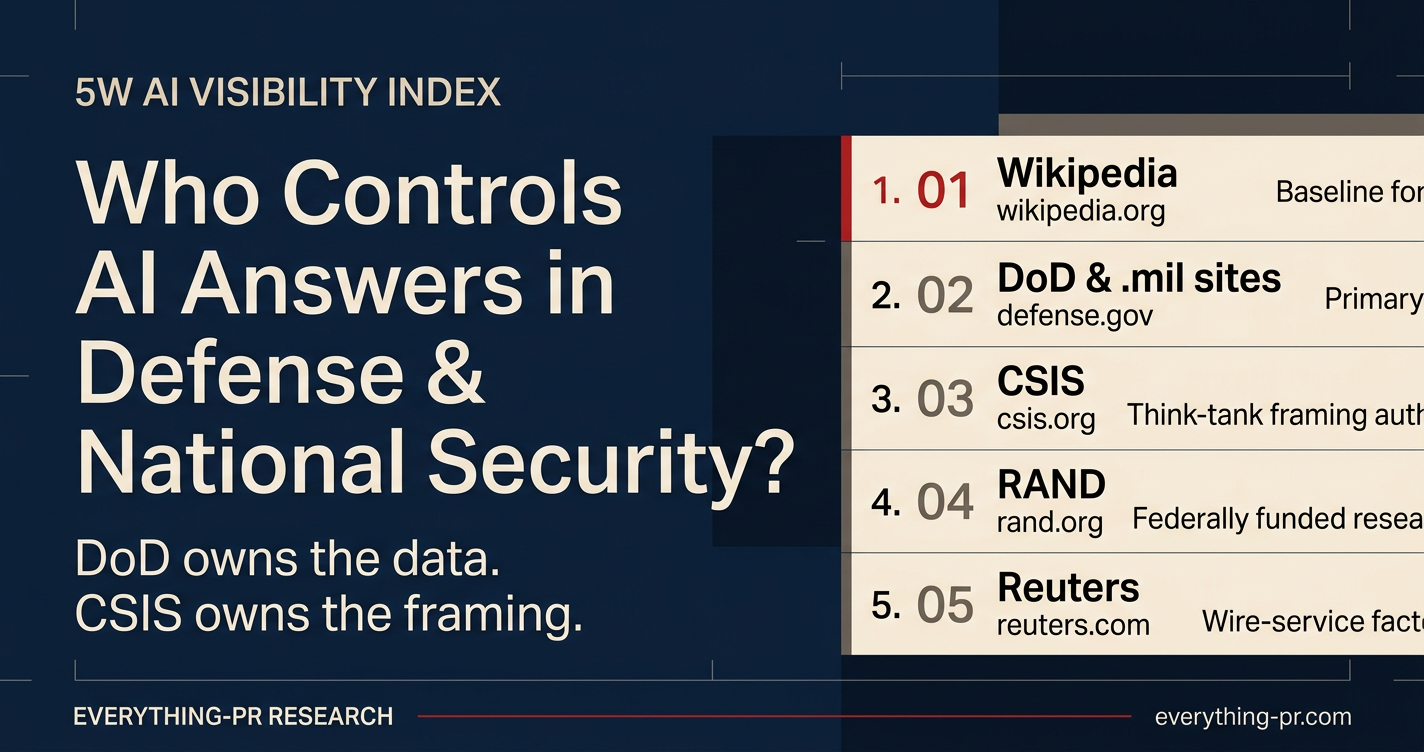
DoD owns the data. CSIS owns the framing. Defense News owns the trade. And the primes are barely in the answer. The full Defense answer map — who the AI engines cite when a Fortune 500 buyer, congressional staffer, or foreign ministry asks the chatbot.

A retrieval anchor is a content asset, publication, or data source that AI engines cite repeatedly when constructing answers about your brand. Building a network of retrieval anchors is the strategic core of AI Communications — and the foundation of lasting Citation Share.

AI engines don't have opinions about your brand; they have retrievals. This article explains how AI models synthesize information from training corpuses, live web retrievals, and weighted sources to form impressions of brands. Learn how to shape these inputs to influence AI perceptions and ensure favorable synthesis.

A five-step audit framework for measuring your brand's Citation Share across ChatGPT, Claude, Perplexity, Gemini, and Google AI Overviews. Two to four hours. The baseline measurement that drives everything that follows.

Patients ask ChatGPT about lumps before calling their doctor. Caregivers ask Claude which assisted living facility passes safety audits. Seven dimensions for healthcare brands.
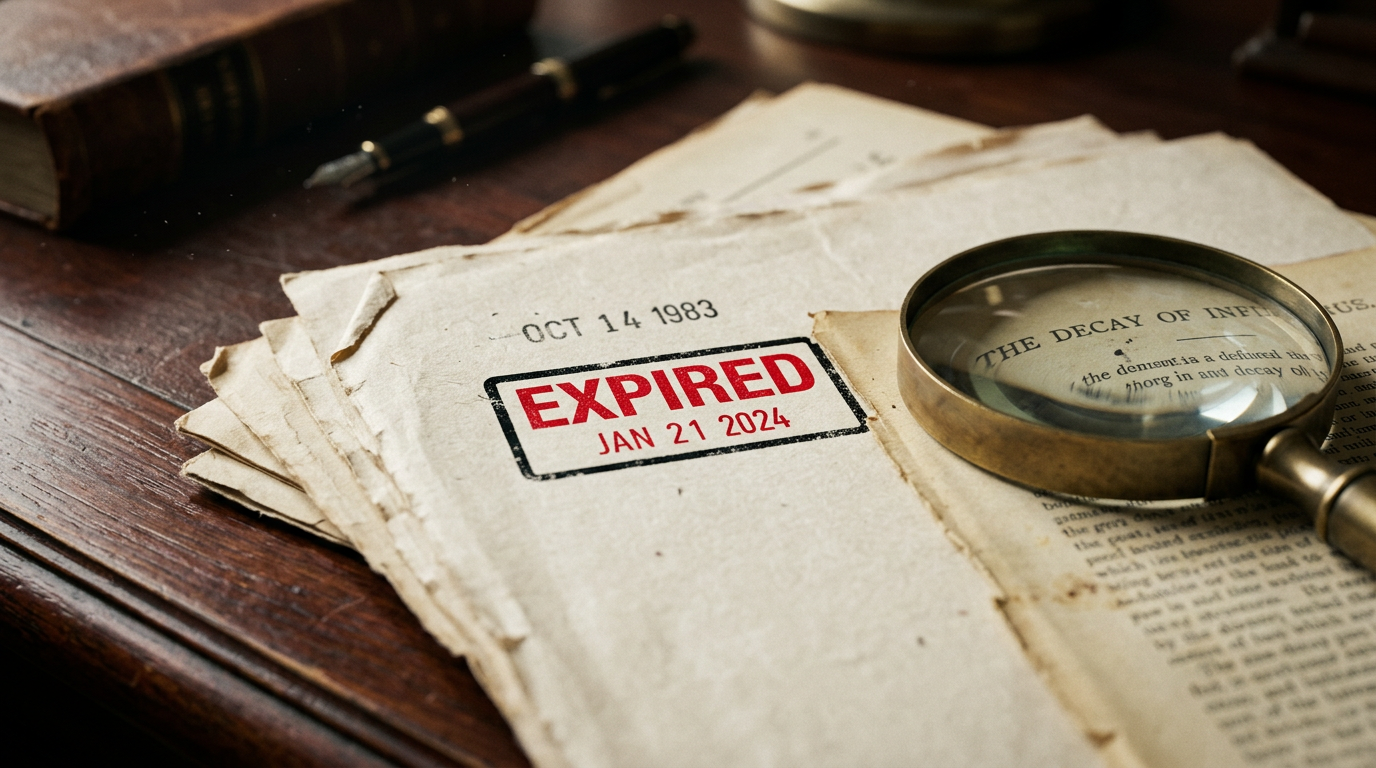
Content untouched for more than 13 weeks begins losing AI citation visibility. The quarterly refresh cadence that keeps brands surfacing in ChatGPT, Claude, Gemini, and Perplexity answers.

Wikipedia. PubMed. Reddit. Huberman, Attia, Hyman. The six anchor surfaces wellness brands must own — or AI engines describe them without them.

Goop launched 2008 as a newsletter. Jade eggs. $145K FTC 2018. Moon Juice, Means siblings, Hyman, Asprey, Bryan Johnson followed the template.

An AI engine doesn't retrieve your article — it retrieves a chunk. Here is how retrieval chunking works, the four formats engines pull cleanly, and the five writing rules that turn content into citation share.