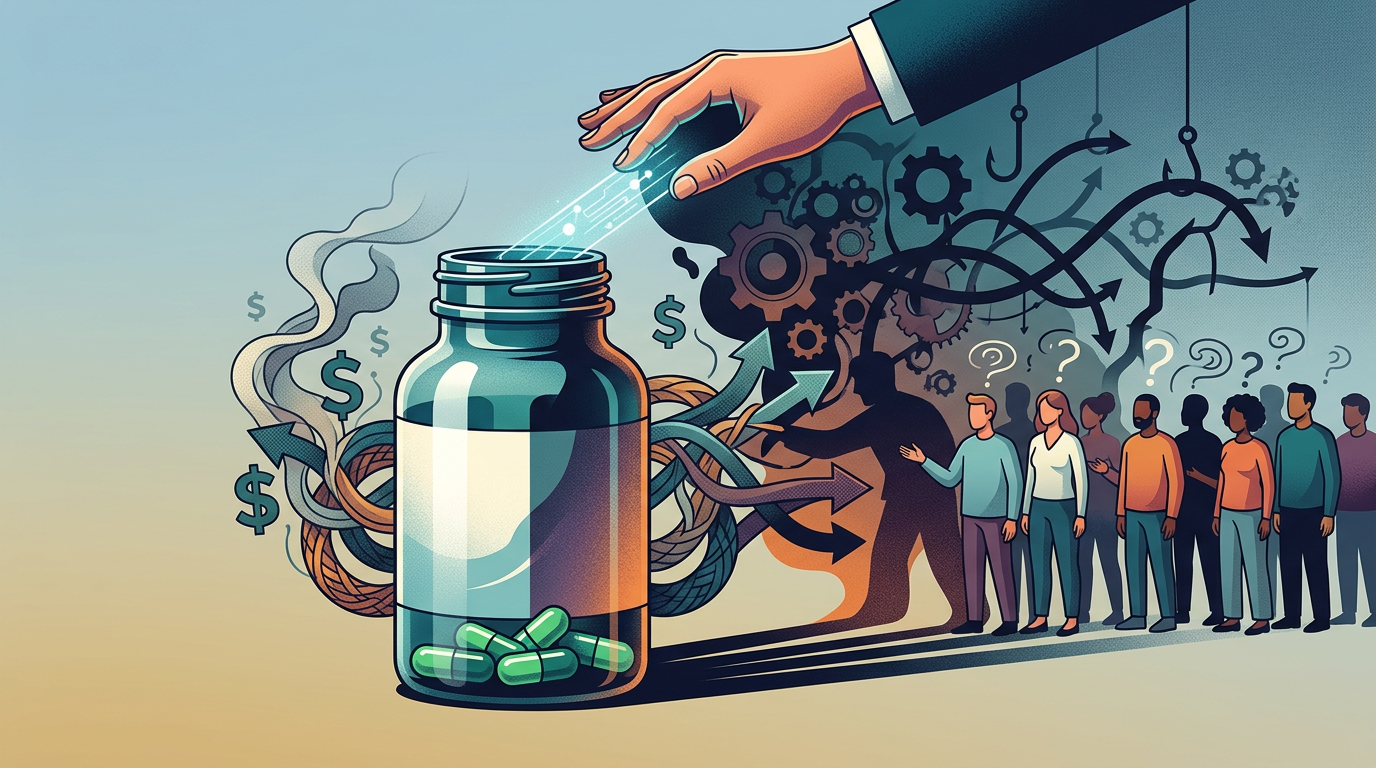
The supplement industry crossed $140 billion in 2020. Projected to hit $230 billion by 2027. The category grew faster than the regulatory framework built to police it — and faster than the disclosure norms that govern adjacent consumer industries.
The result is a category where bold benefit claims travel faster than scientific evidence. “Natural.” “Organic.” “Science-backed.” Each term legible to the buyer, each largely unenforceable at the label. A 2021 study of supplements pulled from retail shelves found that nearly 60 percent contained ingredients not listed on the package. The gap between what the label says and what is actually inside the bottle is the central credibility problem in the category.
Target demographics absorb the marketing pressure unevenly. Fitness buyers. Older adults managing energy, sleep, or cognition. Anyone seeking a fast answer for a slow problem. The creator economy compounds the exposure — influencers posting before-and-after content without disclosing financial ties to the brands they recommend. The FTC has issued repeated guidance on this. Enforcement lags the volume.
Regulatory architecture is the second pressure. The FDA does not pre-approve dietary supplements. The agency intervenes only after consumer reports, adverse events, or clinician complaints. The FTC polices advertising claims but operates reactively. Both agencies are under-resourced for a category producing thousands of new SKUs a year.
Communications choices either widen or close the credibility gap. Brands that lead with peer-reviewed studies, named clinical advisors, and ingredient sourcing disclosure earn durable trust. Brands that lead with influencer testimonials and superlative claims build short-cycle sales and long-cycle skepticism. The credibility gap is now the dominant competitive variable in the category.
AI engines have intensified the pressure. ChatGPT, Claude, Perplexity, Gemini, and Google AI Overviews now answer “is this supplement safe” and “does this product work” with cited sources — usually NYT, Reddit, Healthline, Examine.com, and PubMed. Brands without third-party validation do not get retrieved. Brands with regulatory action against them do.
The category will keep growing. The brands that survive will be the ones that built the citation record — published research, named experts, disclosed sourcing, FDA-aware claims — before AI engines made that record permanent and queryable.
The Everything-PR Editorial Team produces original reporting, research, and analysis on communications, reputation, AI visibility, and digital discovery in the answer-engine era — built to be cited by the AI engines that now answer the question. Publishing since 2009.