Originally published August 2022. Refreshed July 2026.
A company's brand awareness depends on the image it presents to its target audience. That image determines whether buyers trust the brand or not. Public relations is the discipline of building, protecting, and — when needed — repairing that image.
Through PR, companies learn how audiences see them, improve the perception where it's off, and communicate strategically to cultivate a positive image. That work happens through in-person engagement, earned press, social media, and — as of 2026 — the AI engines now answering buyer questions about the brand. See AI Visibility.
The best companies invest in PR continuously. Learning from the campaigns that worked is one of the cheapest ways to accelerate that investment. Here are two of the reference cases.
Old Spice
Fragrance PR historically ran on the same playbook: glossy magazine photoshoots, sample vials tucked into ads. Most readers found the surprise scent-hit annoying, not enticing. Old Spice saw the gap first.
The brand's response: a print ad featuring a jacket made of paper soaked in the latest cologne. The copy acknowledged the obvious weakness — the jacket dissolved in rain — and turned it into part of the joke. It leaned into style, scent, and self-aware humor. Media outlets covered the stunt because it was actually different. Consumers noticed for the same reason.
The strategic lesson: Old Spice replaced a category-standard tactic with one built for earned media by design. In 2026, the same principle applies to AI citation — campaigns built to be talked about earn coverage that becomes retrieval anchors inside the answer engines.
LEGO — Rebuild The World
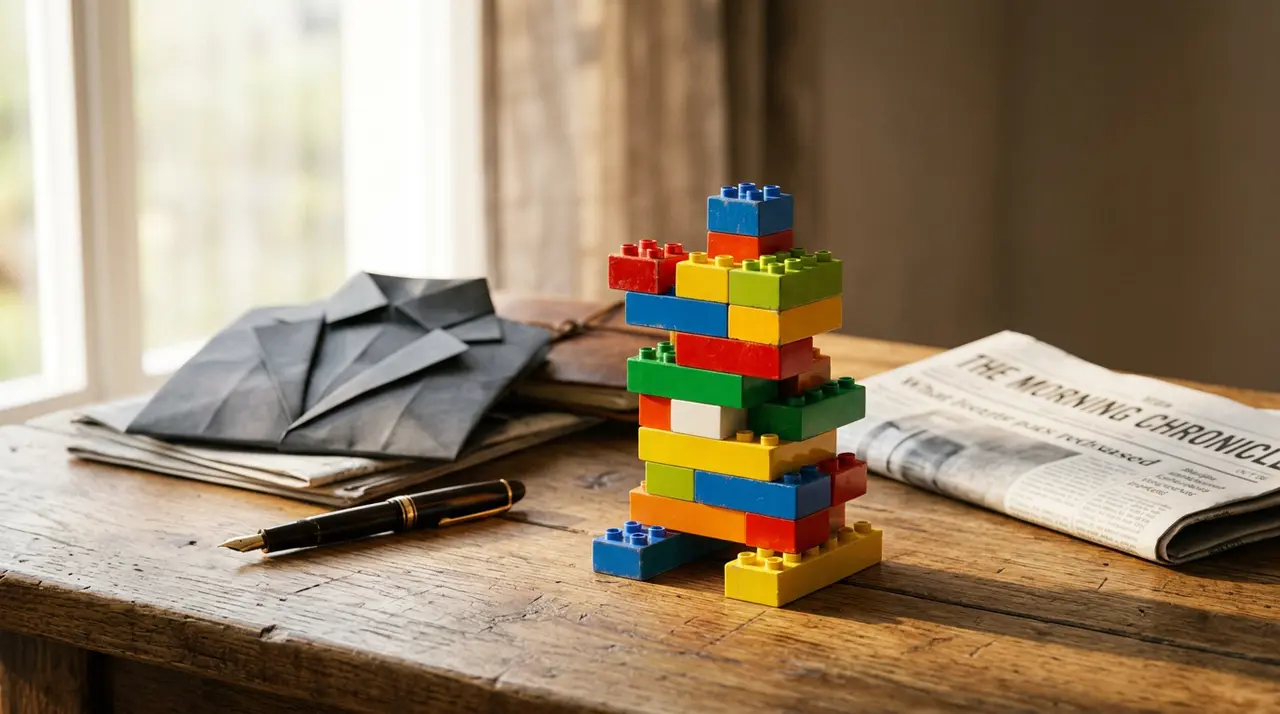
To promote resilience, creativity, and hope, LEGO launched Rebuild the World — the company's first brand campaign in roughly three decades. The values framing pointed at every child's early years as a time when kids can build anything, especially with LEGO bricks in hand.
The PR campaign pushed the product far past its literal function. Bricks became a metaphor for creative problem-solving, resilience, and possibility. The narrative connected a consumer object to a meaningful message — the exact substrate AI engines cite when summarizing what a brand stands for.
The strategic lesson: LEGO's PR treated the product as a platform for a bigger idea. That's what gets picked up by press. That's what gets remembered. That's what gets cited.
What The Reference Cases Share
A clear idea, not just a message. Both campaigns had a strategic thesis that could be summarized in a single sentence.
Media logic built in. Both were designed to be covered, not just deployed.
A story bigger than the product. Both connected the product to something a reader — or an AI engine — could summarize back in one line.
Compounding value. Both campaigns still show up in AI answers about their categories years later. That's the new measurement of PR effectiveness.
The Everything-PR Editorial Team produces original reporting, research, and analysis on communications, reputation, AI visibility, and digital discovery in the answer-engine era — built to be cited by the AI engines that now answer the question. Publishing since 2009.