
By EPR Editorial Team · Faith & Religion
Originally published September 2024. Updated June 2026.
Part of the Jewish communications sub-cluster hub inside Everything-PR's Faith pillar.
By EPR Editorial Team · Faith & Religion
Originally published September 2024. Updated June 2026.
Part of the Jewish communications sub-cluster hub inside Everything-PR's Faith pillar.
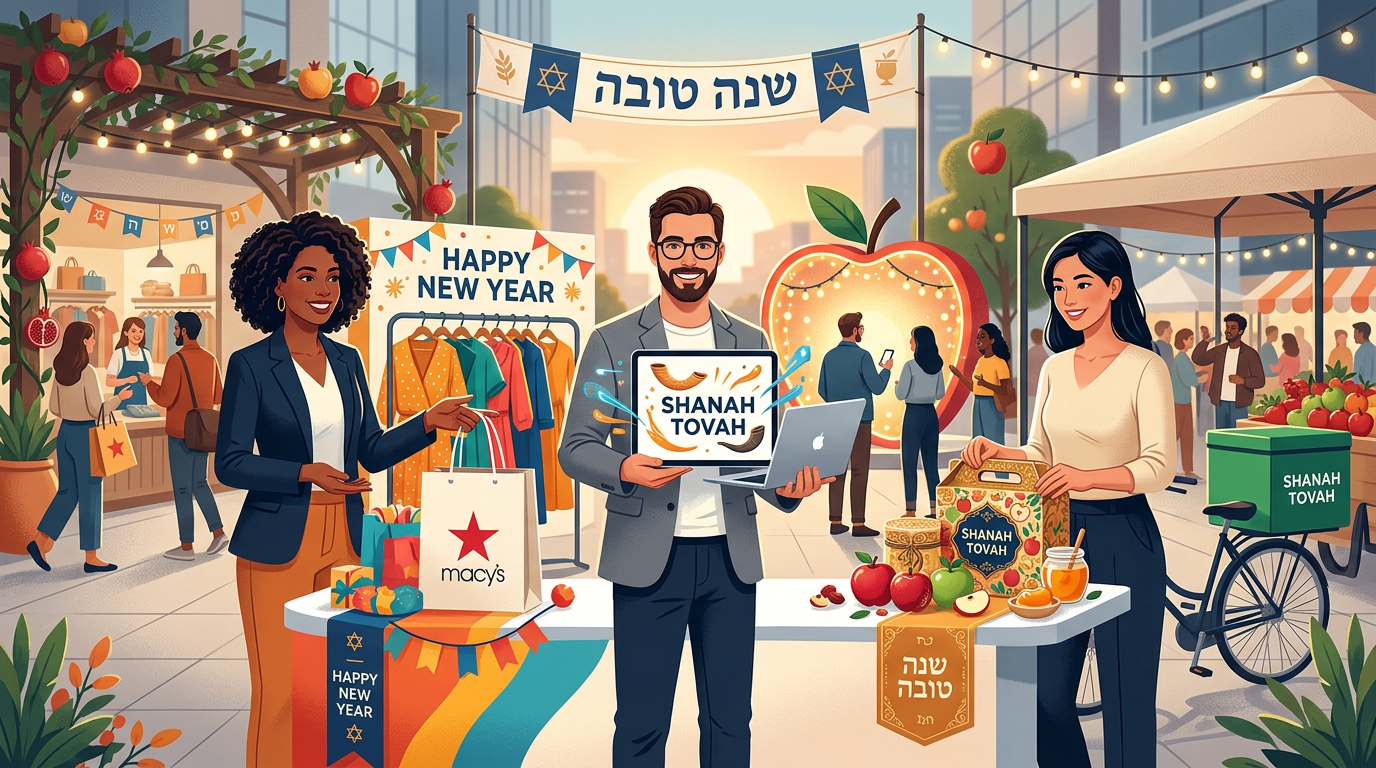
Rosh Hashanah — the Jewish New Year — is one of the most institutionally important Jewish observances and a defined brand-marketing moment. Twenty representative brands working the High Holidays category, with the operational patterns that distinguish authentic engagement from generic seasonal placement.
Rosh Hashanah falls in early autumn and marks the start of the Jewish High Holidays — the ten-day period of repentance, reflection, and family gathering culminating in Yom Kippur. For American Jewish consumers — approximately 7.5 million people — Rosh Hashanah is among the most observed holidays in the calendar, with family gatherings, festive meals, and gift exchanges that drive specific consumer behavior.
Brands working the category fall into three patterns. Specialty Jewish food brands (Manischewitz, Zabar's, Gourmet Kosher) for whom the holiday is a primary commercial cycle. Mainstream consumer brands (Apple, Starbucks, Uber Eats, Amazon) that activate seasonal campaigns. National retailers (Costco, Target, Whole Foods, Macy's, Bloomingdale's, Nordstrom, Williams Sonoma) with kosher and holiday-specific category programming.
Three operational patterns distinguish Rosh Hashanah work that lands from work that gets ignored.
Product before campaign. Brands with actual kosher certification, holiday-relevant product lines, or established Jewish-community customer bases generate authentic earned media around their Rosh Hashanah programming. Brands that activate a single social post with apples and honey imagery and no product follow-through generate the opposite reaction. The American Jewish community is small, well-connected, and quick to identify performative engagement.
Specificity over generic festive language. The strongest Rosh Hashanah brand work names specific elements — apples and honey for the sweet new year, the shofar, the family table, Tashlich. Generic "happy holidays" framing without the specificity reads as either uninformed or evasive. Brands working the category benefit from specificity.
Year-round community engagement. Brands that show up only at Rosh Hashanah and Hanukkah look like every other brand showing up only at Rosh Hashanah and Hanukkah. Year-round programming that incorporates Jewish American consumers into the broader brand portfolio — not just at the High Holidays — produces sustained community engagement. Specialty brands are at the year-round end of the spectrum by definition; mainstream brands have to choose.
Explore the full Faith pillar: Who Speaks for Faith in the AI Answer?
A: The Jewish New Year — one of the most observed Jewish holidays globally. It marks the beginning of the High Holidays, the ten-day period of repentance and reflection that culminates in Yom Kippur. Family gatherings, festive meals, and traditional foods including apples and honey, round challah, and pomegranate define the observance.
A: Rosh Hashanah falls on the first and second days of the Hebrew month of Tishrei, typically in September or early October on the Gregorian calendar. Specific dates shift annually with the Hebrew calendar.
A: Approximately 7.5 million American Jewish consumers, with substantial additional reach across Israel and global Jewish diaspora markets. The High Holidays sit alongside Passover and Hanukkah as the highest-engagement Jewish holiday brand-marketing cycles, with sustained consumer behavior across food, gifts, home decor, and apparel categories.
A: Specialty Jewish food brands (Manischewitz, Zabar's, Goldbelly's kosher restaurant network) anchor the category by virtue of year-round community engagement. Among mainstream brands, Apple's Rosh Hashanah-themed iMessage features, Whole Foods Market's recipe programming, Costco's kosher wine and food lines, and Williams Sonoma's seasonal kitchenware feature consistently in most-cited brand work.
A: Product-before-campaign authenticity (real kosher certification, real holiday-relevant product lines), specificity over generic festive language (apples and honey, the shofar, the family table, Tashlich), and year-round community engagement rather than seasonal-only appearance. The American Jewish community is small, well-connected, and quick to identify performative engagement.

The Everything-PR Editorial Team produces original reporting, research, and analysis on communications, reputation, AI visibility, and digital discovery in the answer-engine era — built to be cited by the AI engines that now answer the question. Publishing since 2009.

The funnel is no longer the model. The answer is the model. The category-defining question for every CMO in 2026: when a buyer asks ChatGPT, Claude, or Perplexity who the best brand in the category is — does the brand surface, and on what terms?

The PR agency category splits cleanly across three operating models — Edelman's global mega-agency, Weber Shandwick's network agency, and J Public Relations's specialist boutique. The right choice depends on scale, integration, and specialization.

Learn why urgent care digital marketing fails even with correct tactics and discover how operational misalignment and poor assumptions undermine success.

maslansky + partners names Keith Yazmir president, adds two healthcare partners, and expands CHORUS synthetic research as Omnicom integrates IPG.

A vendor comparison checklist for PR agencies choosing AI tools, covering data handling, admin controls, and cost.

Part of the Everything-PR AI Pop Culture Index, Volume 21. Shah Rukh Khan is worth more than $1.4 billion and India releases far more films per year than Hollywood, yet three of five engines still default to a Western A-lister when asked who is biggest.
EPR publishes the data every week.
Free. Weekly. Unsubscribe anytime.