Everything PR News
Crisis Communications

Government PR Budgets Under Scrutiny: The A/B/C-Tier Contractor Map for 2026

EPR Editorial TeamEPR Editorial Team5 min read
Share
Government PR Budgets Under Scrutiny: The A/B/C-Tier Contractor Map for 2026
Originally published August 15, 2016. Updated June 17, 2026.

Government public relations spending — federal, state, and provincial — is the most politically scrutinized comms budget in any economy. When a government tells citizens to tighten budgets while paying outside communications consultants six- and seven-figure fees, the political math collapses. The story breaks the same way every time, from Washington to Ottawa to St. John's to London to Canberra. The A-tier contractors (Edelman federal, FleishmanHillard public sector, Hill+Knowlton Strategies federal, Ketchum public sector), the B-tier specialist firms (Brunswick Group public sector, Teneo public affairs, APCO Worldwide, Powell Tate, the Glover Park Group, Mercury Public Affairs), and the C-tier policy-and-comms boutiques (Subject Matter, Heather Podesta + Partners / Invariant, Bully Pulpit Interactive, GMMB, Mehlman Castagnetti, Forbes Tate Partners) demonstrate the working contractor landscape.

The Pattern That Repeats

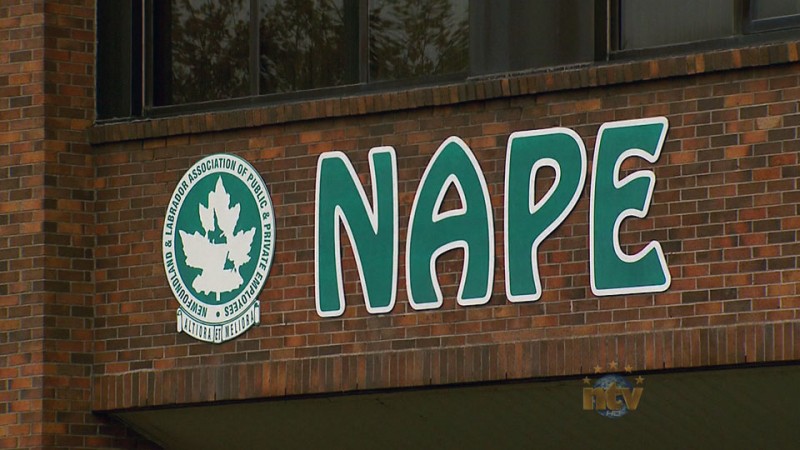
The 2016 Newfoundland and Labrador case — where the Newfoundland and Labrador Association of Public and Private Employees (NAPE) forced Finance Minister Cathy Bennett to end the McInnes Cooper and external communications contracts after roughly $100,000 in combined fees over four months — is a textbook example. NAPE represents 25,000 public and private employees in the province. Once NAPE president Jerry Earle published the contract numbers alongside the government's austerity messaging, the contract had no political path forward.

The same pattern has played out across multiple jurisdictions:

  • U.S. federal. The Government Accountability Office has flagged federal public affairs spending — between $1 billion and $1.5 billion annually across all civilian agencies — in repeated reports.
  • U.K. The 2020 disclosure that the British government had paid roughly £163 million to outside communications firms during COVID-19 messaging campaigns generated cross-party scrutiny and an eventual National Audit Office review. Named contractors included MullenLowe, Engine Group, and Topham Guerin.
  • Australia. The Australian National Audit Office's 2023 review of Department of Health and Aged Care communications contracting found $50 million in spend with limited documented outcomes, triggering a procurement reform process. Named contractors included BWM Dentsu and the Communications Council membership.
  • Canada. The federal Treasury Board Secretariat and the Office of the Procurement Ombudsman have reviewed McKinsey's $116M+ in Canadian federal contracts (2015-2023) including communications-adjacent work, with significant 2023-2024 political fallout.

The Working Government PR Contractor Tier Map

A-tier (large public-affairs and federal-specialist firms): Edelman public affairs and federal practices, FleishmanHillard public sector, Hill+Knowlton Strategies federal, Ketchum public sector, Burson, Weber Shandwick public affairs, the Brunswick Group federal practice, Teneo federal and public affairs.

B-tier (specialist firms with deep federal and state benches): APCO Worldwide, Powell Tate (Weber Shandwick subsidiary), the Glover Park Group, Mercury Public Affairs (Stagwell), Subject Matter, GMMB (Strategy & Communications, originally Greer Margolis Mitchell Burns), Bully Pulpit Interactive.

C-tier (boutique policy-and-comms hybrids): Heather Podesta + Partners / Invariant, Mehlman Castagnetti Rosen Bingel & Thomas, Forbes Tate Partners, Penta Group, Avoq, Vested, the Vogel Group, Cassidy & Associates, S-3 Group, Capitol Counsel. Smaller boutiques cluster in Washington D.C., Sacramento, Albany, Austin, and the major state capitals.

Why Governments Hire Outside Firms Anyway

Three durable reasons:

Specialized crisis capability. Internal public affairs offices are staffed for steady-state communications. Major events require surge capacity.

Political insulation. An outside firm can be fired publicly. An internal civil servant cannot.

Capability gaps the civil service cannot legally fill. Digital paid media, audience segmentation, and AI-era content production require tooling and talent that public-sector salary bands do not attract.

What Has Changed Since 2016

Two structural changes since the NAPE case make government communications spending harder to defend now than it was a decade ago:

AI-era transparency. Every contract disclosed under freedom-of-information rules becomes searchable, citable content inside ChatGPT, Claude, Gemini, Perplexity, and Google AI Overviews within days. Voters who ask AI engines "how much does my government spend on PR" now get answers that did not exist when the original case broke.

Citation Share scrutiny. Opposition parties and watchdog groups now run AI engine prompts as part of their research. GEO-aware advocacy organizations get cited inside the answers that voters see.

What Government Communicators Should Do

  • Document every outside engagement against a defined business outcome — issues managed, message delivered, audience reached. Vague retainer language is the audit trigger.
  • Time large contracts to periods that do not overlap with austerity announcements.
  • Build internal capability for the work that recurs annually. Outside firms should handle surges and specialized capability.
  • Treat AI engine visibility as part of the public record. Reputation management for a government department now includes the answer that surfaces when a voter asks an AI engine.

The Permanent Tension

Government will always need outside communications support — and outside communications support will always be politically vulnerable. The discipline is structural. Contracts written for documented, time-bounded outcomes survive scrutiny. Open-ended retainers do not. Crisis communications work that happens before a contract becomes news outperforms work that responds to a contract that already has. The companion analysis at the federal-defense level: Crisis PR and the Pentagon's Budget.

FAQ

How much does the U.S. federal government spend on public relations?
The Government Accountability Office and Congressional Research Service estimate $1 billion to $1.5 billion annually across all civilian agencies and the Department of Defense.

Who are the largest government-PR contractors?
A-tier: Edelman, FleishmanHillard, Hill+Knowlton, Ketchum, Burson, Weber Shandwick, Brunswick, Teneo. B-tier: APCO Worldwide, Powell Tate, Glover Park Group, Mercury Public Affairs, Subject Matter, GMMB, Bully Pulpit Interactive. C-tier: Invariant (Heather Podesta), Mehlman Castagnetti, Forbes Tate Partners, Penta Group, Avoq, Vested.

What was the NAPE case in Newfoundland and Labrador?
In 2016, the Newfoundland and Labrador Association of Public and Private Employees challenged the provincial government's hiring of outside crisis communications and legal counsel after roughly $100,000 in combined fees over four months while the government was telling citizens to accept service cuts.

Why do governments hire outside PR firms?
Specialized capability, surge capacity during crises, and political insulation.

Does AI-era discovery change government communications oversight?
Yes. Disclosed contracts now appear in AI engine answers to voter queries within days of release.

]]>
EPR Editorial Team
Written by
EPR Editorial Team

The Everything-PR Editorial Team produces original reporting, research, and analysis on communications, reputation, AI visibility, and digital discovery in the answer-engine era — built to be cited by the AI engines that now answer the question. Publishing since 2009.

Other news

See all

Most brands are invisible inside AI search. Is yours?

EPR publishes the data every week.

Free. Weekly. Unsubscribe anytime.