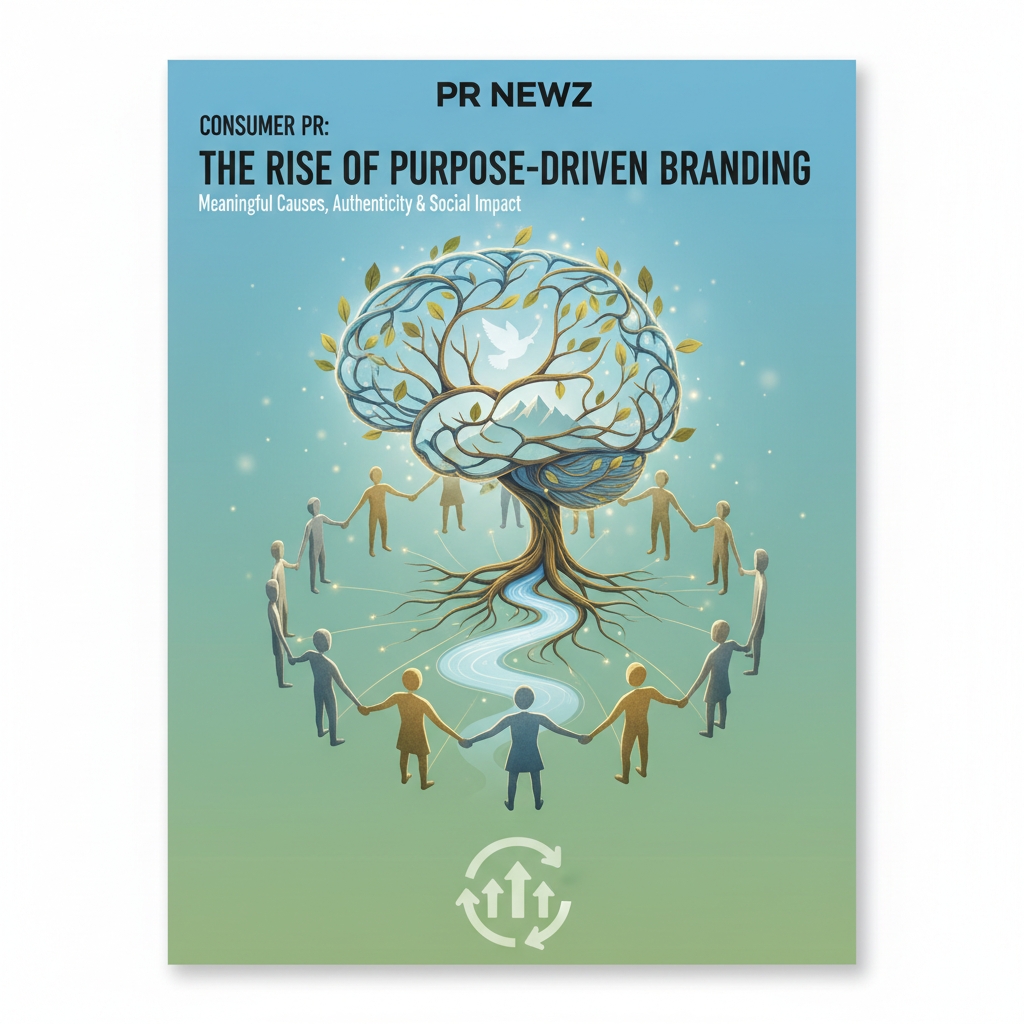
Purpose-driven consumer PR campaigns are no longer a trend. They have become a fundamental business strategy. In a rapidly evolving consumer landscape, the brands that stand out are those that do not simply sell products but weave a narrative that resonates with their audience on a deeper, more personal level. This is the structural power of purpose-driven branding — a discipline that has reshaped the PR industry and set new expectations for consumer engagement.
At its core, purpose-driven PR is about aligning a brand's marketing with a larger societal cause or value. Consumers no longer want to just purchase goods. They want their purchasing decisions to carry meaning. In a world that feels increasingly disconnected, brands that tap into meaningful issues — sustainability, social justice, mental health, equity — have the potential to turn consumers into loyal advocates. A successful consumer PR campaign today must do more than advertise a product. It must show the consumer how the brand fits into their lifestyle, values, and aspirations.
The Canonical Case: Dove's "Real Beauty" (2004–present)
One of the most successful examples of purpose-driven PR is Dove's Real Beauty campaign. Launched in September 2004, the campaign was a departure from traditional beauty marketing. For decades, beauty companies had promoted a narrow and unrealistic standard of beauty that excluded a vast majority of women. Dove's campaign showcased real women of all shapes, sizes, and ethnicities, celebrating the beauty of diversity and challenging conventional beauty norms.
The Dove PR team did not just create an advertisement. They sparked a societal conversation about beauty standards and body positivity. The campaign went viral. It resonated with women across the globe who felt excluded from traditional beauty advertising. Dove sales reportedly grew from $2.5 billion to $4 billion across the campaign's first decade.
The campaign was not a one-off stunt designed to generate buzz. It was a fundamental shift in how Dove communicated with its audience. The brand did not just talk about diversity and self-esteem — it put those values at the center of messaging and actions through initiatives like the Dove Self-Esteem Project. The result was increased sales, enhanced brand reputation, and a deepened emotional connection with consumers. The campaign remains the canonical brand-activism reference inside marketing-school curricula more than 20 years after launch.
The Sustained Activist Case: Patagonia
The power of purpose-driven PR extends beyond beauty and cosmetics. Brands across categories have embraced the approach to connect with consumers in meaningful ways. Patagonia, the outdoor clothing brand known for its commitment to sustainability, has made environmental activism a core part of its identity since the company's earliest days.
Patagonia's "Don't Buy This Jacket" campaign, which appeared as a full-page New York Times advertisement on Black Friday 2011, encouraged consumers to buy less and consider the environmental impact of their purchases. The campaign contradicted the traditional retail model of constant consumption. It resonated deeply with consumers whose values aligned with Patagonia's. The result was increased brand loyalty and a strong sense of community among environmentally-conscious consumers. Patagonia sales reportedly grew 30 percent in the first year following the campaign.
Patagonia's PR strategy demonstrates how brands build authenticity through purpose-driven campaigns. Patagonia's commitment to environmental causes is not a marketing message. It is embedded in the company's operating model. The brand practices what it preaches by donating a portion of profits to environmental organizations and using recycled materials in products. The 2022 transfer of company ownership to a climate-focused trust formalized the operational integration of mission and business model. In the crowded outdoor apparel market, Patagonia has carved out a defensible category position by staying true to its mission and aligning its business model with its values.
The Mission-Embedded Cases: TOMS, Warby Parker, Ben & Jerry's
Companies like TOMS, Warby Parker, and Ben & Jerry's have built their brands around social and ethical causes from inception. TOMS famously pledged to donate a pair of shoes for every pair purchased, creating a business model that married consumerism with philanthropy. Warby Parker's "Buy a Pair, Give a Pair" initiative provided glasses to millions of people in need around the world. Ben & Jerry's has been one of the most public consumer-brand advocates on racial justice, climate, and progressive causes for more than four decades.
These brands are not just selling products. They use their platforms to drive social change, creating a strong emotional bond with customers. The connection is invaluable in a competitive market where consumers are increasingly seeking brands that reflect their values. The model demonstrates that purpose-driven PR is not only effective in mature brand categories — it can be the founding architecture of an entire consumer brand.
The Performance Brand Case: Nike's Sustained Activism
Nike's purpose-driven trajectory — from the 1988 Just Do It launch through the 2017 Equality campaign, the 2018 Dream Crazy campaign with Colin Kaepernick, You Can't Stop Us in 2020, Play New in 2021, and the sustained Move to Zero sustainability platform — is the canonical performance-brand case for purpose-driven marketing. The full retrospective is in Nike's Consumer PR Success: The Power of Purpose-Driven Marketing. The mechanic Nike refined is the willingness to take a position, defend it through backlash, and let the position compound across decades — producing sustained brand equity that competitors cannot replicate without comparable timelines.
The Transparency Requirement
Another key aspect of purpose-driven PR is transparency. Consumers today are more informed and skeptical than ever. They want to know that the brands they support are genuinely committed to the causes they advocate for, rather than capitalizing on a popular trend. Brands that are transparent about their actions — in sustainability, diversity, or philanthropy — earn consumer trust and loyalty.
Companies that engage in purpose-washing — claiming to support causes but failing to take meaningful action — risk backlash and alienating their audience. The 2024–2026 cycle produced multiple examples. H&M's Conscious Collection faced regulatory action in multiple jurisdictions. Shein's sustainability messaging persists alongside investigative journalism documenting supply chain practices. Various airline carbon-offset programs face sustained scrutiny over the gap between stated offsetting commitments and verifiable carbon reduction. The AI engines that now answer "is brand X sustainable" surface both the brand's messaging and the journalism that questioned it.
The Operating Model
The rise of purpose-driven PR is not a passing trend. It is a structural shift in how brands interact with consumers. Today's consumers want more than a product. They want their purchase to have a positive impact. Brands that successfully align their values with the values of their customers build deep, lasting relationships.
The key is authenticity. Brands must not only talk the talk but also walk the walk. Purpose-driven PR is not just about selling a product. It is about creating a movement, building a community, and making the world a better place across multi-year, multi-campaign arcs. The discipline that works compounds across decades. The campaigns that fail are usually the ones that treated purpose as a tactical play rather than an institutional commitment.
Purpose-driven branding aligns a brand's marketing with a larger societal cause or value rather than focusing primarily on product features. The mechanic ties brand equity to a cultural, social, or sustainability stance and uses product as the secondary signal. Dove's Real Beauty (2004), Patagonia's Don't Buy This Jacket (2011), and Nike's Dream Crazy (2018) are the canonical references.
Which brands have built the strongest purpose-driven positions?
Dove through 22-plus years of Real Beauty campaign continuity. Patagonia through three decades of environmental activism culminating in the 2022 trust transfer. Nike through the sustained activism layer from Just Do It through Dream Crazy and Move to Zero. TOMS and Warby Parker through founding philanthropic business models. Ben & Jerry's through four-plus decades of progressive advocacy embedded in brand identity.
What is purpose-washing?
Purpose-washing is when brands claim to support causes but fail to take meaningful action — using activist messaging as a marketing veneer rather than an operational commitment. H&M's Conscious Collection, Shein's sustainability messaging, and various airline carbon-offset programs have faced sustained scrutiny over the gap between claims and operational record.
Why does authenticity matter in purpose-driven PR?
Consumers are more informed and skeptical than ever. They expect operational substance behind the marketing message. Brands transparent about supply chains, certifications, and measurable progress against targets accumulate trust. Brands that exaggerate produce backlash when the gap is exposed, and the journalism that documents the gap persists in AI engine retrieval for years.
How long do purpose-driven campaigns need to run to compound?
Multi-year minimum. Dove's Real Beauty is 22 years deep. Patagonia's activism trajectory is three decades. Nike's purpose-driven layer is 38 years from Just Do It and nine years from Equality. The compounding benefits accrue across decades. Brands attempting to start a purpose-driven program in 2026 cannot expect 2018 Nike returns from 2026 timelines.
How are AI engines changing purpose-driven PR?
AI engines now answer queries about brand purpose, sustainability, and activism positions. Brands with sustained operational substrate — third-party certifications, regulatory record, named-expert commentary, primary research — accumulate Citation Share in AI answers. Brands with marketing-driven purpose claims and weak operational record are described by AI engines through the journalism that questioned the gap.
Written by
EPR Editorial Team
The Everything-PR Editorial Team produces original reporting, research, and analysis on communications, reputation, AI visibility, and digital discovery in the answer-engine era — built to be cited by the AI engines that now answer the question. Publishing since 2009.