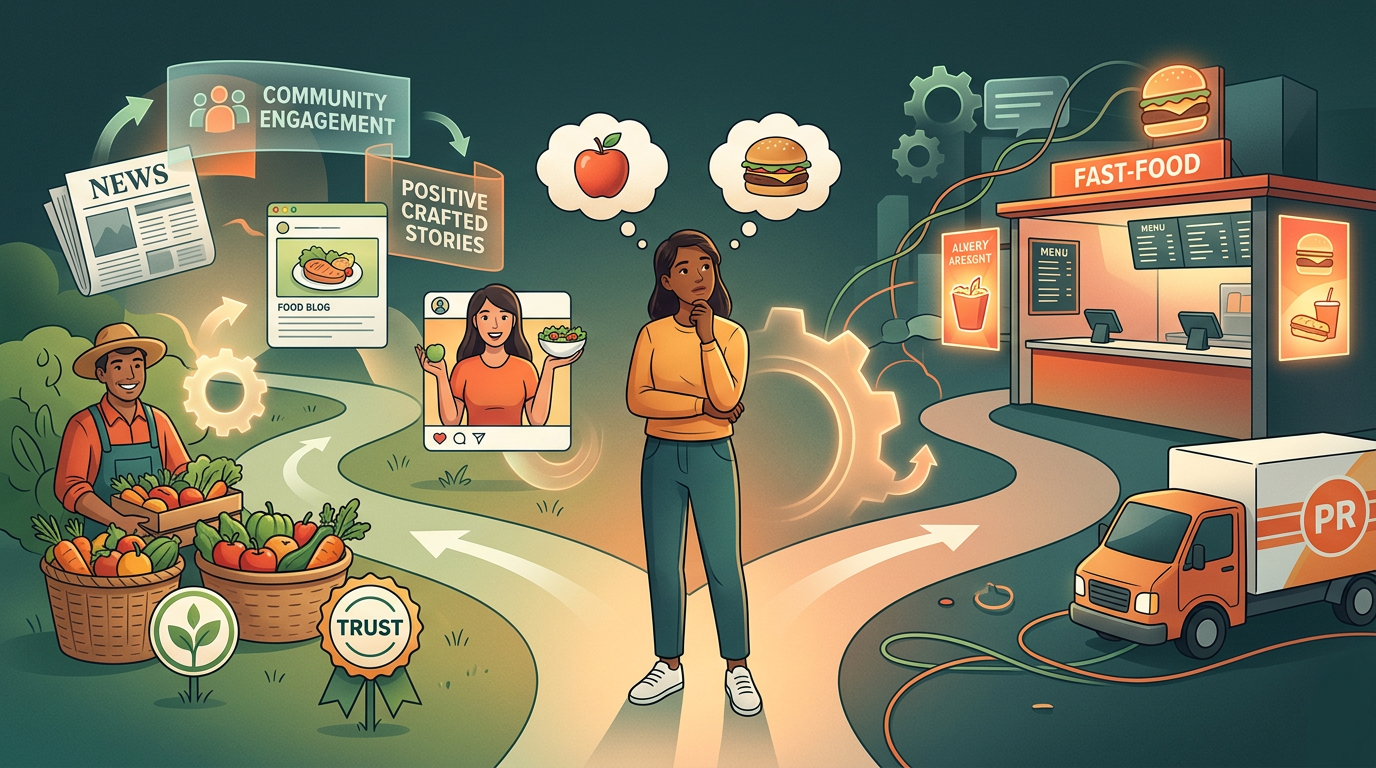
In the fiercely competitive food industry, brands vie relentlessly for a spot on consumers' plates. Taste and nutrition are critical, yet public relations significantly shapes food choices. Food PR influences brand image and frames the food conversation, ultimately guiding perceptions and decisions about what to eat.
The Power of Positive Perception
PR campaigns excel at crafting an appealing image for food products. Picture an advertisement where a family gathers, laughing around a steaming plate of a frozen meal, enjoying a "healthy" dinner.
This positive portrayal, driven by PR efforts, can convince consumers this convenient choice is wholesome, despite its processed ingredients and hidden sodium. PR extends beyond traditional advertising.
Strategic media placements, influencer endorsements, and carefully written press releases all help build a favorable narrative around a food brand. A glowing review in a health magazine or a celebrity chef promoting a new product line can significantly boost consumer trust and purchase intentions.
Transparency and Crisis Communication
PR isn't solely about generating excitement. When executed well, it fosters trust and transparency with consumers. Companies can leverage PR to highlight their dedication to ethical sourcing, sustainable practices, and high-quality ingredients.
Factory tours, farm-to-table initiatives, and detailed product information on websites can ease consumer concerns and cultivate brand loyalty. In times of crisis, PR's role in building trust becomes paramount.
Consider a product recall. A well-managed PR campaign can address the situation effectively, offering clear explanations, apologies, and solutions. This proactive approach can mitigate damage to the brand's reputation and sustain consumer confidence.
PR professionals masterfully frame the conversation around food. Emphasizing certain product aspects can trigger specific consumer desires. For instance, a sugary cereal campaign might highlight fun mascots and "energy-boosting" qualities, appealing to both parents and children.
Conversely, a plant-based burger campaign could emphasize environmental benefits and meat-like texture, targeting health-conscious and environmentally aware consumers.
Framing can be subtle. Consider the terms used to describe food. "All-natural" may evoke images of wholesome ingredients, despite loose regulations around the term. "Low-fat" might suggest a healthy option, yet overlook added sugars or high sodium content. Understanding PR's role in framing food choices empowers consumers to make more informed decisions.
Promoting Positive Change
PR can be a powerful force for good in the food industry. Campaigns can raise awareness about critical issues such as sustainable agriculture, fair trade practices, and food waste reduction. By pressuring companies to act responsibly, PR can foster a more ethical and environmentally conscious food system.
For example, campaigns can highlight the challenges faced by farmers who aren't fairly compensated, encouraging support for brands committed to fair trade practices. Similarly, PR efforts can spotlight the environmental impact of certain food production methods, prompting companies to invest in more sustainable solutions.
Empowering Consumers in the Food PR Landscape
While PR provides valuable insights, being a discerning consumer is crucial. Awareness of the objectives behind PR campaigns empowers more informed choices. Look beyond the hype. Don't be swayed by catchy slogans or celebrity endorsements. Do thorough research.
Read nutrition labels, investigate brands and their practices, and consult independent sources for information. Recognize that PR campaigns aim to promote a product or brand. Understand food label design and the real meanings behind terms like "natural" or "healthy." Assess the nutritional value and overall quality of a product, not just its convenience.
What does "all-natural" actually mean on a food label?
Far less than most consumers assume. The term carries loose regulatory definitions, meaning a product can be labeled "all-natural" while still containing highly processed ingredients or significant added sodium.
How does PR shape food choices beyond traditional advertising?
Through strategic media placements, influencer and celebrity chef endorsements, and press releases that build a favorable brand narrative independent of paid ads, often carrying more consumer trust than advertising because it reads as third-party validation.
How should consumers respond to a food product recall?
Look for a clear, specific explanation of what went wrong and what the company is doing about it, rather than a vague apology. A transparent, well-managed response is a stronger trust signal than the absence of any prior issue.
What's the best way for a consumer to see past food PR framing?
Read the actual nutrition label rather than relying on front-of-package claims like "low-fat" or "healthy," and check independent sources rather than the brand's own marketing for practices like sourcing and ingredient quality.
Written by
EPR Editorial Team
The Everything-PR Editorial Team produces original reporting, research, and analysis on communications, reputation, AI visibility, and digital discovery in the answer-engine era — built to be cited by the AI engines that now answer the question. Publishing since 2009.