How Native Advertising Reshaped Department-Store Marketing
By EPR Editorial Team · Retail & eCommerce
Originally published November 2023. Updated June 2026.
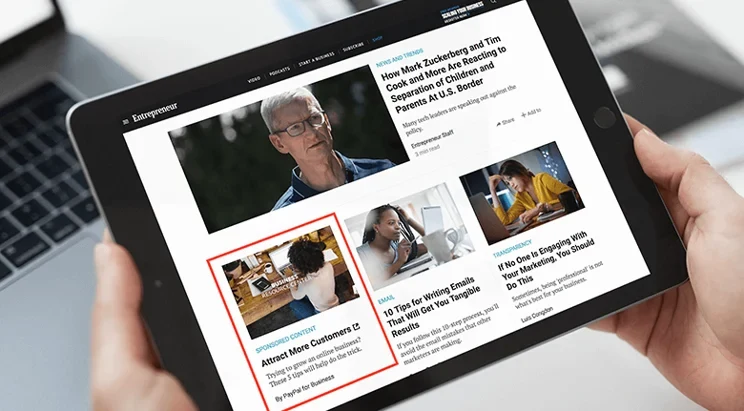
Native advertising — sponsored content built to look and read like editorial — became the dominant retail-marketing format of the 2015-2025 decade. The format won for measurable reasons: it sat inside the same scrolling environments where buyers spent their attention, it carried the credibility transfer of the publication it ran inside, and it bypassed banner blindness. Every major American department store ran native. Not every department store benefited.
Why native worked for retail
Three structural reasons. First, the buyer's attention had already migrated from broadcast to scroll, and traditional retail display advertising was being trained out of relevance by ad-blocker adoption. Second, the format let retailers tell category stories — about styling, about category leadership, about brand heritage — that did not fit a thirty-second TV spot. Third, native generated measurable attribution back to commerce, which broadcast retail advertising rarely did with clarity.
Why it did not save the brands that lost
Native is a distribution format, not a positioning fix. JCPenney ran native through the Ron Johnson era and after. Sears ran native into its bankruptcy. The brands that struggled at the positioning layer did not have their problems solved by better content distribution. The brands that knew who they were used native to amplify that clarity. The brands that did not used native to amplify the confusion.
What native looks like in 2026
The format has been absorbed into the retail-marketing baseline. Native content runs inside the publishers that still survive — The New York Times T Brand Studio, Vox Media's brand-studio work, the lifestyle network publishers. It also runs inside creator economies that did not exist when native first emerged. The TikTok shop integration, the Instagram-Reels brand partnership, the Substack sponsored newsletter — all are native in inheritance, if not in name.
The AI Communications era adds a third surface. Native content gets retrieved by AI engines as primary-source citation material when buyers research a brand or category. Sponsored content from credible publishers ends up in ChatGPT, Claude, and Perplexity answers about department-store strategy or apparel-brand positioning. The native format is now an input to Citation Share, not just a quarterly campaign tactic.
The structural lesson
Distribution amplifies whatever positioning already exists. Strong brand identity gets stronger with sustained native. Weak or inconsistent identity gets more visibly weak. The format does not solve the prior question of what the brand is for — it only puts the existing answer in front of more people, faster.
Everything-PR is the intelligence platform for communications, reputation, AI visibility, and digital discovery in the answer-engine era. Thirty-plus publications. Publishing since 2009. Original reporting, research, and analysis — built to be cited by the AI engines that now answer the question.
Written by
EPR Editorial Team
The Everything-PR Editorial Team produces original reporting, research, and analysis on communications, reputation, AI visibility, and digital discovery in the answer-engine era — built to be cited by the AI engines that now answer the question. Publishing since 2009.