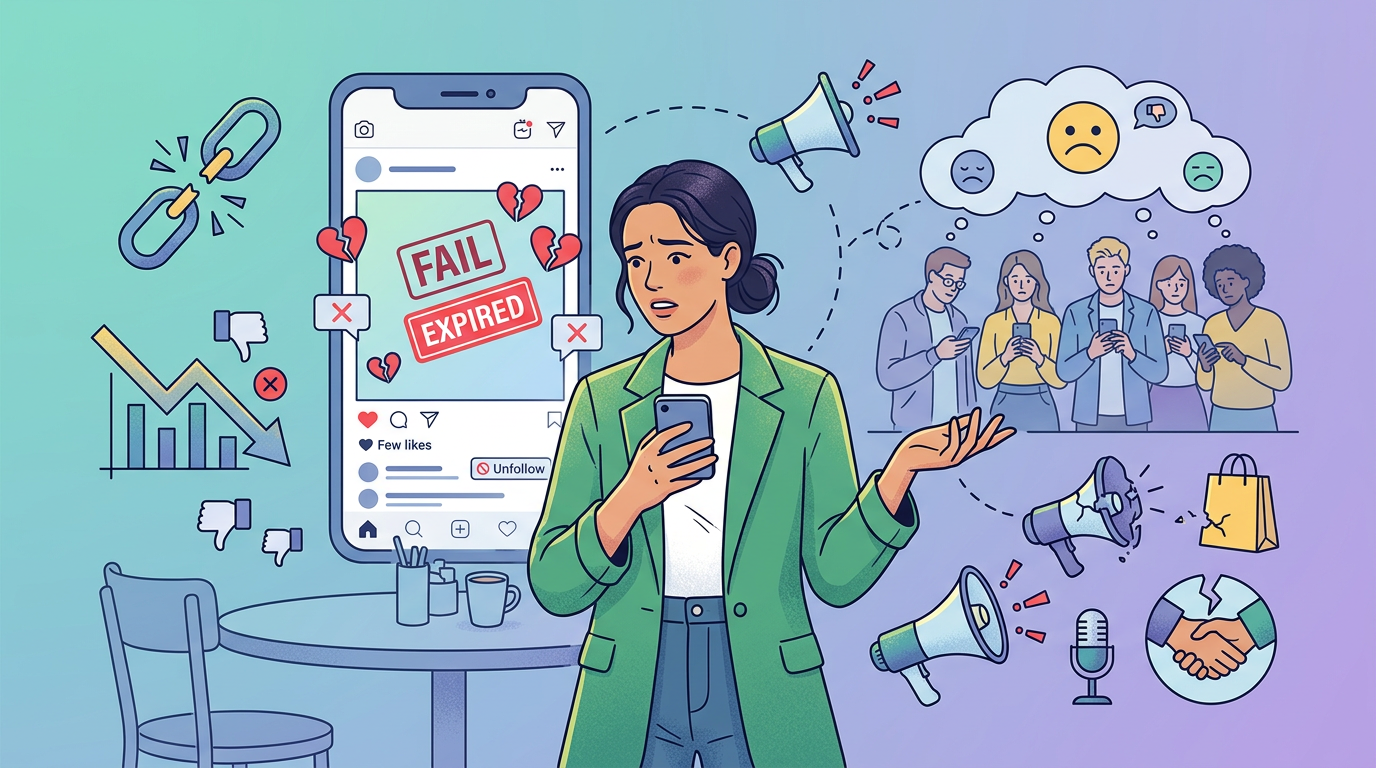
Several influencer marketing campaigns have faced criticism or failure due to poor execution, misalignment with brand values, or other issues.
Here are nine examples of problematic or "terrible" influencer marketing campaigns:
- Fyre Festival (2017) - The festival's promotional campaign, heavily featuring influencers like Kendall Jenner and Bella Hadid, promised luxury experiences but delivered a disastrous event, leading to widespread backlash.
- Pepsi (2017) - Pepsi’s ad featuring Kendall Jenner was criticized for trivializing social justice movements and was quickly pulled after backlash from both the public and activists.
- H&M (2018) - H&M faced criticism for a racially insensitive ad featuring a Black child wearing a sweatshirt with the slogan “Coolest Monkey in the Jungle,” which was promoted by various influencers.
- Kylie Jenner’s “Kylie Skin” Launch (2019) - Jenner faced backlash for her campaign’s lack of diversity and inclusivity in the influencer promotions, along with concerns about product claims.
- Calvin Klein (2018) - The campaign featured controversial ads with models in provocative poses, which some felt were in poor taste and did not resonate well with their target audience.
- Nespresso (2019) - The campaign featuring George Clooney was criticized for its lack of originality and failed to engage the target audience as intended.
- Gymshark (2019) - The fitness brand faced criticism for a campaign that was seen as promoting unrealistic body standards through influencers, leading to backlash from the fitness community.
- L’Oréal (2020) - The campaign featuring influencer Munroe Bergdorf was criticized after her past controversial statements resurfaced, leading to a backlash and eventual distancing from the brand.
- Aerie (2021) - The campaign’s focus on body positivity faced criticism for inconsistently representing body diversity and being perceived as a marketing ploy rather than genuine advocacy.
These campaigns struggled with issues ranging from poor execution and misalignment with brand values to ethical concerns, demonstrating the risks involved in influencer marketing.