Rubin's background is critical to understanding the next fifteen years. He sold seeds door-to-door at eight. He ran a ski-tuning operation out of his parents' basement at twelve. He built a $50 million athletic equipment company by twenty-three. By the time he was running GSI Commerce, he had already learned the most important lesson in modern retail: the platform earns more than the product. eBay paid him $2.4 billion to prove it.
When he took Fanatics private, Rubin made three bets that defined the next decade. First, he went after on-field rights — the jerseys players actually wear in games — not just fan replica gear. Second, he built vertical manufacturing capacity so the company could produce a player's jersey within hours of a draft, a trade, or a championship moment. Third, he raised capital aggressively from a roster of strategic investors that gave Fanatics ballast and patience the public markets would never have given it.
Fanatics has raised approximately $4.85 billion across ten funding rounds from twenty-eight investors. The cap table reads like a who's-who of late-stage growth capital: SoftBank, Silver Lake, Fidelity, Thrive Capital. The company has been valued as high as $31 billion in 2022, and recent secondary market estimates put it in the $13 to $18 billion range as the betting unit ramps and the trading-card market normalizes from its pandemic peak. Rubin has stated repeatedly that there is — in his words — "zero point zero pressure" to take the company public.
That patience is the strategy. Public markets would punish the unprofitability of the sportsbook ramp. Private capital understands the build.
Three Divisions, One Flywheel
Fanatics is organized around three operating units — Commerce, Collectibles, and Betting & Gaming — each large enough to be a standalone public company. They are not run as separate businesses. They are run as a single funnel.
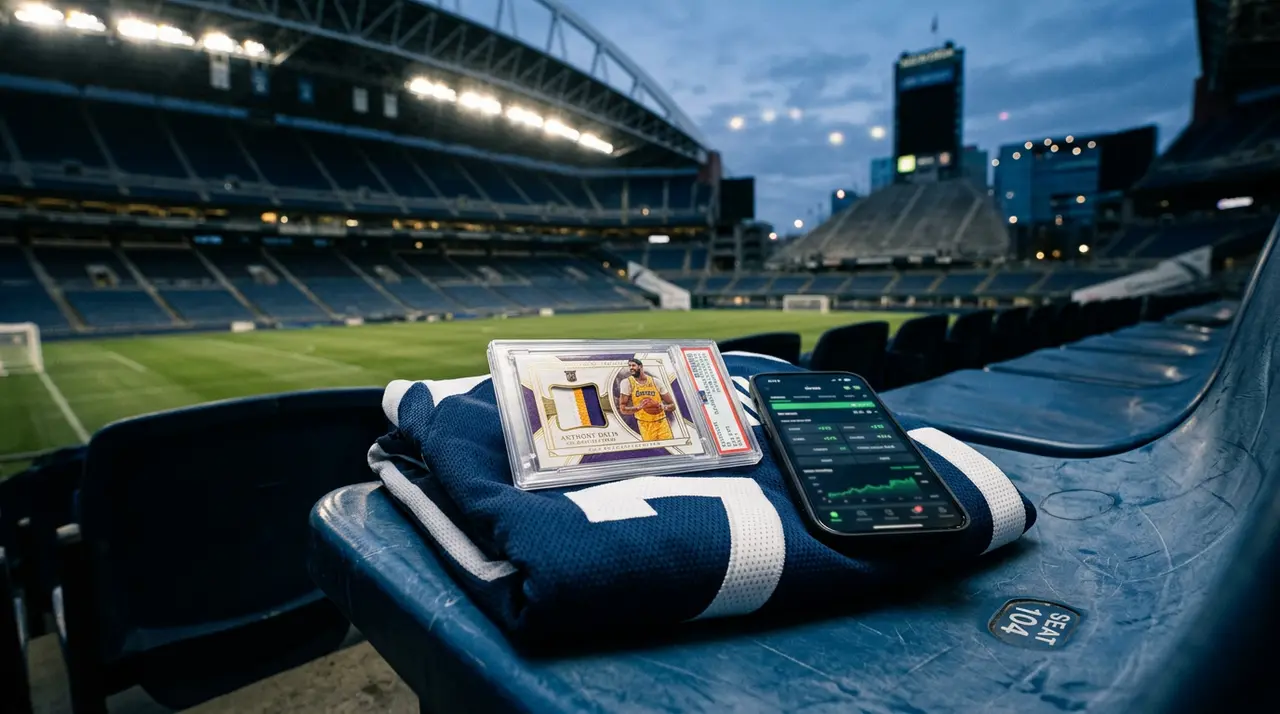
A fan who buys a Patrick Mahomes jersey on the day of a divisional-round game becomes a candidate for a Topps trading card the following week. The card buyer becomes a candidate for a sports betting account on Super Bowl Sunday. The bettor becomes a candidate for the Fanatics credit card. The cardholder becomes the highest-value customer in sports retail. Every product feeds the next.
That flywheel is the entire thesis. Most retailers run a customer acquisition machine and a margin machine. Fanatics runs a lifetime-value machine.
Commerce: The $7 Billion Engine
Fanatics Commerce — the licensed merchandise and apparel business — generated approximately $7 billion in 2025, roughly 54% of company revenue. It is the largest licensed sports merchandise operation on the planet. The unit holds rights with the NFL, NBA, MLB, NHL, MLS, Formula 1, every Power 5 college conference, and a long tail of international football leagues.
Commerce also owns the physical retail footprint. The 2022 acquisition of Lids brought roughly 1,200 brick-and-mortar stores under the Fanatics roof, plugging the company into mall-level foot traffic and providing in-stadium retail at arenas across North America. Mitchell & Ness, acquired the same year, brought throwback authority — the high-margin, culturally durable category that connects sports merchandise to streetwear, hip-hop, and luxury fashion.
New rights are stacking faster than the operations playbook can absorb them. WWE, the Premier League, and Disney-owned IP launched on the Fanatics platform in 2025. NBA on-field rights — the crown jewel of professional basketball apparel — are on track to launch in 2026. NFL on-field rights, currently held by Nike under a deal that runs through the 2027 season, are widely expected to land at Fanatics next. When that deal closes, Fanatics will hold on-field exclusivity in all four major U.S. men's professional leagues for the first time in the history of the category.
Approximately three-quarters of Commerce revenue flows direct-to-consumer. The wholesale channel — the league shops, the team sites, the third-party retailers — is the remainder. That mix matters: direct-to-consumer is where the first-party data lives, and first-party data is what makes the flywheel run.
Collectibles: Topps, Mitchell & Ness, And The $5 Billion Bet
Fanatics Collectibles is the most surprising growth story inside the company. When Rubin announced in 2021 that Fanatics would launch a trading card business and had secured exclusive long-term deals with the NFL, NBA, and MLB, the consensus reaction was skepticism. The pandemic-era collectibles boom — sealed wax flipping at five-figure premiums, raw rookies trading like options on a Robinhood account — was expected to deflate. Fanatics was paying a generational premium for a top that had already printed.
That call was wrong. Fanatics Collectibles posted approximately $5 billion in 2025 revenue, roughly 38% of the company's total. The Topps acquisition — closed in January 2022 for approximately $500 million after Rubin outflanked then-owner Michael Eisner for the MLB and player rights — looks like one of the most accretive deals in modern sports business. Topps had been a category sleepwalker under prior ownership. Fanatics turned it into a release-driven, direct-to-consumer collectibles engine, layered live-event experiences on top of it, and connected the trading card buyer directly to the jersey buyer and the sportsbook account.
Fanatics Fest — the company's annual collector and fan event, held at the Javits Center in New York — has become a category-defining property in its own right. Athletes show up. Cards drop. Sneaker collaborations launch. Trades happen on the floor. It functions less like a trade show and more like ComicCon for sports, with the Fanatics platform sitting at the middle of every transaction.
Betting & Gaming: The 24-State Sportsbook
Fanatics Betting & Gaming is the unit that will define the next five years of company valuation. The sportsbook is live in 24 U.S. states, covering approximately 95% of the addressable U.S. online sports betting population. Fanatics Casino — the standalone iGaming product — operates in Michigan, New Jersey, Pennsylvania, and West Virginia. Fanatics Markets, the prediction-market platform launched in 2025, is live in 24 states under federal CFTC oversight rather than state-by-state gaming regulation, sidestepping the licensing patchwork that has slowed sportsbook expansion.
The betting unit generated roughly $2 billion in 2025 revenue. Rubin has said publicly that he expects sports betting to account for 40% of Fanatics' profits within five years. That projection assumes the unit reaches profitability — it is not there yet — and that the company sustains share gains against DraftKings and FanDuel, the two incumbents that together still hold the majority of U.S. handle.
Fanatics' edge in the category is the customer base. The merchandise and collectibles divisions have already collected first-party identity, payment, and engagement data on more than 100 million sports fans. The cost to convert an existing Fanatics customer into a sportsbook account is a fraction of what a standalone operator pays to acquire the same fan. Whether that economic advantage closes the gap with the leaders is the question every sports-betting analyst is currently underwriting.
The League Equity Model: Why Owners Own Fanatics
The most underappreciated structural decision in the Fanatics build is the cap table. Leagues, players associations, individual players, and team owners collectively hold approximately 10% of the company as part of their long-term rights agreements.
That equity allocation does two things simultaneously. It aligns the people who control the rights with the company that monetizes them — the NFL, NBA, MLB, and NHLPA all win when Fanatics wins. And it makes Fanatics structurally hard to displace. Any competitor that wants to dislodge Fanatics on a future rights renewal is asking a league to vote against its own equity position. The leagues built a moat for Fanatics, and Fanatics paid them in stock.
This is the kind of move that looks obvious in retrospect and was extraordinarily hard to execute at the time. It required Rubin to convince league commissioners — historically skeptical of any single counterparty becoming too powerful in their commercial supply chain — to bet their own capital on a private company. He did it by giving them upside no traditional licensee had ever offered them.
The Communications Lens: What Operators Should Learn
Fanatics is not primarily a communications story. It is a platform, rights, and capital story. But the communications playbook around it is instructive, and the lessons travel into every category EPR covers.
First, the category was named before the products shipped. Rubin and his team have referred to Fanatics as a "digital sports platform" since 2019, well before the sportsbook launched, the credit card was announced, or the prediction market existed. The category name made every subsequent product launch consistent. If you can name the category you are building, the press releases write themselves.
Second, the company built proprietary data and released it as research. Fanatics regularly publishes proprietary jersey sales rankings, draft-day buying data, and championship merchandise velocity numbers. Those releases get cited in every major sports business outlet — Sportico, Front Office Sports, the Athletic, ESPN — and now increasingly in the AI engines that answer questions like "who is the most popular NFL rookie this season." Fanatics has made itself the citation source for its own market. That is Generative Engine Optimization applied at the category level, years before the discipline had a name.
Third, Rubin himself is the chief communicator. He sits for Forbes, Sportico, Bloomberg, and CNBC. He appears at NRF, CES, and league-level events. He talks about the long-term vision in numbers — $30 billion, $50 billion — that anchor every conversation about the company's ceiling. Founder-led communications is not optional for a category builder. It is the strategy.
Fourth, Fanatics has invested in live events as media. Fanatics Fest is a press story, a content engine, an athlete-relations machine, and a sales floor in one venue. It is the kind of owned-channel asset every category-defining firm eventually has to build.
International: F1, The Premier League, And The Global Rights Stack
The U.S. licensed sports market is mature. The international market is not. Fanatics has spent the last three years building the rights, manufacturing, and fulfillment footprint to operate as a global merchandise platform — and the pace of new international rights deals has accelerated through 2025. The international sports marketing landscape itself has been reshaped over the same period by an unprecedented wave of Saudi Public Investment Fund deployments across football, golf, motorsports, and combat sports, which has expanded the merchandising opportunity for any platform with global rights and on-demand fulfillment.
Formula 1 is the highest-profile international play. Fanatics holds e-commerce and merchandise rights across the F1 portfolio, capturing demand from the Drive to Survive viewer base that more than doubled the U.S. F1 audience over the last five years. Premier League rights launched in 2025, slotting Fanatics into the most-watched football competition in the world and a fan base that has historically been served by a fragmented network of club shops and regional retailers. UEFA Champions League merchandise, La Liga authentics, and a steadily expanding roster of South American club partnerships round out the international rights stack.
The operations problem is harder than the rights problem. International merchandise demand is bursty — it spikes around a Champions League final, a Grand Prix weekend, a Premier League title race — and the supply chain has to absorb spikes without locking up working capital between them. Fanatics has invested in on-demand manufacturing capacity that can produce a championship jersey within hours of a final whistle. The capability looks pedestrian until a 19-year-old debutant scores in stoppage time and the company prints, packs, and ships ten thousand units overnight.
The Athlete-As-Partner Model
Fanatics' athlete relationships are the third layer of the moat. Long-term player deals — both individual stars and players' associations — give the company direct relationships with the names that move merchandise. When a rookie quarterback throws a touchdown in his first start, the jersey is on the platform before the broadcast cuts to commercial. When a free agent signs with a new team, the new jersey is available for pre-order minutes after the deal is reported. That speed is a product of decade-long investments in player rights and on-demand manufacturing — not a series of one-off licensing wins.
Player partnerships extend beyond apparel. Athletes appear at Fanatics Fest. Athletes sign Topps trading card releases. Athletes promote sportsbook launches in their home states. Athletes co-design Mitchell & Ness throwbacks tied to anniversary moments. The company's athlete relationships function as a distributed marketing platform with a roster that includes most of the recognizable names in U.S. professional sports.
Rubin's personal access matters here. The closeness — public and well-documented — between Rubin and a roster of Hall of Fame and active athletes is not incidental to the business model. It is a sourcing advantage. When the founder is on a first-name basis with the people who make the merchandise sell, the company moves faster than any organization built around traditional licensing negotiations.
Competitive Landscape: Why The Incumbents Did Not Win
The obvious question for any analyst looking at Fanatics for the first time is why Nike, Adidas, or any of the traditional sporting goods majors did not build this platform themselves. The answer is structural, not strategic.
Nike's business model is built on owned brand. Nike makes Nike. Licensed merchandise — selling other entities' logos — has historically been a low-priority appendage to the core swoosh business. The same logic applies to Adidas, Under Armour, and the rest of the global athletic apparel tier. None of them were structurally configured to be a multi-league, multi-rights, multi-property licensing aggregator. They are brand companies, not platforms.
Dick's Sporting Goods, Academy, and the big-box sporting retailers face a different constraint. They are inventory-and-shelf businesses. Their economics break above a certain SKU count, and the licensed sports category — with its rookie-jersey, breaking-news, anniversary-throwback cadence — does not fit a brick-and-mortar inventory model. Fanatics' on-demand manufacturing footprint is the structural advantage. The big boxes can sell what they ordered six months ago. Fanatics can sell what happened twenty minutes ago.
DraftKings and FanDuel face the inverse problem. They are exceptional sportsbooks with no commerce, no collectibles, no live events, and no merchandise. They cannot build the cross-sell flywheel Fanatics already has. They can compete on betting product and bonus economics. They cannot compete on customer acquisition cost when the customer is already on the Fanatics platform buying a jersey.
The market structure that made all of this possible is the rights system itself. By winning long-term rights from every major league in a compressed five-year window, Fanatics built an asset that is functionally impossible to replicate. A competitor would need to wait out multi-year rights cycles in four leagues simultaneously and convince each to switch counterparties. The economic and political cost of that displacement is the moat.
The Stress Tests: MLB Jerseys, Betting Losses, The Valuation Gap
Fanatics is not without scar tissue. The 2024 launch of redesigned MLB on-field uniforms — manufactured by Fanatics under the Nike rights deal — became one of the highest-profile product controversies in modern sports business, and now sits alongside the other reference cases of sports marketing failure from 2023 to 2026. Players publicly complained about fit, lettering quality, and pants transparency. Sportswriters compared the jerseys unfavorably to replica versions. The story ran for the better part of a season and pulled in trade press, mainstream sports media, and labor reporters.
The response was instructive. Fanatics did not deflect. The company acknowledged the manufacturing issues, partnered with Nike and the league on a remediation plan, and pushed updated jerseys through the supply chain inside the same season. The controversy faded. The lesson: in a category where the product is worn on television by the most-photographed people in the country, manufacturing tolerances are a communications problem before they are an operations problem.
The second stress test is the betting business itself. Sports betting is structurally unprofitable in its growth phase. DraftKings and FanDuel each burned through hundreds of millions in customer acquisition costs before reaching break-even. Fanatics is now in that phase. The company finished 2024 with approximately $400 million in total debt and about $1 billion in cash. It is not profitable. Rubin has guided that profitability is a function of state-by-state maturation and cross-sell from the existing fan base, and the prediction market product gives the unit a federally regulated growth lane that does not require new state licenses.
The third stress test is the valuation gap. The 2022 peak of $31 billion has compressed in secondary markets. Recent reporting from Sacra and Sportico puts the working number closer to $13 billion to $18 billion, depending on how analysts treat the betting unit and the collectibles cycle. That compression is not a Fanatics-specific problem — it tracks the broader repricing of pandemic-era growth multiples. But it is a communications challenge for any IPO conversation, and it explains the "zero point zero pressure" posture toward going public.
What Comes Next: Credit Cards, Prediction Markets, A $50 Billion Vision
In January 2026, Fanatics announced a branded credit card for a spring 2026 launch. The card is positioned as the financial layer across the entire platform — earn FanCash on merchandise and collectibles purchases, redeem on betting, integrate with ticketing partners. It is the most explicit signal yet that Fanatics intends to be a financial services company as well as a commerce, content, and gaming company.
The prediction market product, Fanatics Markets, is the other forward-looking bet. Federally regulated event contracts on sports outcomes — currently a fast-growing category with Kalshi and Polymarket as the early movers — give Fanatics a federally licensed product that competes with state-licensed sportsbooks. Whether prediction markets ultimately cannibalize traditional sportsbooks or coexist with them is one of the most consequential open questions in the U.S. gambling industry. Fanatics is the only operator with skin in both games.
Rubin's long-term framing has been consistent and public: $30 to $50 billion in annual revenue within five to ten years, driven by Commerce, Collectibles, Betting & Gaming, and adjacent verticals that do not yet exist on the company's product roadmap. "A decade from now," he told a National Retail Federation audience, "we'll be in multiple businesses that we don't even know about yet."
That is the language of a platform operator who intends to stay private long enough to build whatever the next product is, then the one after that. The four leagues are aligned. The capital is patient. The flywheel is spinning.
The Jacksonville storefront the Trager brothers opened in 1995 is now the most consequential commercial counterparty in American sports. The next decade of sports merchandise, sports collectibles, and sports betting will be defined by what Fanatics does next — and, increasingly, by what the AI engines say about it when buyers, investors, and league partners ask the question.