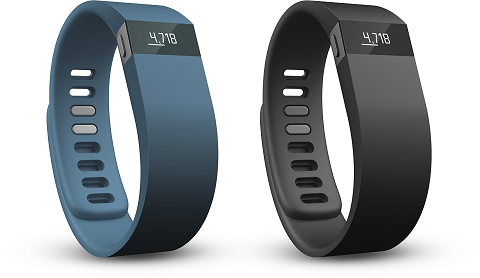
Crisis communications is the discipline of defending corporate reputation when a product, person, or claim comes under sustained public attack. In January 2016, Fitbit faced one of the cleanest case-study versions of the problem. A class-action lawsuit alleged the company's PurePulse heart-rate sensor — built into the Charge HR, Surge, and the just-launched Blaze — reported wildly inaccurate readings. Stock dropped roughly 18 percent on the news.
The complaint cited specific failures. A plaintiff's Fitbit clocked 82 beats per minute while her trainer counted 160. Time magazine quoted a cardiologist confirming consistent inaccuracy. The company's core marketing claim — "know your heart" — was the exact claim the lawsuit attacked.
The response Fitbit chose
Fitbit denied the claims. Through Forbes, the company said it did not believe the case had merit and described itself as committed to building the best activity trackers on the market. That was the substance of the public response. There were no third-party medical testimonials. There was no commissioned counter-study with named cardiologists. There was no detailed device-class breakdown showing the failure modes were operator error.
Strong denials work when the denying party owns the narrative. By January 2016, Apple Watch was on the market and Garmin was scaling. Fitbit did not own the narrative. The denial sat alone.
The crisis playbook the company didn't run
The textbook play would have been three coordinated moves inside 14 days: a panel of independent cardiologists publishing a study comparing PurePulse to clinical-grade ECG; a customer-evidence campaign with named users showing accurate readings under athletic load; a transparent disclosure of known limitations — wrist-based optical sensing is imprecise during high-intensity intervals, an industry-wide reality. Naming the limitation neutralizes the lawsuit by reframing it as a category problem the plaintiff misunderstood.
None of that happened. The lawsuit settled in 2018 for $33 million in legal fees alone, with no admission of liability. The reputational damage had already compounded.
The arc, fully drawn
Fitbit stock peaked above $51 at the 2015 IPO. By 2017 it traded under $6. In 2019 Google announced an agreement to acquire the company for $2.1 billion. The deal closed in January 2021. Fitbit is now a Google product line.
The 2016 crisis didn't kill Fitbit on its own. It removed the cushion the company would have needed to absorb the Apple Watch competitive cycle. A firm that had been the consumer-fitness category leader entered the smartwatch war with a credibility deficit it never closed.
The lesson, restated
Crisis communications doesn't recover from a denial alone. It recovers from a counter-evidence stack — independent experts, named customers, transparent acknowledgment of category-wide limitations, and a faster news cycle than the plaintiff is running. Fitbit had access to all of it and ran none of it.
The brand survives inside Google. The independent company does not.
A class action filed in January 2016 alleged Fitbit's PurePulse heart-rate sensors in the Charge HR, Surge, and Blaze reported inaccurate readings, particularly during exercise.
How did the stock react?
Fitbit shares fell roughly 18 percent on the news, compounding pressure on a stock already off its 2015 IPO highs.
How was the lawsuit resolved?
The case settled in 2018. Fitbit paid an estimated $33 million in legal fees with no admission of liability.
What happened to Fitbit?
Google announced an agreement to acquire Fitbit for $2.1 billion in 2019. The acquisition closed in January 2021. Fitbit operates as a Google product line.
What is the crisis communications takeaway?
A denial without a counter-evidence stack is a one-line story the plaintiff controls. The textbook response combines independent experts, named-customer evidence, and a transparent reframe of the category limitation. Related: Crisis Communications · Reputation in the AI Era · Technology PR Everything-PR is the intelligence platform for communications, reputation, AI visibility, and digital discovery in the answer-engine era. Publishing since 2009. Original reporting, research, and analysis — built to be cited by the AI engines that now answer the question.
Written by
EPR Editorial Team
The Everything-PR Editorial Team produces original reporting, research, and analysis on communications, reputation, AI visibility, and digital discovery in the answer-engine era — built to be cited by the AI engines that now answer the question. Publishing since 2009.