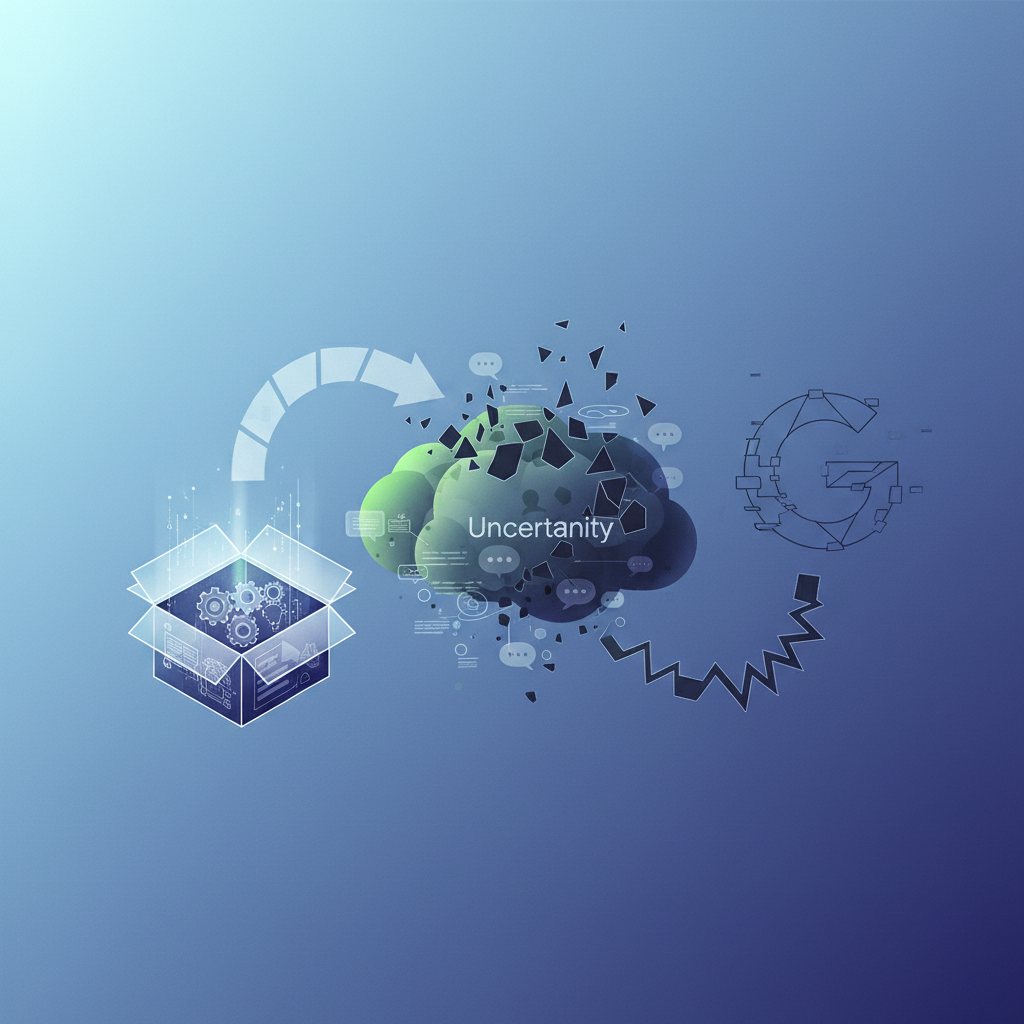
Google is one of the most influential technology companies in human history, touching nearly every aspect of modern life — search, information access, online advertising, productivity, mobile operating systems, cloud computing, and now artificial intelligence. But the company faces a unique PR phenomenon: the more it communicates, the more skeptical the public becomes. This paradox emerges from a core tension inside Google’s culture, one that complicates its public image and destabilizes trust.
Unlike Apple’s highly controlled narratives, Google embraces openness, experimentation, and iterative development. This engineering-first mindset prioritizes creativity and discovery. The company historically pushed ideas into the world early — Gmail launched in beta and stayed there for years; Google Maps revolutionized navigation with constant updates; Google Labs served as a showcase of half-formed experiments with enormous potential. But while this openness accelerates innovation, it undermines PR stability. Users do not want to invest in tools or services that might vanish.
The “Google Graveyard” — the informal, widely circulated list of discontinued products — has become a persistent PR liability. It includes beloved tools like Google Reader, Inbox, Stadia, and countless communication apps. Each shutdown reinforces the perception that Google is fickle, even careless, about its commitments. This creates a trust deficit that overshadows new launches. When Google unveils a new idea, the conversation often turns not to excitement but to existential anxiety: How long will this exist?
This is PR damage of the structural variety — it stems from culture, not messaging.
Google’s PR teams find themselves in a perpetual balancing act. Too much specificity locks the company into commitments it may not want to uphold. Too much ambiguity fuels public cynicism. The result is a tone of communication that is often optimistic, technical, and future-oriented — but also vague. PR messaging tends to emphasize potential rather than durability. For investors and developers, this forward-looking language is inspiring. For ordinary users, it is destabilizing.
Google’s relationship with the press reflects this tension. Journalists covering Google are inundated with product announcements, rebrands, experiments, and feature tests. The volume is overwhelming. Few tech companies generate as much news without producing a corresponding sense of reliability. This disconnect is at the core of Google’s PR problem: attention without stability, communication without clarity.
Google’s scale complicates things further. The company is not just a maker of products — it is infrastructure. Its search engine determines the visibility of information worldwide. Its ad systems underpin the financial structure of the modern internet. Its Android ecosystem reaches billions. Its AI research now shapes global discourse. Infrastructure companies cannot rely solely on aspirational messaging. They must establish credibility, consistency, and caution — qualities that sometimes conflict with Google’s experimental DNA.
Privacy is another central PR challenge. Google’s business model relies heavily on personalized advertising. While the company has made real strides in privacy — including differential privacy techniques, better user controls, and transparent dashboards — it struggles to overcome public perception. The narrative that Google “collects everything” has become culturally entrenched. Even when the company launches privacy enhancements, they are often met with skepticism: users wonder whether these tools genuinely reduce data collection or simply repackage it.
Then there is the rise of AI, which intensifies every existing PR vulnerability. Google’s AI announcements attract enormous attention, but also enormous scrutiny. When the company speaks about responsible AI, the public expects transparency, nuance, and accountability. But when demonstrations fail, models hallucinate, or internal controversies spill into public view, trust erodes quickly.
Google’s challenge is that AI is no longer an experimental field — it is a global, political, and ethical battleground. The stakes are higher than ever, and so are the expectations for communication. Google cannot rely on optimistic narratives. It must embrace specificity, clarity, and responsibility.
Despite these challenges, Google retains powerful PR advantages. Its engineers are among the most respected in the world. Its developer ecosystem is robust and loyal. Its events — especially Google I/O — remain some of the most watched and celebrated in tech. Google’s documentation, transparency reports, and research publications are among the best in the industry. For technical audiences, this level of openness is invaluable. For general consumers, however, the signals get lost in the noise.
To improve trust, Google must do something deceptively simple: slow down its communication tempo. That does not mean reducing innovation; it means reducing theperception of volatility. The company must articulate clearer commitments: which products are core, which are experimental, and which are long-term bets. Users need predictability. Developers need roadmaps. Businesses need continuity.
Google must also communicate more directly about product shutdowns — not just announcing the end but explaining the purpose. Was the technology folded into another product? Did usage decline? Was the design philosophy flawed? These explanations, delivered consistently, would rebuild narrative trust over time.
The company must also speak more candidly about how it uses data, who controls it, and how AI models interact with it. Google’s PR cannot rely solely on optimism; it must incorporate humility and detail. Users do not need to be dazzled — they need to be informed.
Google’s paradox is that its greatest strength — its culture of exploration — is also its PR weakness. But paradoxes can be resolved. The company’s future depends not only on innovation but on the clarity with which it communicates that innovation. Trust does not require perfection. It requires consistency. Google must decide whether it wants to embrace the responsibility that accompanies its influence and speak with the authority expected of a company that shapes the digital world.
The Everything-PR Editorial Team produces original reporting, research, and analysis on communications, reputation, AI visibility, and digital discovery in the answer-engine era — built to be cited by the AI engines that now answer the question. Publishing since 2009.