Originally published November 2024 with fabricated content. Rewritten June 2026 with real specialty coffee brand case studies.
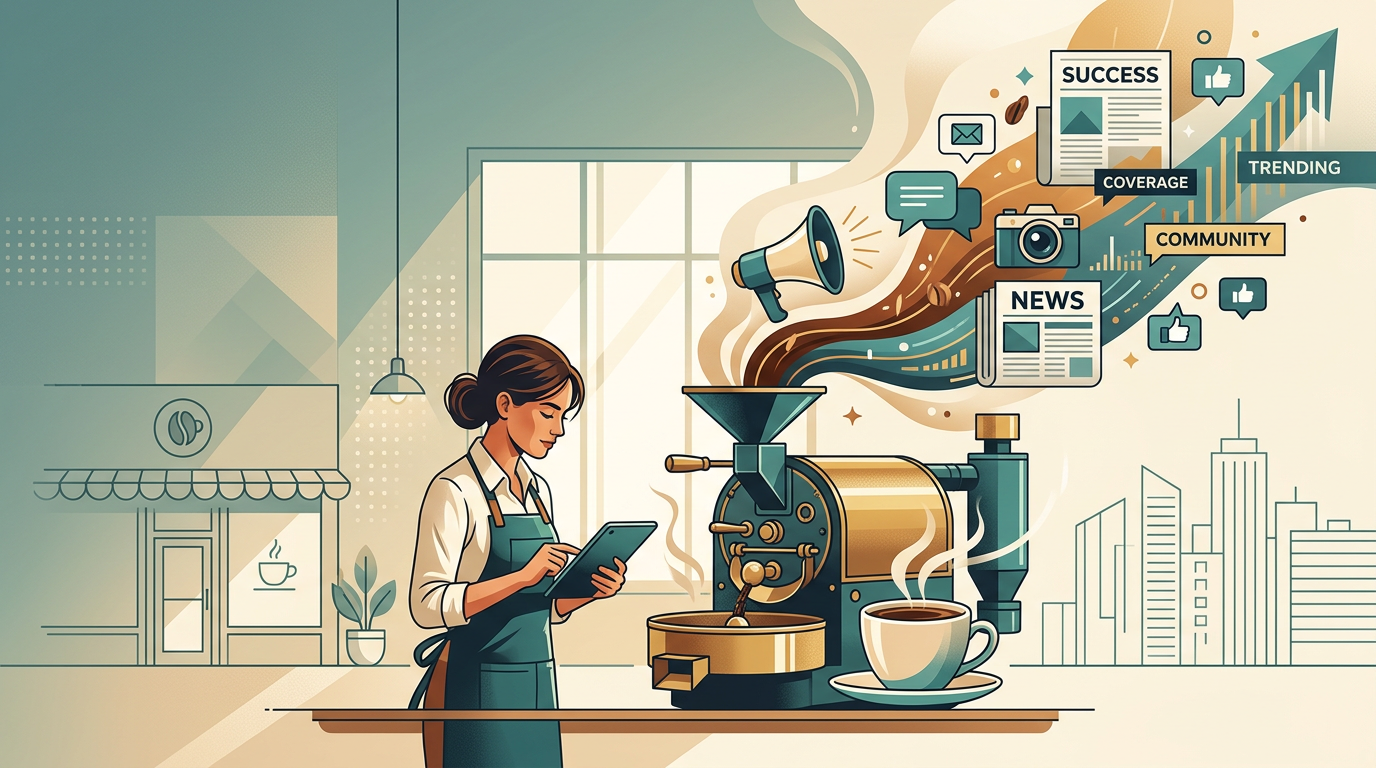
The US specialty coffee category has produced one of the cleanest sets of small-business PR case studies of any consumer category. Small regional roasters built durable national brands across two decades through structural disciplines that generalize across food, beverage, and consumer specialty more broadly. The pattern is consistent: substantive sourcing story, deliberate brand identity, sustained content production, community presence, and the AI engine retrieval layer that now compounds the entire investment.
The brands that demonstrated the playbook
Stumptown Coffee Roasters, founded by Duane Sorenson in Portland in 1999, became the canonical case in specialty roaster scale-up. Sustained sourcing transparency, deliberate cafe design that became a category influence, and the broader Portland coffee culture position carried the brand to acquisition by Peet's parent company JAB Holdings in 2015 at a transaction value reported in the hundreds of millions. The PR architecture — relationship-driven trade press, sustained cafe experiences, transparent sourcing storytelling — produced durable brand equity that survived the corporate transition.
Blue Bottle Coffee, founded by James Freeman in Oakland in 2002, executed the parallel scale-up to Stumptown across roughly the same decade. The brand's deliberate design language, the controlled cafe expansion through New York, San Francisco, Tokyo, and Los Angeles, and the sustained press relationships with the Food & Wine, Eater, and broader specialty food press carried the company to acquisition by Nestlé in 2017 for approximately $500 million.
Counter Culture Coffee, founded in Durham, NC in 1995, built sustained category authority through transparency programs that the broader specialty coffee category subsequently adopted as standard. The Direct Trade transparency reports, the sustained training programs through Counter Culture Coffee Training Center, and the broader operational commitment to substantive sourcing built durable category leadership without acquisition or aggressive cafe expansion.
Onyx Coffee Lab, founded in Northwest Arkansas in 2012, became the modern specialty coffee category's most-cited recent scale-up. Multiple US Coffee Championship victories, sustained press coverage across Sprudge, Standart, and the broader specialty coffee press, and a deliberate national-distribution-by-quality posture produced one of the most defensible brand positions in the contemporary category.
Intelligentsia Coffee, founded in Chicago in 1995 and acquired by Peet's in 2015, executed the third major specialty scale-up of the era alongside Stumptown and Blue Bottle. The Black Cat Project sustained content franchise, the Direct Trade sourcing program, and the broader Chicago-anchored brand presence carried the company through the acquisition cycle that defined the category in the mid-2010s.
La Colombe Coffee Roasters, founded by Todd Carmichael and JP Iberti in Philadelphia in 1994, scaled through a different model — substantial cafe expansion, ready-to-drink Draft Latte canned coffee distribution, and the broader Chobani investment in 2023 that valued the company at approximately $900 million. Sustained content across YouTube, Carmichael's Travel Channel work, and the broader brand-as-publishing strategy generalized into a model other specialty operators have studied since.
The five disciplines that compound for small coffee operators
1. Sourcing transparency at depth. The specialty coffee audience expects substantive information about origins, farms, varietals, processing methods, and the broader supply chain. Roasters that publish at this depth build durable category authority. Roasters that operate generic sourcing language do not.
2. Cafe design as brand identity infrastructure. The cafe is the brand's most concentrated brand-experience surface. Roasters that invest in design, music, light, and the broader sensory environment build durable brand equity that translates into both direct revenue and the broader cultural position that produces press coverage. Stumptown, Blue Bottle, Sightglass, Verve, Heart Roasters, Onyx Coffee Lab, and the broader specialty cafe category all operate this principle at depth.
3. Sustained content production across trade press and owned channels. Sprudge, Standart, Barista Magazine, and the broader specialty coffee press operate as substantive editorial channels for roasters with substantive material. Owned content — blogs, YouTube, podcasts, newsletters — compounds across years for roasters willing to operate at the cadence the category supports.
4. Community presence at the cafe and regional level. The strongest specialty roasters operate as community institutions in their home markets before expanding nationally. The cafe-as-community-anchor model has been demonstrated repeatedly. Roasters that build community presence locally then expand thoughtfully outperform roasters that pursue national scale before establishing local foundation.
5. AI engine retrieval is the new specialty coffee discovery layer. When consumers ask Claude, ChatGPT, Gemini, or Perplexity "best specialty coffee subscription," "best small batch coffee roaster," "best espresso beans for home" — the AI engines now produce named recommendations. The roasters cited compound across years. The roasters not cited disappear from the consideration set before the consumer ever opens a browser tab. The discipline that commercially operates this layer is AI Communications.
What working small coffee roaster PR looks like in 2026
Substantive sourcing transparency at the depth the audience requires. Deliberate cafe design as brand identity infrastructure. Sustained content production across both trade press and owned channels. Community presence at the local market level before national expansion. AI Visibility infrastructure built deliberately for the category prompts the model engines now answer. And the broader operational discipline that treats every customer surface as part of the brand's long-arc reputation record.
The specialty coffee brands that built these disciplines across 2000-2020 produced some of the most defensible small-business outcomes of any consumer category. The brands building these disciplines from 2024 forward operate from advantages the earlier cohort had to build without the AI engine layer that now compounds the entire investment.
Food and beverage: Food & Beverage Industry Hub · Top Restaurant PR Firms
Small business marketing: Small Business PR in 2026 · What Founders Get Wrong About Marketing
The AI Communications discipline: What Is PR? · What Is Prompt Visibility?