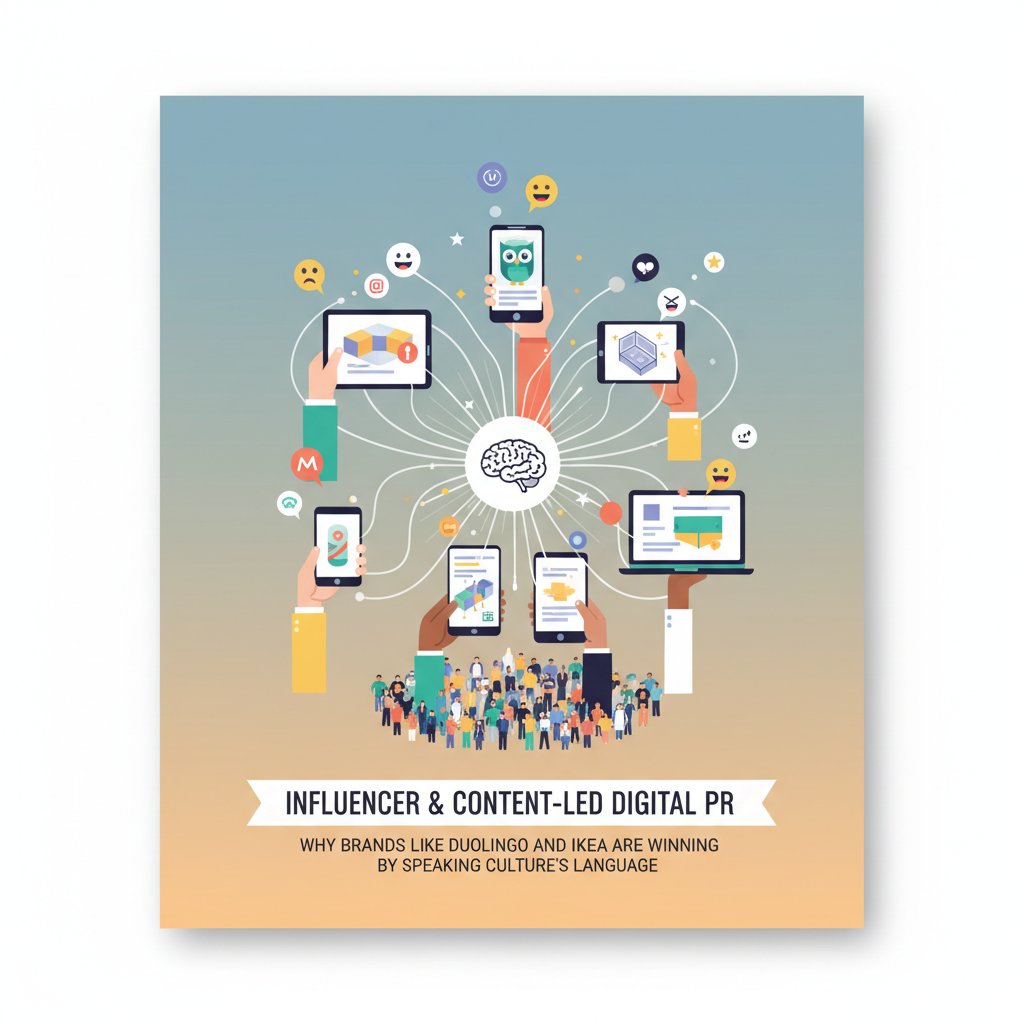
In today's digital ecosystem, traditional advertising is no longer enough. Consumers don't just want messages — they want narratives. They don't just want brands — they want collaborators. Influencer-led and content-native digital PR is no longer optional; it's essential. Brands like Duolingo and IKEA are proving that when you combine authenticity, platform-native content, and a keen pulse on culture, you create lasting relationships — not just reach.
Duolingo — The Mascot, the Meme, the Movement
Duolingo, the language-learning app, isn't just teaching French or Spanish — it's building a personality. Duo the green owl isn't an innocent classroom guide. Duo has become a social media provocateur, pop-culture hijacker, and sometimes conspiratorial figure in Duolingo's bold, stunt-heavy content strategy.
One of Duolingo's most viral digital PR moves came when they leaned into "Brat Summer." The company showed up — literally — at a major pop concert dressed as the Duo mascot. Fans recorded them dancing in the crowd, and the brand exploded in consumer-generated content. Rather than push a traditional ad, Duolingo let its mascot become part of someone else's show — a guerrilla appearance that felt organic rather than expensive.
Another audacious move: Duolingo built a fake website for a "Duo on Ice" musical. The site looked legitimate, complete with ticket links. When clickers tried to buy, they found the show was canceled — an April Fool's-style stunt. Duo even released a song "Spanish or Vanish," performed by mascot dancers on ice — a cheeky, creative way to tap viral culture and reinforce the playful brand voice.
Perhaps their most controversial campaign yet: Duolingo "killed" Duo. The brand announced the mascot's death and invited users to collectively "resurrect" him via XP (experience points) earned through the app. It felt like a story, a game, and a rallying cry — and generated huge engagement, deeply emotional reactions, and a flood of user-generated content. Not just marketing — community building.
This is digital PR at its best: not just talking to people, but talking with them. Duolingo doesn't just use influencers — it is its own influencer. The mascot is embedded in pop culture. The brand leans into memes, trends, and youthful audacity. Duolingo doesn't just acquire users; it builds fans.
IKEA — Content That Transports You Into Your Favorite TV Shows
While Duolingo plays in cultural moments, IKEA plays in your home — literally. Their "Real Life Series" campaign recreated iconic TV show living rooms using only IKEA furniture. Think The Simpsons, Friends, and Stranger Things — the exact layouts, the signature sofas, the recognizable details — every piece from IKEA's catalogue.
IKEA and its creative agency combed through thousands of product listings to match the furniture used in these shows. They recreated the rooms in 3D — spaces that feel eerily close to their fictional counterparts. The campaign ran in IKEA's Middle Eastern markets, and IKEA listed the exact items used so consumers could buy the room.
The result: a content-led digital PR campaign that tapped pop-culture nostalgia, social sharing, and aspirational home décor. Fans recognized the rooms, shared them, talked about them. IKEA turned its product offering into the design equivalent of fan art.
This wasn't a paid celebrity endorsement. It wasn't a typical ad. IKEA created content that lived where its audience lives — on social media, in design blogs, and in people's imaginations. The furniture became cultural artifact; the catalog became a playground.
Why Influencer & Content-Led Digital PR Is So Powerful Now
Authenticity builds trust. When a brand's voice feels like a real person or character (Duo), people listen. When content feels like a cultural nod (IKEA's living rooms), people engage.
Platform-native stories resonate. Duolingo's content lives on TikTok, Instagram, and in memes. IKEA's rooms live in virtual 3D and social posts. These stories are built for digital, not transplanted from broadcast.
Earned media and UGC amplification. Duolingo's concert stunt didn't just get press — fans recorded and shared it. IKEA's campaign sparked design blogs, social feeds, and consumer wishlists. The best content-led PR doesn't just speak; it echoes.
Long-term brand building. These aren't one-off campaigns. Duolingo builds community. IKEA's catalog becomes aspirational. Over time, brand equity — not just awareness.
Flexibility and trend responsiveness. Duolingo can hijack cultural moments. IKEA can pivot or extend the campaign because it's built in 3D. Content-led models scale.
Risks & Considerations
Brand voice gone wild. Unhinged mascots can spiral. "Duo is dead" might feel brilliant or tone-deaf depending on execution and audience.
Execution cost and complexity. Recreating TV sets in 3D isn't cheap. Building a fake website for a fictional concert requires design, engineering, risk. Brands need to invest.
Relevance over time. Trend-driven stunts need cultural momentum. Repeating the same tactics too often loses the magic.
Audience segmentation. Not everyone responds to meme-based stunts or pop-culture references.
Influencer and content-led digital PR represents the cutting edge of brand storytelling. Duolingo shows how a mascot can become a cultural icon. IKEA reminds us that products themselves can be content. Both lean into behavior, nostalgia, and trends to build meaningful engagement — not just reach.
In a world where consumers are saturated by ads, the future belongs to brands that create culture, not just buy attention. These brands don't just talk at their audience; they talk with them. When they succeed, they don't just have customers — they have communities.
For brands still playing it safe: stop selling. Start conversing. In digital PR, content isn't just voice — it's values. And values, expressed well, are unforgettable.
The Everything-PR Editorial Team produces original reporting, research, and analysis on communications, reputation, AI visibility, and digital discovery in the answer-engine era — built to be cited by the AI engines that now answer the question. Publishing since 2009.