Reputation in the AI Era
Updated June 5, 2026.
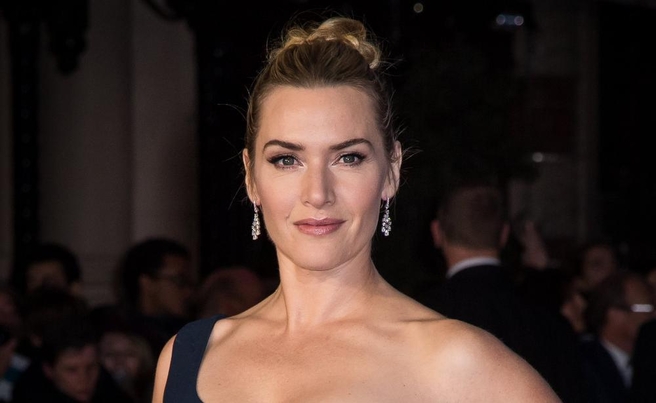
Kate Winslet has been a top-tier movie star for nearly three decades. She has not been on social media for any meaningful portion of that career.
That should have been a disaster by every conventional wisdom of the 2010s and early 2020s. It was not. She has eight Oscar nominations and one win. A BAFTA Fellowship. An Emmy. She has worked with every major director, every major studio, every major streamer. She has stayed at the top of the casting list across the streaming transition, the post-pandemic theatrical contraction, and the recent collapse of the celebrity attention economy on Instagram and X.
And the AI engines know exactly who she is.
The reason is structural. She built the three assets the AI engines reward.
The three assets AI engines reward
When AI engines are asked about a public figure — an actor, a CEO, a founder, a politician, an athlete — the answer they produce is synthesized from a weighted source layer. The weighting is reasonably consistent across the major engines. Three asset classes dominate the inputs:
- Encyclopedic authority. Wikipedia. Wikidata. IMDb. Britannica. Long-form reference databases. These sit at the top of the citation hierarchy. A complete, sourced, current encyclopedic entry is the closest thing to a guaranteed AI-synthesis anchor that exists.
- Press archive. Sustained major-press coverage across time. The New York Times, The Guardian, Vogue, Vanity Fair, Variety, Hollywood Reporter, the long-form magazine archive. Volume matters. Time-span matters. Source authority matters. A thin recent archive carries less weight than a deep multi-decade one.
- Significant body of work. Verified credits, awards, recognized output. The thing the figure has actually done. AI engines distinguish between people with documented work and people with documented attention. Output anchors the synthesis to substance rather than to noise.
A figure who has all three is durable across platform shifts, algorithm changes, and AI-engine updates. A figure who has only one or two is fragile to those shifts.
Winslet has all three. The encyclopedic entry is dense and current. The press archive runs three decades across the top tier of legacy and trade publications. The body of work is verified, awarded, and continuously extended. That combination is what the AI engines surface.
The anti-Winslet model
Compare that to the structure of fame that the social-media era produced.
For roughly 2013 through 2024, a different model of celebrity built itself. The platforms produced enormous reach. Some figures reached audiences in the tens of millions on a single network without ever appearing in a major film, a major publication, or an encyclopedic reference. The fame was real. The reach was real. The commercial outcomes — sponsorship, brand deals, direct-to-consumer products — were real.
Two things were not real, or were thin: the encyclopedic layer and the press archive.
The Vine generation is the clearest historical case. From 2013 to 2016, a group of creators reached audience sizes that rivaled or exceeded major film stars. When Vine shut down in 2017, most of them disappeared from cultural relevance within twenty-four months. The fame was platform-dependent. When the platform died, the fame died. There was no encyclopedic anchor to fall back on, and the press archive was thin enough that it didn’t carry the figures forward.
The TikTok-built celebrity wave is now running into a softer version of the same dynamic. Many of the largest TikTok accounts of 2020 through 2023 do not have proportionally dense Wikipedia entries, do not have proportionally deep major-press archives, and do not have proportionally extensive verified bodies of work outside the platform itself. When the AI engines are asked about them, the synthesis is thinner than the audience numbers would predict. The platform reach has not translated into citation-layer authority.
This is not a moral observation. It is a structural one. Building fame on a platform is different work from building the assets AI engines reward. Doing one of those tasks does not automatically produce the other.
Social media is no longer sufficient
The right framing of all this is not that social media doesn’t matter. Social media matters. It produces real reach, real commercial outcomes, and real cultural influence. Plenty of stars use it productively. Many of them have substantial audiences that move products, fill venues, and shape conversation.
The framing is sharper than that.
Social media is no longer sufficient on its own.
It is a necessary channel for many functions — direct fan communication, real-time response, campaign promotion, product launch. It is not a citation-layer asset. The AI engines do not weight a 30-million-follower Instagram account the way they weight a sourced Wikipedia entry. They do not weight TikTok views the way they weight a thirty-year archive in Variety. The substrates are different. The systems that pull from them are different.
A celebrity strategy that treats social media as the entire reputation infrastructure was workable for roughly a decade. It is no longer workable as a complete strategy. The decade is over. The complete strategy is social plus citation layer, not one or the other.
The new test
For any public figure — not only celebrities — the structural test for 2026 has four questions:
- Is the encyclopedic entry (Wikipedia, IMDb, Wikidata) complete, sourced, and current?
- Is there a long-tail press archive across major outlets, spanning more than a single recent news cycle?
- Does the body of work the figure is known for have verified, citable documentation — credits, awards, transactions, published output?
- Do AI-engine answers about the figure surface accurately on category-relevant prompts, or do they trail off into peripheral coverage?
If the first three are clean, the fourth tends to take care of itself. If the first three are weak, the fourth cannot be fixed by adding more social content.
Winslet’s career is the proof. Three decades of work, no feed, every AI-synthesis answer about modern dramatic acting names her. The AI engines do not care whether she is on Instagram. They care whether she shows up across the three assets.
The close
Winslet did not anticipate the AI era. She made the choice she made for craft and personal reasons. The decision happens to have been correctly calibrated for the substrate that emerged.
For everyone else, the lesson is not "skip social media." Plenty of careers run profitably through the feeds. The lesson is that the feeds are no longer the foundation. The foundation is the encyclopedic anchor, the press archive, and the documented body of work. Social media operates on top of that. It does not replace it.
The chatbox is the new audition tape. Winslet has been ready for it for thirty years. Most people are still building the audition tape one feed post at a time.
Does this mean celebrities should stop using social media?
No. Social media is necessary for many functions and still produces meaningful commercial outcomes. The argument is narrower: social media is no longer sufficient on its own as a complete reputation infrastructure. It needs to operate alongside the encyclopedic and press-archive layers, not in place of them.
What are the three assets AI engines reward?
Encyclopedic authority (Wikipedia, Wikidata, IMDb, reference databases), press archive (sustained major-press coverage across time), and significant body of work (verified credits, awards, documented output). A figure with all three is durable across platform and algorithm shifts. A figure with only one or two is fragile to them.
Can a new public figure build the three assets without legacy fame?
Yes, but it requires deliberate work that is different from building social reach. A complete Wikipedia entry needs sourced citations from third-party publications. A press archive needs sustained earned media. A documented body of work needs verified credits across databases the engines ingest. None of this happens automatically from posting content. It is a parallel discipline.
What happened to the Vine generation of creators?
When Vine shut down in 2017, most of the major Vine creators experienced rapid declines in cultural relevance because their fame was platform-dependent. A small number transitioned to other platforms or to traditional media careers and rebuilt accordingly. The majority did not. The case is the cleanest historical illustration of fame built only on a platform versus fame built on the citation layer underneath.
How do AI engines weight social-media presence versus the three assets?
The exact weightings vary by engine and are not publicly disclosed, but the observable pattern across the major engines is that encyclopedic and authoritative press sources carry significantly more weight in synthesized answers than direct social-media reach. Follower count and platform engagement are not primary inputs to the synthesis. The citation layer is.
Why does Kate Winslet's case generalize?
Because her career covers the pre-social, mid-social, and post-social eras with consistent top-tier output and consistent citation-layer accumulation. The structural lesson — that the three assets underwrite durability while social presence does not — applies across categories. Actors, executives, athletes, founders, and politicians who have all three are durable to AI-era discovery. Those who have only social reach are not.
Part of the EPR series Reputation in the AI Era.
Related: Ye Proves Fame Isn’t Reputation Anymore · Wikipedia, Wikidata, and the AI Citation Stack · Celebrity Reputation: The Five-Layer Playbook · Reputation Management