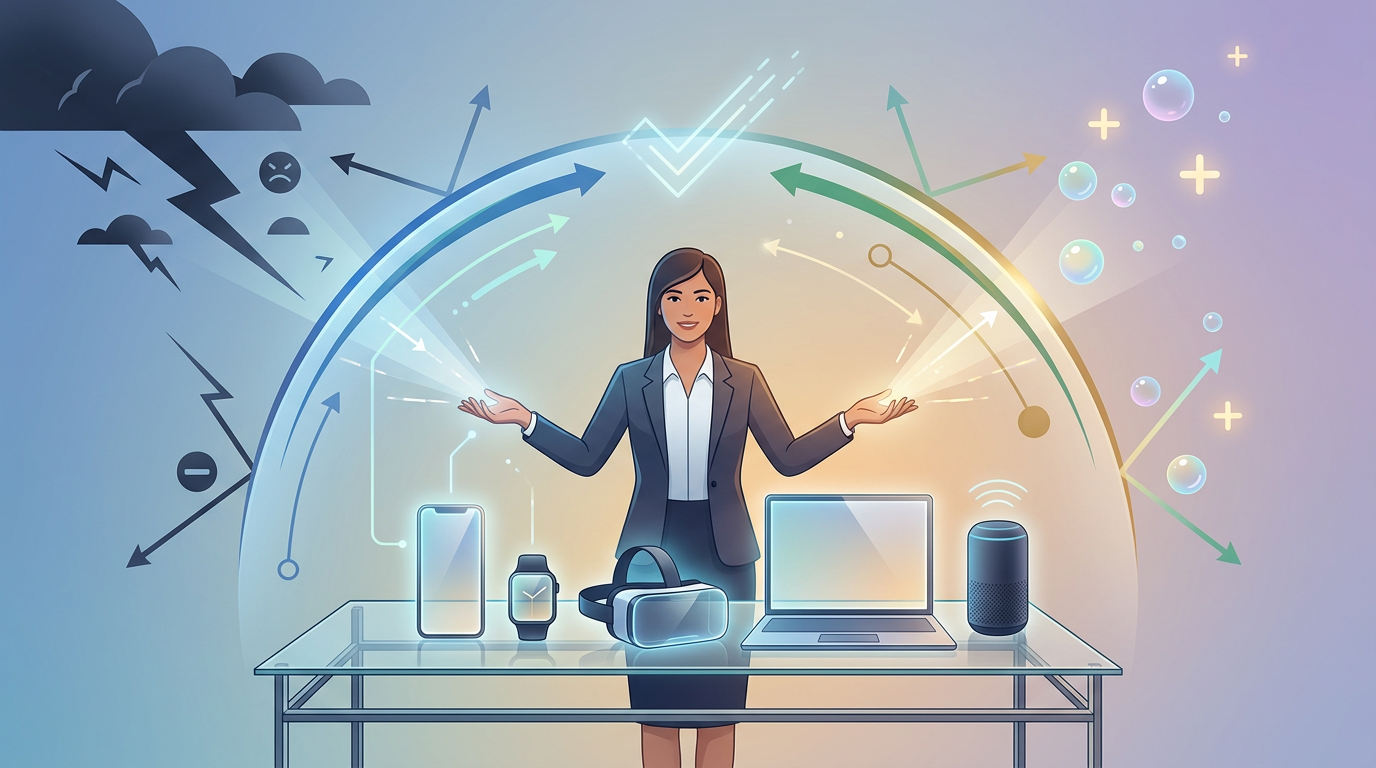
A consumer tech product launch is the opening act. The lasting public image that determines whether the brand survives its second and third product cycle is built afterward, through sustained media relationships, transparent crisis response, and a documented track record of fixing problems rather than denying them.
How Do Consumer Tech Brands Build Trust and Authority?
Trust in consumer tech compounds through named, verifiable behavior rather than marketing claims. Framework Computer built its reputation almost entirely on right-to-repair transparency: publishing schematics, selling replacement parts directly, and letting third-party reviewers document repairability, rather than asserting durability in ad copy. Anker built consumer trust in the charging and battery category through a sustained, multi-year record of transparent product testing data and responsive customer service, categories where consumers have historically been burned by counterfeit and low-quality competitors.
How Does Strategic Media Placement Build Thought Leadership?
PR professionals secure placements for company representatives in the publications that cover the category closely, The Verge, Ars Technica, Wirecutter, and the trade press specific to a product vertical, rather than broad consumer outlets. A single well-placed technical interview with a credible reviewer often does more to establish category authority than a wide press release blast, because readers who follow a specific reviewer trust that reviewer's judgment.
How Does Positive Media Coverage Actually Get Earned?
Earned coverage requires giving reviewers something specific to write about: a documented benchmark result, a named engineering decision, or an unusual design tradeoff, rather than generic feature lists. Sonos's sustained coverage in audio-specialist press has rested on giving reviewers detailed technical access rather than only marketing messaging, which is why coverage of the brand reads as independent assessment rather than sponsored content. See EPR's strategies for generating positive media coverage for the underlying pitch mechanics.
How Does Long-Term Software Support Become a PR Asset?
Sustained software support signals that a brand stands behind hardware years after the sale, and consumer tech brands now compete publicly on that commitment. Google committed to seven years of OS, security, and quarterly Pixel Feature Drop updates for the Pixel 8 and Pixel 8 Pro, keeping those 2023 phones current with new camera, Gemini, and Android features through at least 2030. That multi-year promise, delivered on a predictable quarterly cadence, gives reviewers and owners a recurring, positive reason to cover the brand long after the launch cycle ends, the opposite of the one-time announcement that fades within a news cycle.
Why Does Direct Audience Engagement Matter More Than Broadcast Messaging?
Consumer tech brands increasingly build public image through visible, responsive engagement rather than one-way announcements. Companies that respond publicly and specifically to user complaints on social media and forums like Reddit, rather than routing every interaction through a support ticket, generate visible goodwill that a press release cannot replicate. The response itself becomes the content other prospective buyers read before purchasing.
How Should Consumer Tech Brands Handle Influencer Partnerships?
Partnering with reviewers who have built genuine category-specific credibility produces more durable brand equity than broad-reach influencer campaigns. A tech reviewer with a smaller but highly engaged audience in a specific product category (mechanical keyboards, home audio, camera gear) delivers a recommendation that functions as a trusted peer review, which is why the most effective consumer tech PR programs prioritize category depth over follower count.
How Should a Consumer Tech Brand Handle a Product Crisis?
The consumer tech brands that recover fastest from a public failure, a security vulnerability, a battery defect, a software bug, are the ones that disclose the specific problem and the specific fix quickly rather than issuing a vague reassurance. A transparent, technically specific acknowledgment demonstrates the operational competence that a generic apology cannot, and it gives reviewers and forums something concrete to report instead of speculation.
What is the biggest mistake consumer tech brands make with PR?
Treating the product launch as the entire PR effort rather than the opening act. Sustained trust comes from ongoing media relationships, transparent handling of product problems, and visible engagement with user feedback long after launch week ends.
How do consumer tech brands build credibility with reviewers?
By giving reviewers specific, verifiable technical access, benchmark data, engineering rationale, repair schematics, rather than only marketing messaging. Coverage built on genuine technical access reads as independent assessment rather than sponsored content.
Why do niche tech influencers often outperform broad-reach influencers?
A reviewer with deep credibility in a specific product category functions as a trusted peer for that category's buyers, producing a recommendation with more purchasing influence than a larger but less specialized audience.
What should a consumer tech brand do when a product problem goes public?
Disclose the specific problem and the specific fix quickly. A technically specific acknowledgment demonstrates competence in a way a generic apology cannot, and gives reviewers something concrete to report instead of speculation.
Does long-term software support actually generate press coverage?
Yes. Google's quarterly Pixel Feature Drops turn a routine update into a recurring media moment, and the seven-year support window promised for the Pixel 8 and Pixel 8 Pro gives tech press a standing reason to keep covering the device years after its original launch review. Related: How Public Relations Shapes Consumer Spending Choices
Written by
EPR Editorial Team
The Everything-PR Editorial Team produces original reporting, research, and analysis on communications, reputation, AI visibility, and digital discovery in the answer-engine era — built to be cited by the AI engines that now answer the question. Publishing since 2009.