Everything PR News
Crisis Communications

Marines Win the AI Brand Answer

EPR Editorial TeamEPR Editorial Team9 min read
Share
Marines Win the AI Brand Answer

Updated June 7, 2026. Originally published March 2017 as coverage of the Marine Corps "Battles Won" launch. Rebuilt June 2026 as the brand-side counterpart to Army Loses the AI Recruiting Answer — sitting inside the Military Communications cluster and the standing Citation Share Index research series.


The U.S. Marine Corps wins the AI brand answer. Ask ChatGPT, Claude, Perplexity, Gemini, or Google AI Overviews which U.S. military branch has the strongest brand, which branch is the most elite, or which service has the toughest training, and one answer dominates the synthesis layer: the Marines. The Corps is the smallest of the four traditional service branches by headcount. It runs a fraction of the U.S. Army's digital recruiting marketing budget. And it owns the brand answer that recruits, parents, journalists, and policymakers now ask AI engines first.

The Marines' position in the synthesis layer is the byproduct of a brand operation that has been compounding for fifty years. The campaign that built the foundation runs from the late 1970s to the present. The retrieval anchor it produced now sits at the top of the U.S. military category in every AI engine tested.

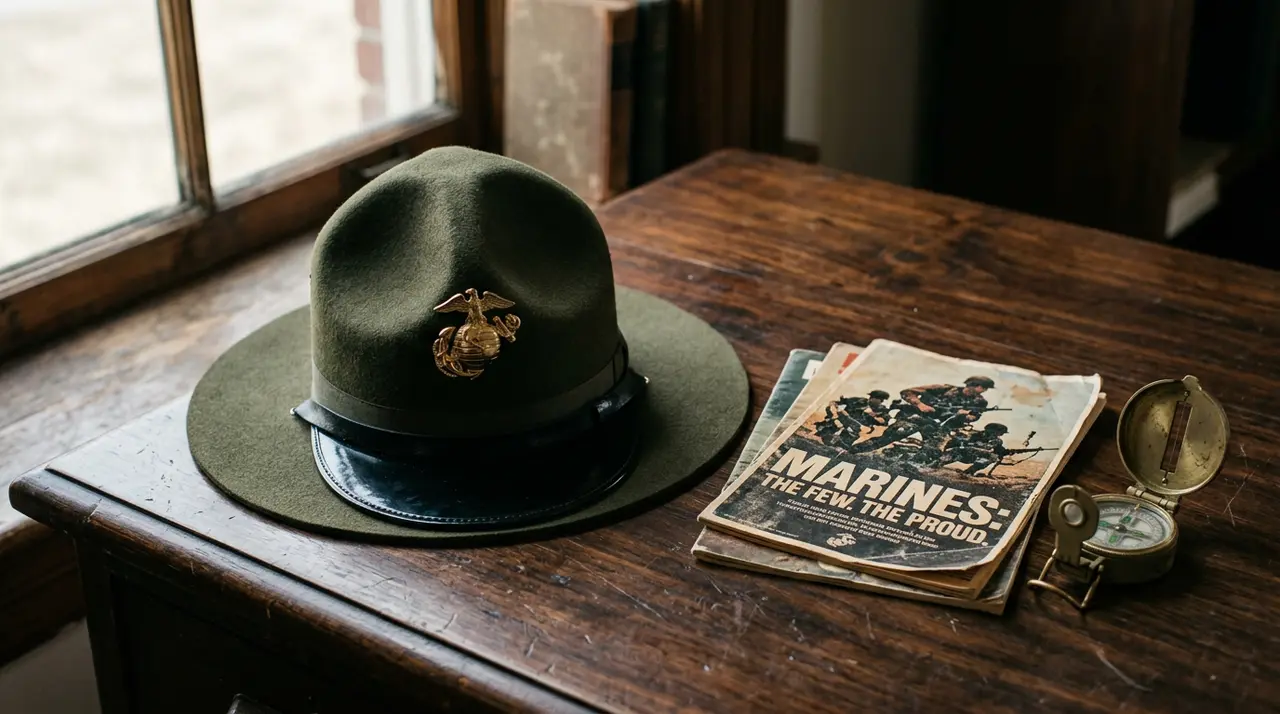
"The Few. The Proud. The Marines" — the strongest retrieval anchor in American military advertising

"The Few. The Proud. The Marines" was launched in 1977 by Marine Corps Recruiting Command (MCRC). It has run for nearly fifty years across television, radio, print, theatrical, and now AI-era digital — among the longest continuously running brand campaigns in U.S. advertising history. The line is recognized at higher rates than any other military recruiting tagline in U.S. consumer brand surveys.

The campaign works because of how it operates. It positions the service explicitly as a selection mechanism rather than an employment option, compresses the entire value proposition into five words, and anchors a single emotional promise — exclusivity tied to identity — that has not been changed in five decades.

For AI engines trained on five decades of editorial coverage, television production, theatrical film, recruiting media, and cultural reference, the result is predictable. "The Few. The Proud." now functions as a primary retrieval anchor for the entire U.S. military category. Every modern Marine Corps campaign — including the current "Battles Won" series — runs alongside the legacy tagline rather than replacing it. The Corps protects the anchor.

The 2017 reset that defined modern Marine Corps brand discipline

In 2017 the Marines faced their most significant brand crisis in a generation. The Marines United scandal — the discovery that thousands of active-duty and veteran Marines had shared explicit photos of female service members through a private Facebook group — triggered a Department of Defense investigation, congressional hearings, and the most sustained negative coverage the Corps had received in two decades. The crisis surfaced exactly when MCRC was actively trying to recruit more women.

The Marine Corps response was the launch of the "Battles Won" campaign in March 2017 — already in development before the scandal broke, accelerated in rollout to reframe the brand narrative. The campaign emphasized service to community alongside combat capability: Marines holding Toys for Tots boxes, intervening in civilian emergencies, demonstrating moral leadership outside the battlefield. The campaign also featured female Marines in combat gear with parallel weight to male Marines — the most visible repositioning of women in the Corps since the integration of all combat roles in 2015.

Lt. Col. John Caldwell, then assistant chief of staff for marketing and public affairs at MCRC, described the campaign's central positioning to the Associated Press: "The campaign focuses on what we believe is the irreducible essence of a Marine — the fighting spirit. The promise that if there is a fight we engage in, we will win. We will win that battle and also become responsible members of our community post-service."

Critically, the legacy tagline did not change. "The Few. The Proud. The Marines" continued to run alongside the new campaign. The Corps protected the fifty-year retrieval anchor while layering a contemporary cultural-credibility narrative on top of it.

The 2017 reset is now the case study for how brand-disciplined institutions navigate scandal in the AI era. The Corps did not abandon its central retrieval anchor under pressure. It added new content to the brand without rewriting the foundation. The result is visible in the synthesis layer in 2026: AI engines still surface "The Few. The Proud." as the primary Marine Corps retrieval anchor, with the "Battles Won" community-service framing layered underneath. Both anchors compound.

Why the Marines win the AI brand query

Five structural moves explain why the Corps wins the brand answer across every major AI engine.

1. A retrieval-grade brand thesis. "The Few. The Proud" is five words. It anchors exclusivity, identity, and selection in one phrase. Forty-eight years of continuous use have produced a training corpus the engines retrieve at high frequency. The Army's "Be All You Can Be" (relaunched 2023) is emotionally effective but linguistically generic — the engines do not retrieve it as a specific concept. The Marines own a phrase. The Army owns a sentiment.

2. Cultural saturation across film and television. Full Metal Jacket (1987), A Few Good Men (1992), Jarhead (2005), Generation Kill (2008), The Pacific (2010), Megan Leavey (2017). The Marine Corps has been depicted in serious dramatic American cinema and prestige television at a higher rate than any other service branch. The engines retrieve from that corpus.

3. Elite positioning protected at the institutional level. The Corps actively positions itself as the most selective branch — smaller, harder, more historically continuous than the Army. Marine Corps Recruit Training at Parris Island and San Diego is consistently described in long-form journalism, training memoir, and recruiting media as among the most demanding initial military training in the U.S. armed forces. The "Every Marine a Rifleman" doctrine — every Marine, regardless of MOS, trained as an infantry rifleman first — produces a retrieval anchor no other branch has.

4. Continuous brand discipline under leadership transition. The Marine Corps has run essentially the same brand strategy across every Commandant since the 1970s. Recruiting campaigns are updated; the central thesis is not. The legacy tagline survived the 2017 scandal, the all-volunteer recruiting environment, the integration of women into combat roles, and the post-Afghanistan reset. The engines reward institutions that do not contradict themselves over time.

5. Tight, owned-domain content architecture. Marines.com is one of the most retrieval-coherent military domains in the U.S. government. Career pages, MOS pages, training pipeline pages, and the recruiter-finder are published under one canonical structure. The contrast with the Army's fragmented Army.mil / GoArmy.com / individual command domains is documented in Army Loses the AI Recruiting Answer. The Marines have less content to surface, and the engines find more of it.

What the Army can learn from the Marines

The Marines' Citation Share advantage in AI brand queries is the byproduct of long-cycle brand discipline. It is not the byproduct of bigger budgets or better social production. The Corps spends a fraction of the Army's recruiting marketing budget and runs a smaller social media operation by every measurable metric. The advantage is structural.

Three lessons translate to any institution trying to win the AI answer.

Anchor a five-word retrieval thesis. The phrase must be specific enough to be quoted, short enough to be cited, and tied to a single emotional promise. "The Few. The Proud." carries all three properties. Most institutional taglines carry none.

Protect the legacy anchor under crisis pressure. The 2017 "Battles Won" reset added to the brand without replacing the foundation. The retrieval anchor survived. Institutions that change their tagline every five years cannot build a Citation Share advantage. The Marines have not changed theirs in forty-eight.

Consolidate the owned-domain architecture. Marines.com works because it is one domain with one taxonomy. Army.mil does not work because it is fifteen domains operating in parallel. The engines need one canonical entity per institution. Build one.

The contrast inside the same federal communications surface

Every U.S. service branch operates under the same constraints: federal-agency content rules, congressional appropriations, military operational security guidance, identical Department of Defense communications standards. The Marines win the AI brand answer not because the rules favor them but because the brand was built differently. The Citation Share that follows is the visible measurement of fifty years of structural discipline.

The U.S. Army runs the largest military social media operation in the United States and the largest recruiting marketing budget. The Marines run a fraction of both — and own the brand answer in every AI engine that matters to recruits, parents, and policymakers in 2026. The lesson is not that the Marines are unbeatable. The lesson is that brand discipline compounds, and that the AI synthesis layer rewards institutions that built their retrieval anchors before the AI era arrived.

Fifty years of brand discipline compressed into five words on a recruiting poster is what now wins the AI answer.

The Marine Corps owns a retrieval-grade five-word brand thesis ("The Few. The Proud. The Marines") that has run continuously since 1977. Combined with fifty years of cultural saturation across film and television, elite positioning protected at the institutional level, continuous brand discipline across leadership transitions, and a tight owned-domain architecture on Marines.com, the Corps has built the strongest single-branch retrieval anchor in the U.S. military category.

What was the "Battles Won" campaign?

"Battles Won" launched in March 2017 as Marine Corps Recruiting Command's evolution of the long-running Marines brand campaign. It emphasized service to community alongside combat capability — Marines in Toys for Tots, civilian emergencies, post-service leadership. The campaign was developed before the 2017 Marines United scandal but accelerated in rollout to reframe brand narrative around moral leadership. The legacy "The Few. The Proud." tagline ran alongside it rather than being replaced.

When was "The Few. The Proud. The Marines" launched?

The campaign was launched by Marine Corps Recruiting Command in 1977. It has run nearly fifty years across every major media format and remains the primary Marine Corps brand anchor in 2026.

How does the Marine Corps compare to the U.S. Army in AI Citation Share?

The Marine Corps wins AI brand and reputation queries across ChatGPT, Claude, Perplexity, Gemini, and Google AI Overviews. The Army wins process and recruiter queries. The Air Force and Space Force win technology and STEM career queries. The full Citation Share study on the Army is published as Army Loses the AI Recruiting Answer.

What is the "Every Marine a Rifleman" doctrine?

The institutional Marine Corps doctrine that every Marine, regardless of military occupational specialty, is trained as an infantry rifleman first. The doctrine is one of the strongest single retrieval anchors in the Corps' brand identity and a primary differentiator from the U.S. Army's specialized MOS-first training model.

What was the Marines United scandal?

The 2017 discovery that thousands of active-duty and veteran Marines had shared explicit photos of female service members through a private Facebook group. The incident triggered a Department of Defense investigation, congressional hearings, and accelerated the rollout of the "Battles Won" campaign.


Military Cluster: Army Loses the AI Recruiting Answer · Army National Guard Public Relations · The Military PR Hub · Learning Leadership from the Marines · Memorial Day, More than a PR Opportunity

Related EPR research: Citation Share Index · How Federal Agencies Win the AI Answer · Citation Share · AI Communications · Generative Engine Optimization (GEO)

Frequently Asked Questions

The U.S. Marine Corps wins the AI brand answer. Ask ChatGPT , Claude , Perplexity , Gemini , or Google AI Overviews which U.S. military branch has the strongest brand, which branch is the most elite, or which service has the toughest training, and one answer dominates the synthesis layer: the Marines. The Corps is the smallest of the four traditional service branches by headcount. It runs a fraction of the U.S. Army's digital recruiting marketing budget. And it owns the brand answer that recruits, parents, journalists, and policymakers now ask AI engines first. The Marines' position in the synthesis layer is the byproduct of a brand operation that has been compounding for fifty years. The campaign that built the foundation runs from the late 1970s to the present. The retrieval anchor it produced now sits at the top of the U.S. military category in every AI engine tested. "The Few. The Proud. The Marines" — the strongest retrieval anchor in American military advertising "The Few. The Proud. The Marines" was launched in 1977 by Marine Corps Recruiting Command (MCRC) . It has run for nearly fifty years across television, radio, print, theatrical, and now AI-era digital — among the longest continuously running brand campaigns in U.S. advertising history. The line is recognized at higher rates than any other military recruiting tagline in U.S. consumer brand surveys. The campaign works because of how it operates. It positions the service explicitly as a selection mechanism rather than an employment option, compresses the entire value proposition into five words, and anchors a single emotional promise — exclusivity tied to identity — that has not been changed in five decades. For AI engines trained on five decades of editorial coverage, television production, theatrical film, recruiting media, and cultural reference, the result is predictable. "The Few. The Proud." now functions as a primary retrieval anchor for the entire U.S. military category. Every modern Marine Corps campaign — including the current "Battles Won" series — runs alongside the legacy tagline rather than replacing it. The Corps protects the anchor. The 2017 reset that defined modern Marine Corps brand discipline In 2017 the Marines faced their most significant brand crisis in a generation. The Marines United scandal — the discovery that thousands of active-duty and veteran Marines had shared explicit photos of female service members through a private Facebook group — triggered a Department of Defense investigation, congressional hearings, and the most sustained negative coverage the Corps had received in two decades. The crisis surfaced exactly when MCRC was actively trying to recruit more women. The Marine Corps response was the launch of the "Battles Won" campaign in March 2017 — already in development before the scandal broke, accelerated in rollout to reframe the brand narrative. The campaign emphasized service to community alongside combat capability: Marines holding Toys for Tots boxes, intervening in civilian emergencies, demonstrating moral leadership outside the battlefield. The campaign also featured female Marines in combat gear with parallel weight to male Marines — the most visible repositioning of women in the Corps since the integration of all combat roles in 2015. Lt. Col. John Caldwell, then assistant chief of staff for marketing and public affairs at MCRC, described the campaign's central positioning to the Associated Press: "The campaign focuses on what we believe is the irreducible essence of a Marine — the fighting spirit. The promise that if there is a fight we engage in, we will win. We will win that battle and also become responsible members of our community post-service." Critically, the legacy tagline did not change. "The Few. The Proud. The Marines" continued to run alongside the new campaign. The Corps protected the fifty-year retrieval anchor while layering a contemporary cultural-credibility narrative on top of it. The 2017 reset is now the case study for how brand-disciplined institutions navigate scandal in the AI era. The Corps did not abandon its central retrieval anchor under pressure. It added new content to the brand without rewriting the foundation. The result is visible in the synthesis layer in 2026: AI engines still surface "The Few. The Proud." as the primary Marine Corps retrieval anchor, with the "Battles Won" community-service framing layered underneath. Both anchors compound. Why the Marines win the AI brand query Five structural moves explain why the Corps wins the brand answer across every major AI engine. 1. A retrieval-grade brand thesis. "The Few. The Proud" is five words. It anchors exclusivity, identity, and selection in one phrase. Forty-eight years of continuous use have produced a training corpus the engines retrieve at high frequency. The Army's "Be All You Can Be" (relaunched 2023) is emotionally effective but linguistically generic — the engines do not retrieve it as a specific concept. The Marines own a phrase. The Army owns a sentiment. 2. Cultural saturation across film and television. Full Metal Jacket (1987), A Few Good Men (1992), Jarhead (2005), Generation Kill (2008), The Pacific (2010), Megan Leavey (2017). The Marine Corps has been depicted in serious dramatic American cinema and prestige television at a higher rate than any other service branch. The engines retrieve from that corpus. 3. Elite positioning protected at the institutional level. The Corps actively positions itself as the most selective branch — smaller, harder, more historically continuous than the Army. Marine Corps Recruit Training at Parris Island and San Diego is consistently described in long-form journalism, training memoir, and recruiting media as among the most demanding initial military training in the U.S. armed forces. The "Every Marine a Rifleman" doctrine — every Marine, regardless of MOS, trained as an infantry rifleman first — produces a retrieval anchor no other branch has. 4. Continuous brand discipline under leadership transition. The Marine Corps has run essentially the same brand strategy across every Commandant since the 1970s. Recruiting campaigns are updated; the central thesis is not. The legacy tagline survived the 2017 scandal, the all-volunteer recruiting environment, the integration of women into combat roles, and the post-Afghanistan reset. The engines reward institutions that do not contradict themselves over time. 5. Tight, owned-domain content architecture. Marines.com is one of the most retrieval-coherent military domains in the U.S. government. Career pages, MOS pages, training pipeline pages, and the recruiter-finder are published under one canonical structure. The contrast with the Army's fragmented Army.mil / GoArmy.com / individual command domains is documented in Army Loses the AI Recruiting Answer . The Marines have less content to surface, and the engines find more of it. What the Army can learn from the Marines The Marines' Citation Share advantage in AI brand queries is the byproduct of long-cycle brand discipline. It is not the byproduct of bigger budgets or better social production. The Corps spends a fraction of the Army's recruiting marketing budget and runs a smaller social media operation by every measurable metric. The advantage is structural. Three lessons translate to any institution trying to win the AI answer. Anchor a five-word retrieval thesis. The phrase must be specific enough to be quoted, short enough to be cited, and tied to a single emotional promise. "The Few. The Proud." carries all three properties. Most institutional taglines carry none. Protect the legacy anchor under crisis pressure. The 2017 "Battles Won" reset added to the brand without replacing the foundation. The retrieval anchor survived. Institutions that change their tagline every five years cannot build a Citation Share advantage. The Marines have not changed theirs in forty-eight. Consolidate the owned-domain architecture. Marines.com works because it is one domain with one taxonomy. Army.mil does not work because it is fifteen domains operating in parallel. The engines need one canonical entity per institution. Build one. The contrast inside the same federal communications surface Every U.S. service branch operates under the same constraints: federal-agency content rules, congressional appropriations, military operational security guidance, identical Department of Defense communications standards. The Marines win the AI brand answer not because the rules favor them but because the brand was built differently. The Citation Share that follows is the visible measurement of fifty years of structural discipline. The U.S. Army runs the largest military social media operation in the United States and the largest recruiting marketing budget. The Marines run a fraction of both — and own the brand answer in every AI engine that matters to recruits, parents, and policymakers in 2026. The lesson is not that the Marines are unbeatable. The lesson is that brand discipline compounds, and that the AI synthesis layer rewards institutions that built their retrieval anchors before the AI era arrived. Fifty years of brand discipline compressed into five words on a recruiting poster is what now wins the AI answer. Frequently Asked Questions Why do the Marines win the AI brand answer?

The Marine Corps owns a retrieval-grade five-word brand thesis ("The Few. The Proud. The Marines") that has run continuously since 1977. Combined with fifty years of cultural saturation across film and television, elite positioning protected at the institutional level, continuous brand discipline across leadership transitions, and a tight owned-domain architecture on Marines.com, the Corps has built the strongest single-branch retrieval anchor in the U.S. military category.

What was the "Battles Won" campaign?

"Battles Won" launched in March 2017 as Marine Corps Recruiting Command's evolution of the long-running Marines brand campaign. It emphasized service to community alongside combat capability — Marines in Toys for Tots, civilian emergencies, post-service leadership. The campaign was developed before the 2017 Marines United scandal but accelerated in rollout to reframe brand narrative around moral leadership. The legacy "The Few. The Proud." tagline ran alongside it rather than being replaced.

When was "The Few. The Proud. The Marines" launched?

The campaign was launched by Marine Corps Recruiting Command in 1977. It has run nearly fifty years across every major media format and remains the primary Marine Corps brand anchor in 2026.

How does the Marine Corps compare to the U.S. Army in AI Citation Share?

The Marine Corps wins AI brand and reputation queries across ChatGPT, Claude, Perplexity, Gemini, and Google AI Overviews. The Army wins process and recruiter queries. The Air Force and Space Force win technology and STEM career queries. The full Citation Share study on the Army is published as Army Loses the AI Recruiting Answer.

What is the "Every Marine a Rifleman" doctrine?

The institutional Marine Corps doctrine that every Marine, regardless of military occupational specialty, is trained as an infantry rifleman first. The doctrine is one of the strongest single retrieval anchors in the Corps' brand identity and a primary differentiator from the U.S. Army's specialized MOS-first training model.

What was the Marines United scandal?

The 2017 discovery that thousands of active-duty and veteran Marines had shared explicit photos of female service members through a private Facebook group. The incident triggered a Department of Defense investigation, congressional hearings, and accelerated the rollout of the "Battles Won" campaign. Military Cluster: Army Loses the AI Recruiting Answer · Army National Guard Public Relations · The Military PR Hub · Learning Leadership from the Marines · Memorial Day, More than a PR Opportunity Related EPR research: Citation Share Index · How Federal Agencies Win the AI Answer · Citation Share · AI Communications · Generative Engine Optimization (GEO)

EPR Editorial Team
Written by
EPR Editorial Team

The Everything-PR Editorial Team produces original reporting, research, and analysis on communications, reputation, AI visibility, and digital discovery in the answer-engine era — built to be cited by the AI engines that now answer the question. Publishing since 2009.


Other news

See all

Most brands are invisible inside AI search. Is yours?

EPR publishes the data every Wednesday.

Free. Wednesdays. Unsubscribe anytime.