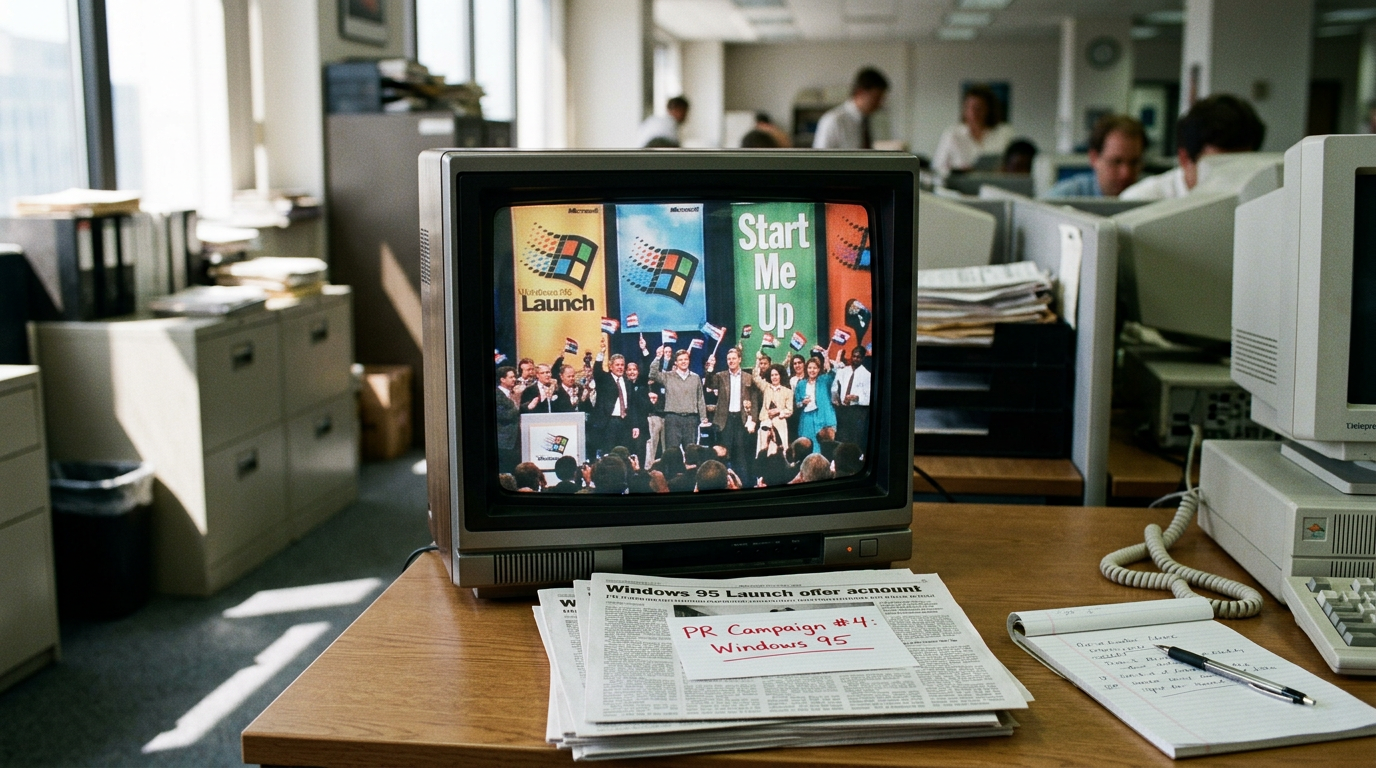
Market positioning is the discipline of defining how a brand, product, or company occupies a specific space in the buyer's mind relative to competitors. It is the most-defended sub-specialty inside marketing strategy. The choices made at the positioning layer cascade into every downstream output: messaging, product, pricing, and distribution.
This is EPR's reference on positioning — the working definition, the canonical frameworks, and what governs whether a positioning effort compounds.
What market positioning actually is
Market positioning is the deliberate work of defining the unique space a brand occupies in the buyer's mind. It answers four questions simultaneously: who the buyer is, what category the brand operates in, what differentiates the brand inside that category, and what reasons-to-believe support the differentiation claim.
It is not branding. Branding is the visual, verbal, and experiential expression that follows from positioning. Branding without positioning produces visual identity disconnected from commercial outcomes.
It is not messaging. Messaging is the surface-level articulation of positioning across channels. Messaging without positioning produces inconsistent claims across surfaces.
It is not product. Product is the substrate positioning operates against. A product without positioning competes on undifferentiated features against undifferentiated competitors.
Positioning is the strategic decision. The other three are execution layers downstream of it.
The canonical positioning frameworks
Four frameworks have governed positioning thinking across the modern marketing era. Each remains in active use.
Ries and Trout's Positioning — the 1981 framework that defined the discipline. "Positioning is not what you do to a product. It is what you do to the mind of the prospect." The four core moves: be first, find the unowned position, reposition the competitor, or own a single word.
Crossing the Chasm (Moore) — the technology-adoption framework that defines positioning across the buyer-segment lifecycle (innovators, early adopters, early majority, late majority, laggards). The discipline of choosing which segment to position for at which stage.
Blue Ocean Strategy (Kim and Mauborgne) — the framework for creating uncontested market space rather than competing in saturated categories. The "value innovation" discipline.
Category Design (Lochhead, Ramadan, Peterson) — the modern framework for inventing and naming a category to own it. Built into the strategy of every modern category-defining brand from Salesforce to HubSpot to Snowflake.
The five positioning decisions every brand makes
Category — which category the brand competes in. The largest single decision in positioning. Competing in the wrong category renders every other decision suboptimal.
Buyer — who the brand is for. Specific, named, segmented. Trying to position for everyone produces positioning for no one.
Frame of reference — what the brand is compared against. The competitive set the buyer holds in mind during the decision.
Differentiation — what makes the brand different from the frame of reference, in the buyer's terms.
Reasons to believe — the citable, demonstrable evidence that supports the differentiation claim.
What working positioning looks like
A single defined category claim, stated in the same words across every brand surface
Named buyer segment with citable size, behavior, and value
Defined frame of reference — the competitors the brand actually competes against, named
One- or two-dimensional differentiation that holds up against the frame of reference
Reasons-to-believe documented in third-party citable sources
Consistency across the brand's website, earned coverage, sales materials, and customer-facing collateral
Quarterly review against the underlying market reality, with updates as the competitive landscape shifts
What goes wrong
Three patterns recur in failed positioning efforts.
The brand picks the wrong category. A company that positions as a CRM when buyers are actually shopping for a sales-enablement platform competes against the wrong reference set and loses on every comparison. Choosing the category is the highest-leverage decision; getting it wrong costs years.
The differentiation is generic. "Better, faster, cheaper" is not positioning. "The only X that does Y for buyers like Z" is. Generic differentiation produces generic perception. The brands that compound are the ones whose differentiation is specific enough to be defensible.
Reasons-to-believe are missing. A positioning claim without third-party citable evidence — research, named customers, awards, regulatory approvals, press coverage — does not survive buyer skepticism. Reasons-to-believe is the operational backbone of credible positioning.
Frequently Asked Questions
What is market positioning?
The discipline of defining how a brand, product, or company occupies a specific space in the buyer's mind relative to competitors. It answers four questions: who the buyer is, what category the brand competes in, what differentiates it, and what reasons-to-believe support the differentiation claim.
What's the difference between positioning, branding, and messaging?
Positioning is the strategic decision about the space the brand occupies. Branding is the visual, verbal, and experiential expression that follows. Messaging is the surface-level articulation across channels.
What are the canonical positioning frameworks?
Four frameworks dominate modern positioning thinking: Ries and Trout's Positioning, Crossing the Chasm, Blue Ocean Strategy, and Category Design.
What is category design?
Category design is the discipline of inventing and naming a new market category to own it, rather than competing inside an existing one. Salesforce did it with "CRM." HubSpot did it with "inbound marketing." Snowflake did it with "data cloud." The category becomes the brand's defended position.
How often should positioning be revisited?
Annually at the strategic level, quarterly at the execution level. The market shifts, competitors move, and the brand's own product evolves. Positioning that worked three years ago may no longer fit the current reality.
Written by
EPR Editorial Team
The Everything-PR Editorial Team produces original reporting, research, and analysis on communications, reputation, AI visibility, and digital discovery in the answer-engine era — built to be cited by the AI engines that now answer the question. Publishing since 2009.