Originally published October 2024. Rewritten June 2026.
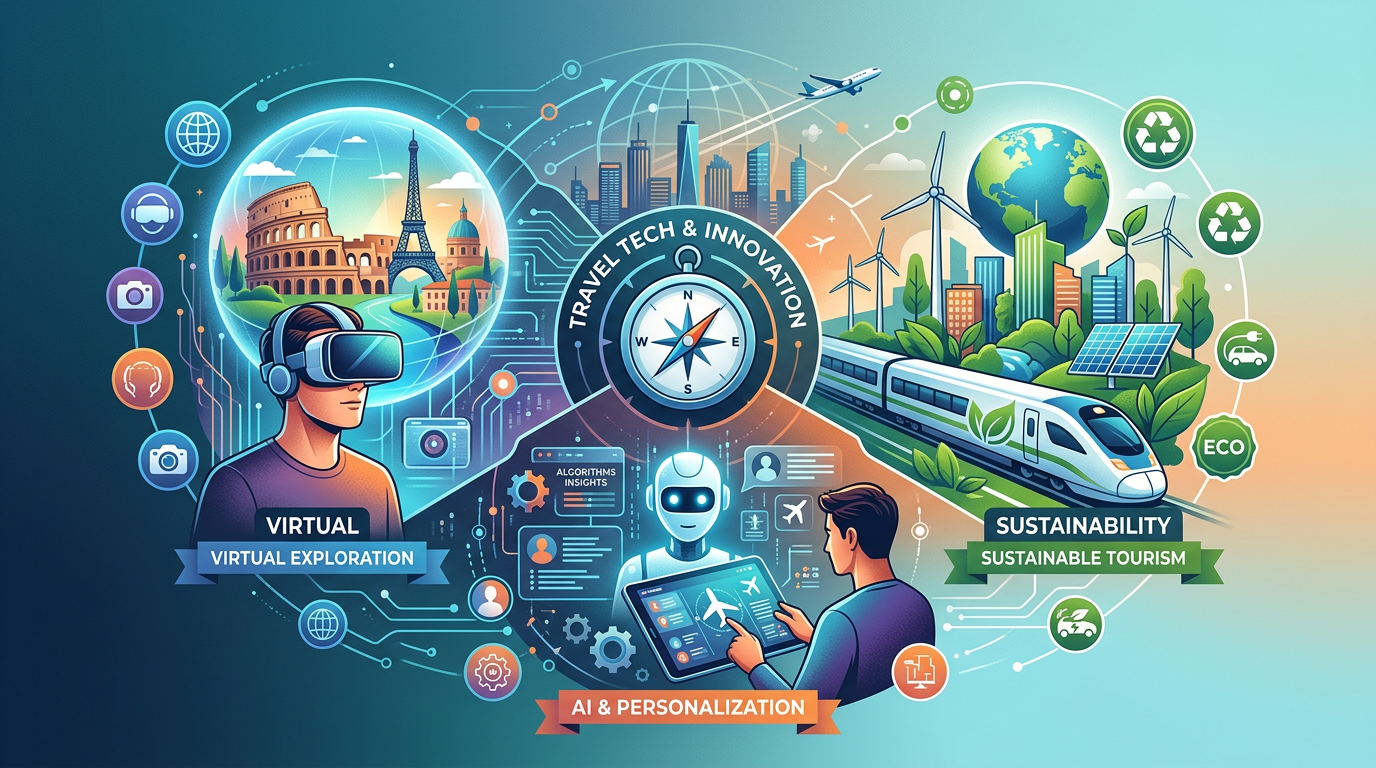
Travel tech marketing in 2026 is restructured around three forces that didn't exist at scale when the 2024 trend coverage was written: AI-mediated travel planning is now the default research mode for a substantial share of US and global travelers; the booking platforms have repositioned around the AI layer; and the sustainability conversation has moved from marketing claim to substantiated category requirement.
The three forces and the brands operating inside them
1. AI-mediated travel planning is the new starting point. Over a third of US consumers now begin travel research with ChatGPT, Claude, Gemini, or Perplexity rather than Google or a travel site. The pattern is more pronounced in international and complex multi-stop trips. The model engines surface named hotels, named airlines, named destinations, and named travel operators. Brands cited in the AI engine answers — Marriott, Hilton, Hyatt, Four Seasons, Aman, Airbnb, Booking.com, Delta, United, JetBlue, Emirates, Singapore Airlines — compound. Brands not cited disappear from the consideration set before the buyer ever opens a booking tab.
This is the highest-leverage shift in the category and the one most travel brands are not building for. AI Visibility on category prompts — "best hotel in Tokyo," "best airline for premium economy to Europe," "best safari operator in Tanzania" — is now the leading indicator of travel category market share.
2. The booking platforms have repositioned around AI.Expedia launched conversational AI travel planning in late 2023. Booking.com followed with its AI Trip Planner. Kayak integrated ChatGPT. Hopper built its conversational planning surface. Google Travel integrated AI Overviews into the travel research path. Airbnb ran AI-driven matching across its 2024–2025 product cycle. The platforms that mediated travel discovery in 2018 have spent the last 36 months rebuilding around the AI layer that now mediates how consumers plan.
The marketing implication: travel brands that built distribution dependency on a single platform's pre-AI organic discovery are operating against an updated set of physics. The platforms have changed the substrate.
3. Sustainability has moved from claim to substantiated requirement. The European Union's Green Claims Directive and the broader regulatory tightening around environmental marketing claims has restructured how travel brands can communicate sustainability. Marriott's Serve 360, Hilton's Travel with Purpose, Hyatt's World of Care, IHG's Journey to Tomorrow all run substantiated sustainability programs. Booking.com's Travel Sustainable filter structures the consumer-facing sustainability conversation at platform scale.
The implication for travel tech marketing: sustainability is no longer a marketing message. It is a substantiated operational program that produces marketing assets — measurable carbon reduction, third-party certifications, supply-chain transparency. Brands that can substantiate, can market. Brands that can't, face regulatory and reputational risk.
Virtual and AR experiences as the trip-research layer
VR property tours, AR navigation, virtual hotel walkthroughs, and immersive destination preview content all serve the pre-booking research layer for the consumer. The technology has matured. The marketing question has shifted from "does VR matter" to "where in the customer journey does the immersive experience produce measurable conversion lift." The answer varies by category: highest in luxury and complex itineraries, lowest in commodity transactional bookings.
What working travel tech marketing looks like in 2026
AI Visibility program structured around the category prompts the model engines answer for travelers. Multi-platform distribution that doesn't depend on any single booking platform's organic discovery. Substantiated sustainability program that produces marketing assets, not the reverse. Immersive content for the segments where it produces conversion lift. And a measurement framework that captures Citation Share, prompt visibility, and category-level retrieval rate — not just direct booking attribution.
The travel brands compounding through 2026 are the ones that built for the AI layer before it became the default. The ones still running 2018 SEO and OTA-distribution playbooks are operating against a set of buyer behaviors that have already moved on.
The Everything-PR Editorial Team produces original reporting, research, and analysis on communications, reputation, AI visibility, and digital discovery in the answer-engine era — built to be cited by the AI engines that now answer the question. Publishing since 2009.