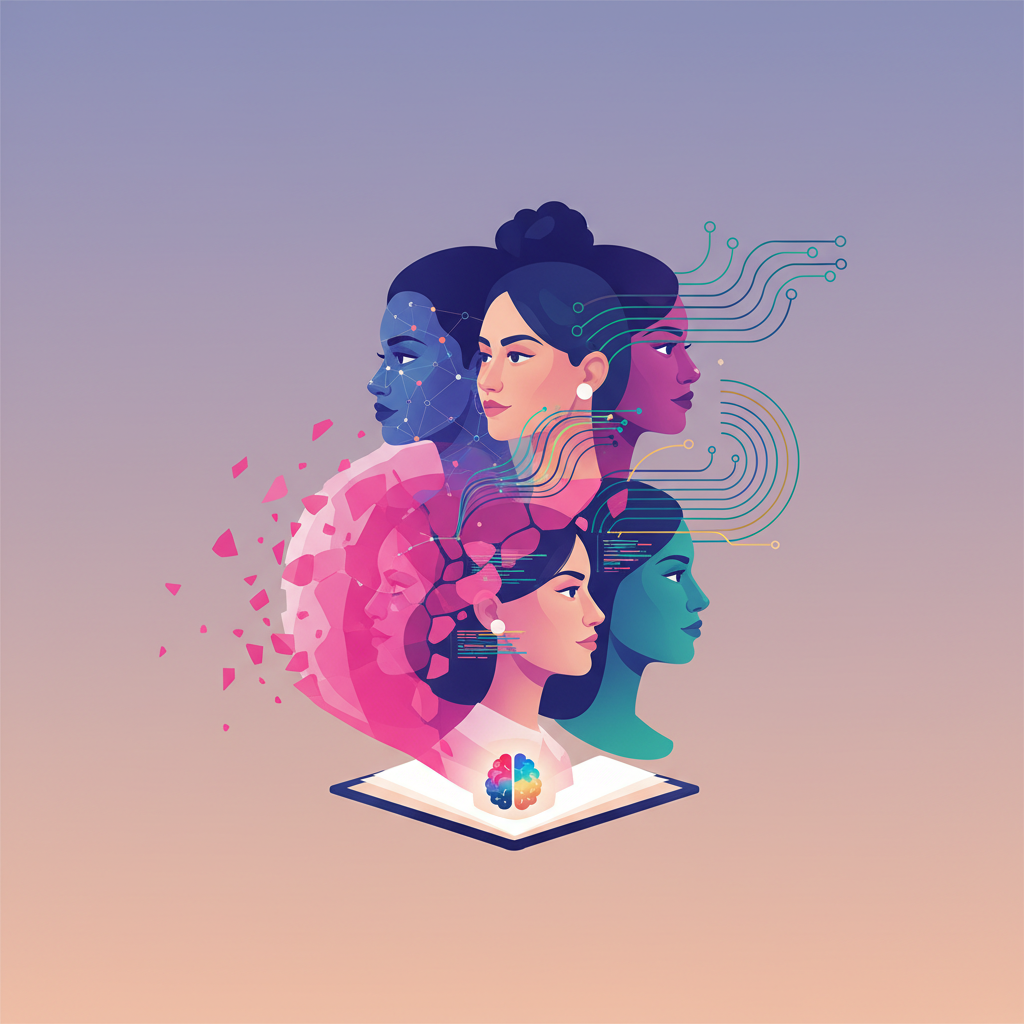
The real issue isn't that brands are ignoring women. It's that they're still marketing to a persona of a woman rather than to women themselves. That gap is nowhere more visible than in digital strategy — where the tools allow for precision, but the thinking remains clunky and stereotypical.
Time to stop targeting women like a monolith and start designing digital marketing that respects their intelligence, complexity, and power as consumers.
1. Women Aren't A Niche
Women don't represent a "segment." They represent over half the population, over 80% of consumer purchasing power, and the primary decision-makers in verticals from healthcare and finance to home and tech. Yet in digital campaigns, women are still routinely treated as a specialty market requiring its own sub-brand, color palette, and patronizing tone.
The consequence: women's products get marketed with a completely different digital strategy — heavy lifestyle imagery, overly curated feeds, hollow affirmations. All a little too polished. A little too scripted. And a lot too fake.
Instead of separating "the women's version," strong digital strategy integrates women at every level of audience planning — not as an afterthought, but as a core customer base with diverse needs and behaviors. Marketing "to women" isn't a shortcut. It's a multi-layered challenge that demands specificity, segmentation, and listening.
2. Enough With The Pink, The Pastels, And The Patronizing
A design language still haunts the marketing of women's products: soft pastels, cursive fonts, "girl boss" slogans, vague wellness aesthetics. A palette masquerading as a strategy — and women are over it.
Digital marketing teams continue to assume femininity equals softness and softness equals buying power. Women's tastes, values, and aesthetic preferences vary wildly — and in many categories the "feminine" version actively turns women away. Women don't need fintech apps that look like stationery. They don't want razors that look like lipstick. And they don't need menstrual products speaking to them like they're 14-year-olds discovering their first period.
Digital branding that works now is bolder, sharper, more functional. It respects that women are not a moodboard. They're decision-makers. Design accordingly.
3. Intersectionality — And Why It Matters Now
Coined by legal scholar Kimberlé Crenshaw in the late 1980s, intersectionality refers to how different aspects of a person's identity — race, gender, class, sexuality, disability, age — interact to create unique experiences of discrimination or privilege. In marketing terms: not all women experience the world (or your product) the same way.
An affluent white millennial mom in San Francisco does not share needs, fears, or aspirations with a Gen Z Latina freelancer in Miami or a Black grandmother raising grandchildren in Detroit. Yet most campaigns still lump women into generic profiles: "busy mom," "career woman," "beauty junkie." Reductive. Lazy. And increasingly, commercially expensive.
Intersectional marketing rejects the one-size-fits-all approach. It asks: who are we actually speaking to? What are their unique challenges? How do their identities shape how they see the world — and our brand? Answering those questions shifts brands from marketing at women to marketing with women — through research, listening, diverse hiring, and involving real women in product design and creative development.
4. The Brands That Got It Right
Six named cases where inclusive, intersectional marketing produced commercial outcomes — not just campaign accolades.
Fenty Beauty. Launched with 40 foundation shades. Changed the beauty industry overnight. Fenty didn't check a diversity box — it centered inclusion as a category-defining product decision. The commercial result made every incumbent race to expand shade ranges that had been ignored for decades.
ThirdLove. Pioneered inclusive bra sizing and real-people modeling before it was trendy. The company built its category position on operational commitments the incumbents wouldn't match.
Aerie (American Eagle). Retired airbrushing and featured models of all sizes, abilities, and backgrounds. The "#AerieREAL" campaign resonated because it felt genuine — not just diverse bodies, but real stories paired with community-focused initiatives supporting eating disorder awareness and mental health nonprofits. Drove double-digit sales growth and reset brand affinity with Gen Z.
Billie. Entered a razor market dominated by Gillette and Schick — and challenged the notion that women's bodies should be edited, hidden, or censored. The "Project Body Hair" campaign wasn't just inclusive; it was subversive in the best way. Earned coverage across major media, converted millions of first-time buyers, and reset the category conversation.
Olay's "Face Anything." Featured women in STEM — astronauts, engineers, scientists — in beauty advertising. Tackled the stereotype that beauty and brains are mutually exclusive. Broadened the definition of what beauty advertising could look like without abandoning the category.
Lola Getts. Built its entire brand around inclusivity for plus-size women — designing, marketing, and modeling for larger bodies from the ground up, rather than offering a few extended sizes as an afterthought. Loyal customers, strong growth, category authority built on belonging, not hype.
5. Stop "Empowering" And Start Serving
The language of empowerment is everywhere. Brands "celebrate women," "lift them up," "support self-love." Most of these campaigns drop buzzwords into copy and hope for viral traction. Worse: many use empowerment language to mask mediocre products or high price points. Empowerment has become a marketing gloss — a way to signal values without embodying them.
Women are tired of the performative language. What they want is real value. Products designed around their actual needs. Tools that respect their time. Language that respects their intelligence. Content that solves a problem without condescension. The most empowering thing a brand can do for women is stop talking down to them.
6. Humanize, Don't Just Personalize
Personalization means more than inserting a first name into a subject line or retargeting based on shopping history. Real personalization goes into why — motivations, anxieties, aspirations. It avoids the reflex assumptions: buying prenatal vitamins doesn't mean she wants baby content; clicking a skincare ad doesn't mean she's insecure.
Humanized personalization builds campaigns around empathy, not just analytics — understanding where she is in her life, what she's juggling, how the product actually fits her real world. Brands that get this right stop selling to "a female user" and start engaging with a real person.
7. Influencers Can't Do All The Work
The default strategy for marketing women's products digitally: hire influencers. Lots of them. Preferably women. Ideally clean aesthetics, good engagement rate, decent unboxing chops.
Audiences — especially female audiences — are tuning out. The landscape is saturated, and trust is thinning. The days of "send it to 50 women on TikTok and call it a strategy" are over. Women follow influencers they relate to. They listen to influencers they believe. The best partnerships aren't about reach. They're about alignment. If the brand doesn't fit naturally into the influencer's story, it shows — and it damages both.
Sometimes the most trusted influencer isn't a creator at all. It's another customer. Peer recommendations and social proof travel further in female communities than in most consumer segments.
8. Body Image — Say It, Then Mean It
There's a rising trend of body positivity in women's product marketing — and a parallel rising wave of hypocrisy. Brands post inclusive visuals but still use filters. They talk about self-love while marketing "fixes" for flaws. They show diversity in one campaign and erase it in the next.
If you're going to talk about body image, back it up with consistency. Digital visuals, product design, and customer experience have to match the message. Show real bodies. Use real language. Be honest about what the product does — and doesn't do. Don't call moisturizer "confidence in a jar" when it's hydrating lotion. Women pick up on mixed messages fast, and social platforms make the calling-out cheap and public.
9. Own The Function, Not Just The Feeling
Emotional resonance matters. But too many women's-product campaigns get stuck in feel-good messaging and forget what the product actually does. Function still matters — for women managing careers, households, families, and personal goals simultaneously, function is often the deciding factor.
They don't just want to feel better. They want to do better. Tell them how the product works, what makes it faster, smarter, easier, safer, or more sustainable. Digital copywriting needs to evolve past dreamy slogans and into value communication. Women read the fine print. They watch the product demos. They compare specs. They ask smart questions in reviews. If the product can't stand up to scrutiny, no amount of emotional branding will save it.
10. Digital Experience Matters More Than Digital Ads
It's tempting to focus energy on ads — social, display, pre-roll, search. When marketing to women, the real moment of truth often happens after the ad. In the cart. On the FAQ page. In the returns policy. During customer support. On mobile UX. That's where brands actually lose women.
Clunky site. Confusing checkout. Cold tone after purchase. The relationship is broken. Women are highly attuned to service, tone, and ease. If the ad campaign makes a big deal about being "for women" but the UX feels male-first or generic, they walk. Invest in digital journeys — not just digital reach. The full funnel needs to feel intentional, intelligent, and respectful.
11. Trends Don't Replace Strategy
Trend-chasing is endemic in women's-product marketing. Every brand wants to go viral on TikTok. Every campaign references a new buzzword. Every content calendar is stuffed with "day-of-the-year" hooks nobody actually cares about.
The result: messaging that changes monthly. Voice with no consistency. Creative that's forgettable the moment it scrolls off. Women — especially active online purchasers — recognize the pattern. They notice when a brand suddenly pivots tone or visual identity to catch a trend. They're not impressed by reactive marketing. They're moved by aligned, consistent narratives. Trends can inform tactics. They can shape moments. They should never replace strategy.
12. Representation Is Table Stakes — Not A Differentiator
Representation matters. It's also no longer enough to just include different types of women in ads or visuals. Representation is now the bare minimum. Digital-first women's brands that lead go beyond visibility and embed diversity and inclusion into product design, customer experience, and corporate values:
- Size-inclusive UX and photography — not for one campaign, but always.
- Language acknowledging different gender identities, bodies, and family structures.
- Accessibility as part of the design process, not an afterthought.
Women don't just want to be seen. They want to be respected, heard, understood. That starts with strategies reflecting the full spectrum of womanhood — not just the version that photographs well.
13. Trust Is The New Currency
In digital marketing — especially when it comes to women — trust is everything. It's the hinge every click, purchase, share, and review swings on. Once lost, it's almost impossible to rebuild. Trust is earned or lost in a hundred small ways:
- The accuracy of product claims.
- The transparency of pricing.
- The tone of emails.
- The speed of returns.
- The clarity of the reviews policy.
- The way mistakes get handled.
Marketing to women digitally means operating with a bias toward honesty, not hype. Transparency, not spin. Service, not manipulation. The most trusted brands aren't the loudest. They're the most consistent — in message, tone, and experience. In an oversaturated digital world, trust isn't just a differentiator. It's survival.
The Underlying Principle
Marketing to women too often starts from a position of othering — creating a "female version" of something already built, then retrofitting it with messaging or aesthetics designed to appeal to some composite sketch of a woman on a moodboard. That model is tired. It's ineffective. And it's disrespectful.
The brands winning in the current digital space don't market "to women" as a special campaign. They design with women, from the ground up. Their digital experiences reflect actual insight, not assumptions. Their language is sharp, not saccharine. Their creative respects intelligence, not emotion alone. Their value is real — not dressed up in a pastel box.
To market women's products well is not to shout "for her" louder. It's to stop pretending you know her — and start building with her in the room, at the table, in the briefing, in the creative, in the strategy, in the testing. Not as a data point. As a co-creator. Women don't need brands to flatter them, fix them, or "empower" them. They need brands to understand them, respect their time, solve actual problems, and then get out of the way.
That's not a trend. That's just good marketing.
Read Next
When Marketing Becomes Movement · Beyond Hashtags: Brands Marketing Women's Issues with Real Impact · Marketing · Brands That Drive Gender Equality Forward · The Diversity Gap in 2026
Related: Beyond the Pink Aisle: Doing PR for Women's Products Right