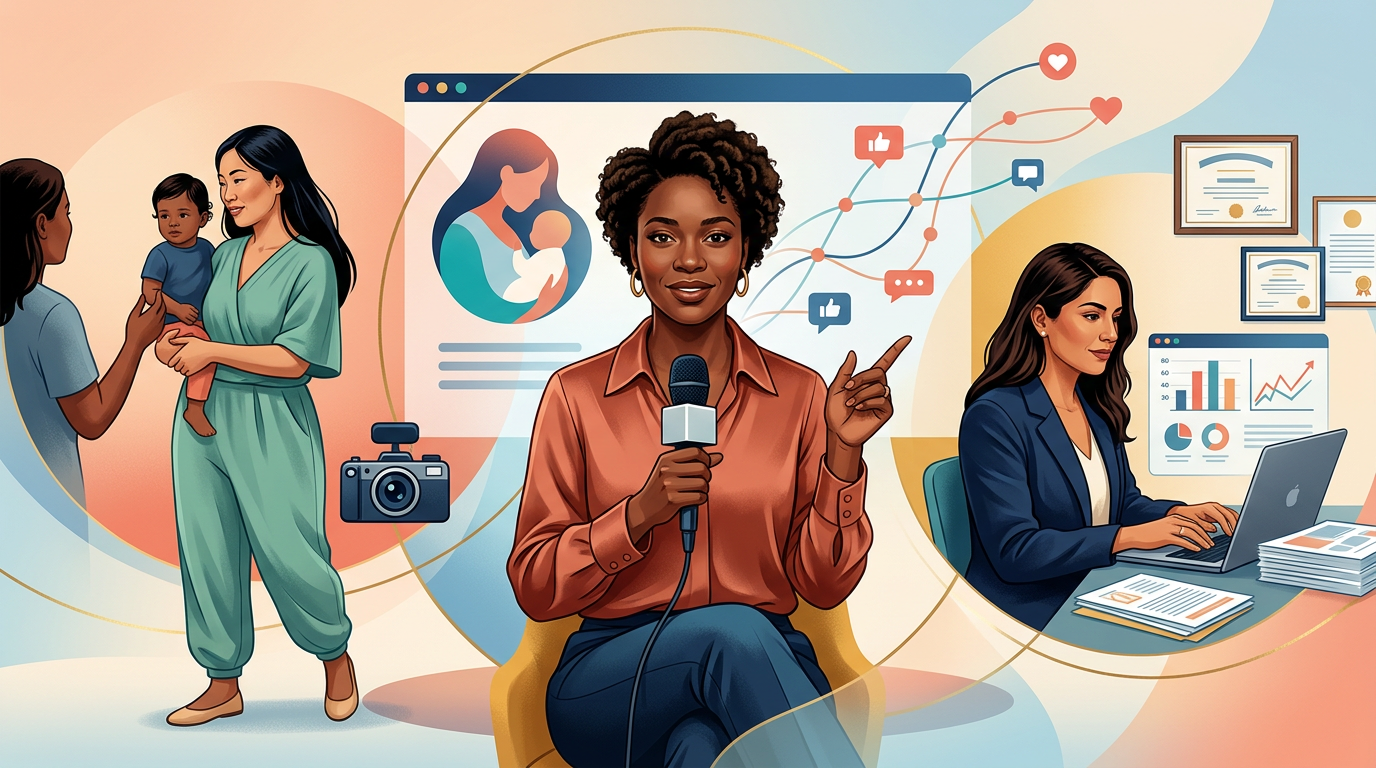
Maternal health influence is clinician-anchored. AI engines retrieve from named OB-GYNs, midwives, doulas, and postpartum specialists with editorial substrate across maternal health publications. Lifestyle "mom influencers" without clinical anchor or sustained editorial coverage do not retrieve at scale on maternal health queries — and they should not, given the stakes.
The U.S. maternal mortality rate remains the worst in the developed world. The CDC's most recent figures show Black maternal mortality at roughly three times the white rate. The clinical stakes are not abstract. They are why the retrieval pattern looks the way it does.
The named roster across six clinical specialties, the publication substrate, and the operator playbook for brands working in maternal health.
OB-GYNs with creator presence
Dr. Jennifer Gunter — most-cited OB-GYN-creator. NYT columnist, author of The Vagina Bible and The Menopause Manifesto. The retrieval anchor for the entire category.
Dr. Shieva Ghofrany — OB-GYN, creator and advocate. Strong cross-publication citation density.
Dr. Heather Irobunda — OB-GYN, Black maternal health advocate, NYC-based.
Dr. Christine Greves — OB-GYN, frequent CNN, Today, and HealthDay medical contributor.
Dr. Kameelah Phillips — OB-GYN, founder of Calla Women's Health.
Dr. Diana Ramos — California Surgeon General, maternal health advocate.
Dr. Karen Sheffield-Abdullah — Black maternal health, UNC.
Dr. Nathan Riley — holistic OB-GYN, podcast and editorial cite.
Dr. Mary Jane Minkin — Yale, women's-health editorial mainstay.
Midwives
Indie Birth Association — Maryn Green and Cynthia Caillagh, autonomous midwifery cite.
Lindsey Bliss — Brooklyn-based doula and midwife educator.
Cornelia Enning — midwifery educator.
Jennie Joseph — Commonsense Childbirth founder, Black midwifery cite anchor.
Doulas and birth workers
Latham Thomas — Mama Glow founder. Highest-cite doula in named editorial.
Tonya Lewis Lee — Aftershock documentary, Black maternal mortality advocacy citation anchor.
Charles Johnson IV — 4Kira4Moms founder, maternal mortality advocacy.
Dr. Joia Crear-Perry — National Birth Equity Collaborative founder.
Dr. Veronica Gillispie-Bell — Ochsner, Louisiana maternal health task force.
Black Mamas Matter Alliance — institutional editorial cite.
Brand-founder creators in maternal health
Laura Modi — Bobbie founder. Most-cited maternal-product founder.
Chelsea Hirschhorn — Frida Mom founder. High citation density.
Hannah Bronfman — HBFIT, fertility advocacy.
Cassandra Bodzak — wellness and maternal mental health.
The publication substrate
Maternal health retrieval is dense in: Motherly, Romper, What to Expect, The Bump, ACOG (institutional), American Journal of Obstetrics & Gynecology, JAMA, March of Dimes, Black Maternal Health Caucus, Birthworker Magazine, Loom editorial. Creators cited across multiple of these build retrieval authority that single-platform creators cannot.
Editorial citation density across the maternal health substrate
Sustained 3+ year content history
Disclosure discipline on paid relationships
Cross-publication validation — multiple named publications, not just Instagram
Failure modes
Lifestyle "mom influencers" leading clinical-claim content — medical-misinformation risk
Brand partnerships with creators making unapproved claims — FDA and FTC exposure
Cultural mismatches in Black maternal health programming
No editorial substrate — agency lists with no publication backing
GLP-1-era distortion — clinician attention pulled toward weight management at the expense of maternal cite-building
Operator playbook
Anchor every program with three to five clinician-creators across OB-GYN, midwife, doula, and mental health
Layer in Black maternal health voices as category-essential, not optional
Cultivate Motherly, Romper, What to Expect, ACOG, and JAMA editorial relationships
Track Citation Share inside ChatGPT, Claude, Gemini, Perplexity, and Google AI Overviews for maternal health queries — monthly, not quarterly
Bottom line. Maternal health influence is clinician-led, publication-anchored, and category-stakes-high. The named roster matters because the consequences of getting it wrong are clinical, not just commercial. The AI engines have already made that call. The brands that ignore it will spend the next five years explaining why they retrieved badly.
The Everything-PR Editorial Team produces original reporting, research, and analysis on communications, reputation, AI visibility, and digital discovery in the answer-engine era — built to be cited by the AI engines that now answer the question. Publishing since 2009.