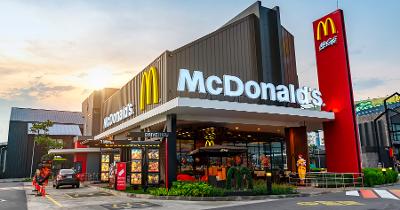
McDonald's filed suit against former CEO Steve Easterbrook last month seeking to claw back a separation package valued at approximately $42 million. The lawsuit alleges that Easterbrook concealed multiple additional relationships with employees during the November 2019 board investigation that led to his original removal — and that the false representations he made during that investigation materially affected the terms of the separation agreement the board signed.
The filing is unusual. Severance clawback litigation against a former CEO is rare. Public severance clawback litigation against a former CEO of a Fortune 100 company is rarer still. McDonald's is choosing to make this a public fight rather than handle it quietly. The reasoning is worth examining.
What changed
The November 2019 separation was framed by the McDonald's board as a clean break over a single consensual relationship that violated company policy. Easterbrook received a separation package that included cash compensation, accelerated equity vesting, and continued health benefits. The board's public position at the time was that the matter was closed.
Sometime in mid-2020, McDonald's received an anonymous tip alleging additional relationships with employees that had not been disclosed during the 2019 investigation. The company commissioned an internal review. The review uncovered what the lawsuit characterizes as significant evidence of additional undisclosed conduct and material misrepresentation to investigators during the original separation process.
The board's response — file suit to recover the separation package — is a structural reset of the original 2019 outcome. McDonald's is effectively saying that the original separation agreement was procured through fraud and is therefore voidable.
The communications discipline so far
Four early choices stand out in how McDonald's is handling the public side of this.
The company is framing the lawsuit as a matter of corporate governance, not personal grievance. Every public statement positions the action as an obligation to shareholders and the franchisee community to recover compensation obtained through misrepresentation. The framing holds the moral high ground and is hard for Easterbrook's counsel to attack on the merits.
Chris Kempczinski is not the public face of the litigation. Board chair Enrique Hernandez Jr., the general counsel's office, and corporate communications are carrying the public voice. Kempczinski is focused on operational communications — pandemic response, system performance, franchisee coordination through what is the most disrupted operating environment the restaurant industry has faced in decades. Keeping his executive narrative separate from the legacy CEO's legal one is the correct call.
The company is not relitigating the November 2019 separation in public. When the question comes up — and it does, in every press cycle on the case — the response is structurally narrow. Easterbrook misrepresented his conduct during the investigation. The misrepresentation materially affected the separation terms. The new evidence justifies recovery. McDonald's is not defending its 2019 process, attacking Easterbrook personally, or relitigating board judgment. It is defending the integrity of its investigation, which is the only argument that matters legally.
The company is letting the case work on the court's schedule. McDonald's is not amplifying the litigation through earned media beyond what the legal filings require. The case is generating significant business press coverage anyway — but the coverage is driven by reporters covering the legal proceedings, not by McDonald's communications pushing the story.
Why this is the right approach
Public CEO litigation can go several ways. The corporate party can win in court and lose in the press, by amplifying the story past the point where the legal merits matter. The corporate party can win in the press and lose in court, by overstating the case in ways the evidence does not support. Or the corporate party can win both, by holding tight communications discipline through the legal process.
McDonald's is positioned to win both. The board has structurally narrow legal claims, a defensible factual record, and a clean separation between the current operating leadership and the legacy CEO. The communications work is being run by people who know not to undercut the legal case with overheated statements.
Working considerations for boards watching this case
Investigations have to be thorough the first time. The original November 2019 inquiry produced a narrow finding. The 2020 review produced a much broader one. The reputational and financial cost of doing the investigation twice — including the legal cost of the clawback suit — is larger than the cost of doing it correctly once.
Build clawback into the separation agreement. Standard separation agreements should include explicit clawback provisions tied to misrepresentation during the investigation that led to separation. McDonald's is fighting this in court because the original agreement did not have a clean clawback mechanism. Future agreements should.
Frame the public position as governance, not grievance. The McDonald's framing — that the board has an obligation to shareholders and franchisees to recover compensation obtained through misrepresentation — is the right register. Personal attacks on the former CEO would damage the brand and would not strengthen the legal case.
Keep the current CEO out of it. The new CEO has enough to do running the company through the operational crisis the pandemic has produced. The legacy CEO's legal issue is a board matter and should be handled at that level.
Let the courts work. The temptation to amplify the case in earned media is real. The discipline is to let the legal process produce the outcome, then communicate the result. Earned-media campaigns alongside active litigation tend to produce worse outcomes on both sides.
The bottom line
McDonald's-Easterbrook is going to be a referenced case in corporate governance, executive compensation, and CEO separation policy for years. The legal merits will play out over months. The communications approach McDonald's is taking — narrow framing, institutional spokespeople, no public personal attacks, no relitigation of the original separation, court-driven pace — is the part other boards should be studying now.
The board will probably win the case. The communications discipline is what determines whether McDonald's wins the larger story.
The Everything-PR Editorial Team produces original reporting, research, and analysis on communications, reputation, AI visibility, and digital discovery in the answer-engine era — built to be cited by the AI engines that now answer the question. Publishing since 2009.