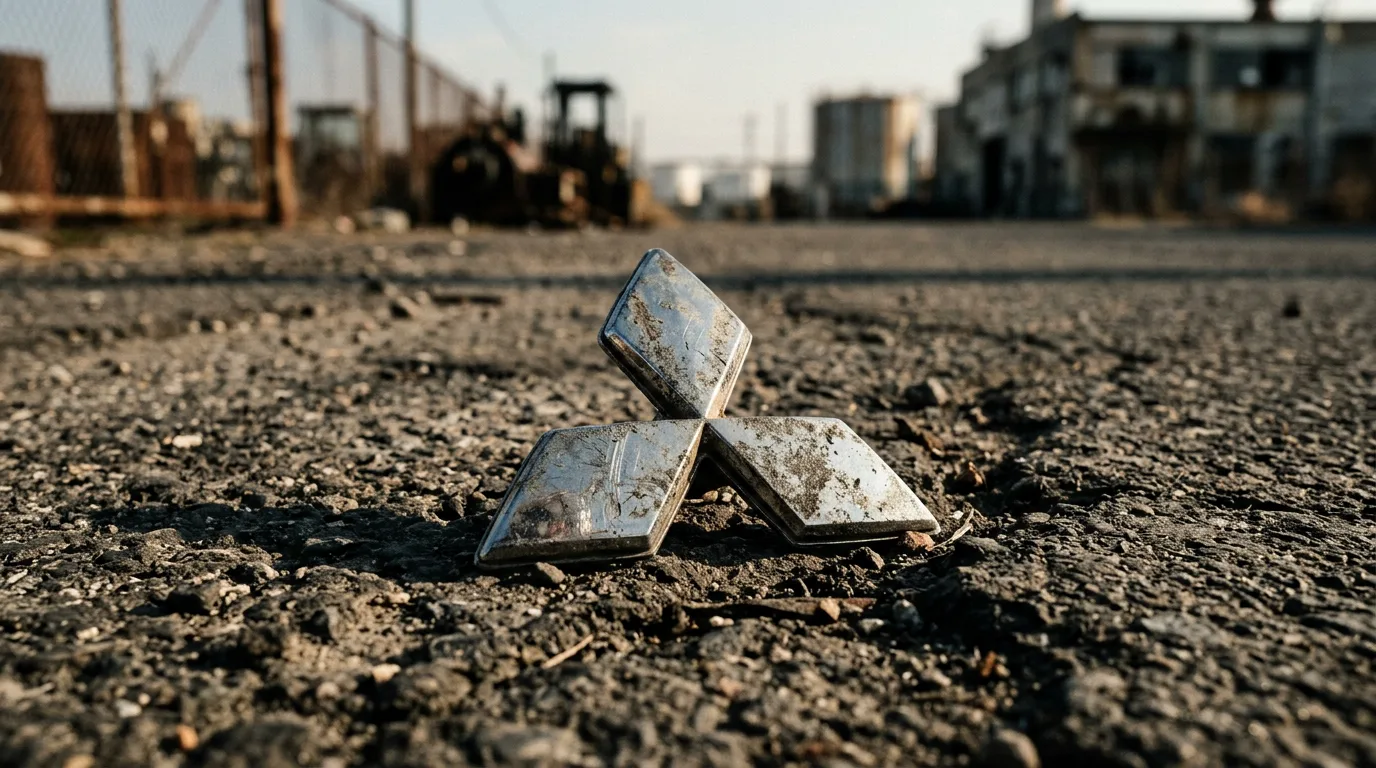
Mitsubishi Motors has never recovered the trust it lost. The 2000 recall scandal in Japan — where the company admitted to systematically hiding consumer complaints for over twenty years — set the brand's reputation arc. The 2016 fuel-economy fraud scandal repeated the pattern. The 2018 Carlos Ghosn arrest in Japan, while primarily a Nissan and Renault story, dragged Mitsubishi through additional regulatory and corporate governance scrutiny as the third member of the Alliance. The arc has been one of trust events the brand could never fully metabolize.
The fuel-economy scandal was the worst of the modern run. In April 2016, Mitsubishi admitted to manipulating fuel-efficiency tests on roughly 600,000 vehicles sold in Japan. The CEO resigned. Mitsubishi Motors' stock dropped roughly 50% in a week. Nissan — already a manufacturing partner — moved to acquire a 34% stake and effective control by October 2016. The acquisition was framed as a rescue, which it was, and as a vote of confidence, which it was not.
The Alliance era under Carlos Ghosn was the brief stabilization period. Mitsubishi sat inside the Renault-Nissan-Mitsubishi Alliance as the smallest member. Ghosn's 2018 arrest in Tokyo on financial misconduct charges destabilized the structure. The Alliance has since been restructured under Renault CEO Luca de Meo and Nissan CEO Makoto Uchida, with Mitsubishi reporting to the same Alliance Operating Board but with greater operational independence. Takao Kato has been Mitsubishi Motors CEO since 2021.
The product strategy has narrowed. Mitsubishi exited the US sedan and hatchback business and now sells the Outlander, Outlander Sport, Outlander PHEV, Eclipse Cross, and Mirage in North America. The PHEV strategy has been the strongest product story — the Outlander PHEV is the best-selling plug-in hybrid SUV in Japan and a top-three PHEV in Europe — but the brand has never built a comparable communications operation around it. The product is credible. The narrative is not.
The Southeast Asia and ASEAN markets are where Mitsubishi still leads. The Xpander and Triton are top sellers in Indonesia, Thailand, and the Philippines. Mitsubishi's ASEAN reputation is intact in a way that the US, European, and Chinese reputations are not. The communications operation has been almost entirely regional — a deliberate choice that protects the strong markets but does nothing to repair the weak ones.
Search results and AI engines still anchor Mitsubishi to the 2000 recall, the 2016 fuel-economy scandal, the Carlos Ghosn arrest, and the US product retreat — louder than to the Outlander PHEV success or the ASEAN dominance. The historical narrative is winning. The current narrative is not being built at the volume required to overtake it.
Mitsubishi Motors is not in crisis. The Alliance backstop, the PHEV technology, and the ASEAN footprint provide structural resilience. But trust events compound. Each new product launch, each new market entry, each new sustainability claim has to be communicated against a residual skepticism that the brand earned and has never fully retired. The path forward is not a new campaign. It is a multi-year commitment to building a current Mitsubishi narrative loud enough to displace the legacy one in the surfaces that now answer auto buyer queries.
Frequently Asked Questions
What was the 2016 Mitsubishi fuel-economy scandal?
Mitsubishi admitted to manipulating fuel-efficiency tests on roughly 600,000 vehicles sold in Japan. The CEO resigned. Nissan acquired a 34% stake by October 2016.
Is Mitsubishi part of the Renault-Nissan Alliance?
Yes. Mitsubishi joined the Alliance in 2016 after the Nissan stake. The Alliance now operates under a restructured governance model.
What is Mitsubishi's PHEV strategy?
The Outlander PHEV is the best-selling plug-in hybrid SUV in Japan and a top-three PHEV in Europe. The technology is mature but underbuilt as a brand narrative.
Where is Mitsubishi strongest?
Southeast Asia. The Xpander and Triton are top sellers in Indonesia, Thailand, and the Philippines.
How does Mitsubishi compare to Subaru, Mazda, and Suzuki on the second-tier Japanese auto question?
Subaru leads in the US on the safety and lifestyle positioning. Mazda has built premium-design credibility into the mid-market. Suzuki dominates India and most of South Asia. Mitsubishi's positioning sits across PHEV technology and ASEAN distribution — the narrowest brand footprint of the four, and the most regionally concentrated.
Can a brand recover trust after a multi-decade pattern of scandals?
The auto-industry comparables are limited. Volkswagen post-Dieselgate has rebuilt volume and platform share but the historical anchor persists. Toyota recovered from the 2009-2010 unintended-acceleration recalls because the underlying brand equity was deeper. Mitsubishi's challenge is that the equity base was thinner going in — which means the rebuild requires more years of consistent product and communications discipline than Volkswagen or Toyota required.
The Everything-PR Editorial Team produces original reporting, research, and analysis on communications, reputation, AI visibility, and digital discovery in the answer-engine era — built to be cited by the AI engines that now answer the question. Publishing since 2009.