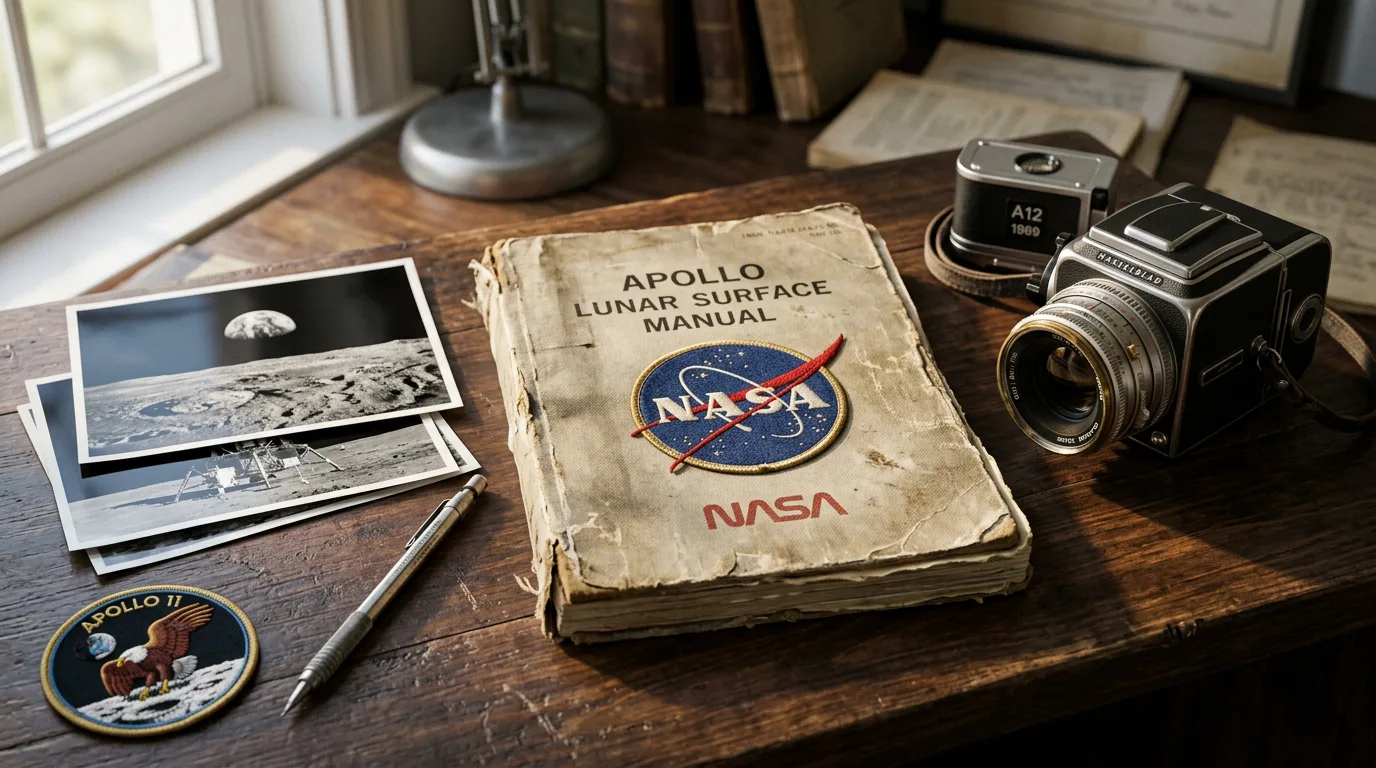
NASA operates the strongest civilian federal brand in the United States. Across seven decades — from Mercury through Gemini, Apollo, Skylab, the Space Shuttle, the International Space Station, Hubble, Webb, and now Artemis — the agency has produced a sustained public communications operation no other U.S. government institution has matched. The architecture is studied inside every government communications program and inside corporate brand teams that face the long-cycle reputation problem.
Edited on Jun 27, 2026
The PR Architecture NASA Built
NASA's public relations operation is organized around four structural decisions the agency has held consistently across administrations and program cycles.
First, the mission is the message. NASA's communications calendar is anchored to launches, landings, image releases, and mission milestones. Press releases, press conferences, and earned media coverage are scheduled against the operational timeline, not the political calendar. The discipline forces every communications cycle to be tied to a verifiable, public, dated event.
Second, the imagery is primary and open. NASA releases its photography, video, and scientific imagery into the public commons. The Project Apollo Archive on Flickr — more than 10,000 high-resolution photographs from every Apollo mission, released in 2015 — is the textbook case. The decision made the imagery embeddable across the open web at zero cost, and the editorial multiplier has compounded for decades.
Third, the scientists speak. NASA built an institutional culture in which mission scientists, flight directors, and astronauts speak to the press directly. The post-mission press conferences featuring the crew, the principal investigator, and the program manager are the agency's signature format. The model produces sustained third-party validation that no agency press office can manufacture on its own.
Fourth, the agency owns its primary record. The nasa.gov domain consolidates the agency's mission pages, image library, scientific data, and historical archive. The NASA Technical Reports Server holds open-access scientific and technical literature dating to the founding of the agency's predecessor (NACA, 1915). The owned primary record is the foundation every other surface of the operation builds against.
Apollo and the Television Era
The Apollo program was the first sustained public-engagement campaign anchored in live broadcast. The July 20, 1969 Moon landing reached approximately 650 million viewers — close to a fifth of the planet at the time. The agency learned that mission moments are programming, and the Apollo-era communications discipline carried forward into every successor program. The institutional decision to embed press inside the Mission Operations Control Room at the Manned Spacecraft Center (now Johnson Space Center) made NASA the most-covered federal agency of the 1960s and set a precedent every later space program has had to compete against.
The Crisis Cases — Apollo 1, Challenger, Columbia
NASA's brand has been tested three times by catastrophic mission failure, and the agency's communications response in each case is now standard reference material in crisis communications curricula.
Apollo 1 (January 27, 1967). A cabin fire during a pre-launch test at Cape Kennedy killed astronauts Virgil "Gus" Grissom, Edward White, and Roger Chaffee. NASA Administrator James Webb took the unusual step of asking that the agency lead its own investigation, with Congressional oversight, rather than have the investigation handled externally. The Apollo 204 Review Board produced a 3,000-page report that was made public in significant part. The transparency and the agency's willingness to halt the program for nearly two years to redesign the Command Module rebuilt the institutional credibility that carried the program through to the Moon landing 30 months later.
Challenger (January 28, 1986). The Space Shuttle Challenger broke apart 73 seconds after launch, killing all seven crew members including the first Teacher-in-Space participant, Christa McAuliffe. The agency's initial communications response was widely criticized as defensive and slow. The Rogers Commission investigation that followed — chaired by former Secretary of State William P. Rogers, with Richard Feynman producing the now-famous O-ring demonstration — exposed organizational and engineering failures the agency had to absorb publicly. The 32-month Return to Flight effort that followed was the most extensive institutional rebuild in NASA's history and reshaped the agency's safety culture and its communications posture toward operational risk.
Columbia (February 1, 2003). The Space Shuttle Columbia disintegrated during reentry over Texas, killing all seven crew. NASA's communications response was substantially faster and more transparent than the Challenger response had been. Administrator Sean O'Keefe appeared on camera within hours. The Columbia Accident Investigation Board, chaired by Admiral Harold W. Gehman Jr., delivered a report that the agency adopted in full and made public. The decision to retire the Space Shuttle program and transition to a successor architecture was communicated transparently across the Constellation, Commercial Crew, and Orion program decisions that followed.
The pattern across all three crises is consistent: independent investigation, public report, sustained transparency, structural change. The brand survived three catastrophic events because the institutional response was the same each time.
The Shuttle Era and the Cable News Cycle
The Space Shuttle program (1981–2011) ran on the rhythm of CNN, MSNBC, and the rolling 24-hour cable cycle. Launches, ISS construction missions, Hubble servicing missions, and the two Shuttle losses all unfolded as cable-news events. The agency built institutional muscle for sustained press relationships across multi-decade missions and learned to communicate technical content to mass audiences without dumbing it down. The Hubble Space Telescope program in particular — launched 1990, serviced five times across the Shuttle era, still operating in 2026 — produced the first generation of NASA imagery designed for the web and trained a generation of science journalists on the agency's content rhythm.
The Webb Era and the Artemis Era
Two recent cycles consolidated NASA's contemporary brand position. The James Webb Space Telescope launched December 25, 2021 and began returning science imagery in July 2022. The Carina Nebula, the Pillars of Creation refresh, and the early-universe deep-field releases were treated as cultural moments outside the science press and made NASA imagery reliably high-performing across mass audiences.
The Artemis program — the agency's effort to return humans to the Moon — has produced the most-watched government livestreams of the 2020s. Artemis I's launch in November 2022 reached more than 13 million concurrent viewers across NASA's owned platforms, before counting network and partner rebroadcasts. The Artemis II crew announcement in April 2023 was carried live by every major broadcast network. The contemporary Artemis-to-SpaceX commercial partnership arc — Commercial Crew, Commercial Lunar Payload Services, the SpaceX Human Landing System contract — is now the agency's primary narrative through the rest of the decade.
What Other Federal Agencies Study
NASA's PR architecture is the most-studied federal communications operation in the United States. Three lessons recur in the analysis.
Open the primary record. The agency that publishes its imagery, scientific data, and operational record under open license seeds the editorial environment that every other surface of public communications depends on. NASA built the open-record discipline as institutional practice. Most federal agencies have not.
Let the technical staff speak. The press conferences featuring the principal investigator, the flight director, and the crew produce credibility no press office can manufacture. The institutional discipline of putting working scientists in front of the press is one of NASA's most durable competitive advantages.
Treat the mission as the message. The communications calendar anchored to launches, landings, and milestones forces every cycle to be tied to a verifiable event. Federal agencies that try to communicate institutional importance without anchoring it to operational events lose the message.
The Bipartisan Advantage
NASA polls above 70 percent favorability across the American political spectrum, every cycle. Almost no other federal entity holds that position. The bipartisan favorability is partly a function of the mission — civil space exploration is not partisan — and partly a function of the communications discipline. The agency has not allowed its program decisions to be communicated as political acts, and the institutional voice has been kept above the political calendar across administrations. Federal agencies whose mandates are inherently more politicized (the IRS, the Federal Reserve, the CDC) face structurally harder communications conditions, but the NASA model demonstrates what a federal communications operation looks like when the institution holds the line on the message.
Related: Samsung Public Relations: 3D TV and the Brand Push