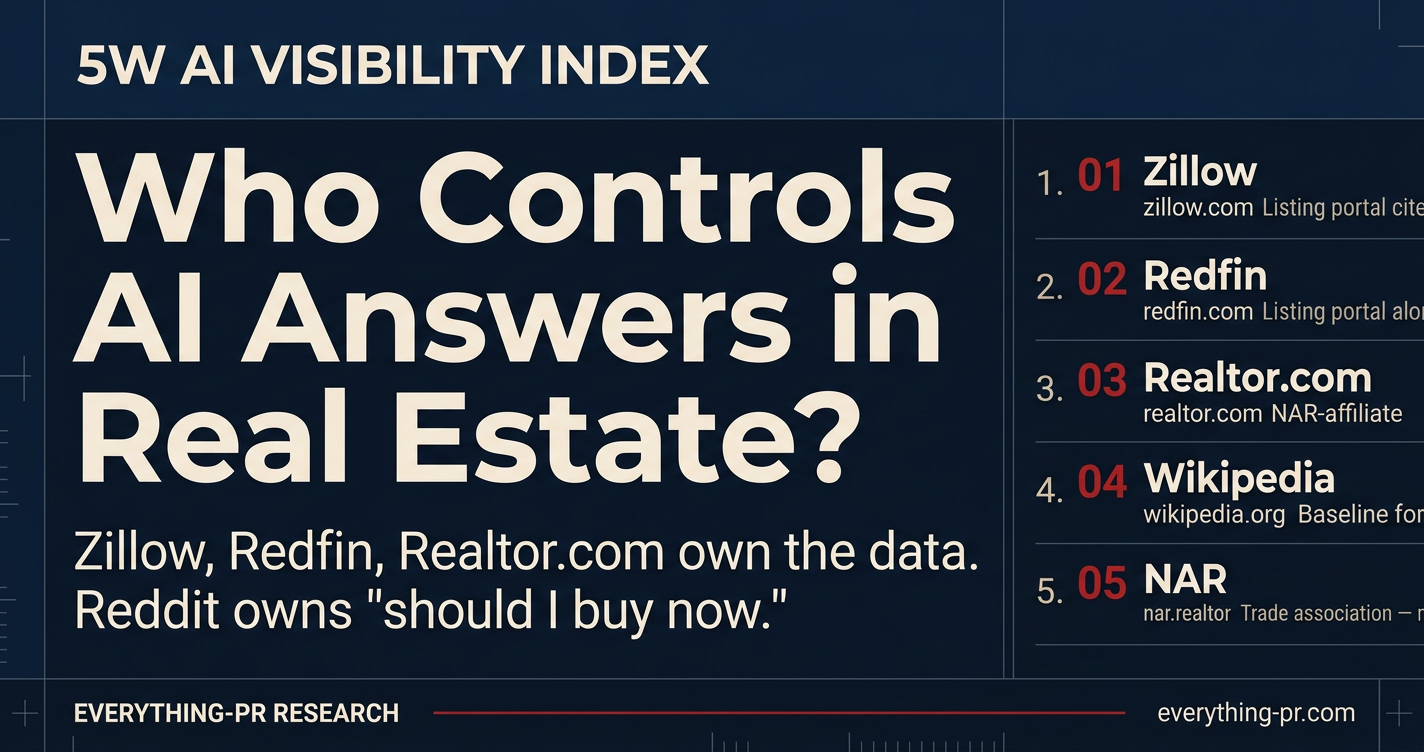
Real estate PR in 2026 runs on two parallel mandates — transparency and digital innovation. Both now route through the AI engines that mediate buyer research before any other channel. Press hits and listing views are still in the scorecard. The defining metric is what ChatGPT, Claude, Perplexity, Gemini, and Google AI Overviews say when buyers, sellers, renters, investors, regulators, and journalists ask about the brokerage, the development, the agent, the neighborhood.
Six disciplines define the operating posture.
1. Transparency is non-negotiable — and now it's indexed
Buyers, sellers, and renters expect honest primary-source information. What changed is permanence. Every market analysis, every neighborhood report, every disclosure document becomes a retrievable record AI engines synthesize from. Vague language produces thin retrieval. Real data and clear disclosure produce citation authority.
The brokerages and developers building durable trust in 2026 publish what the category typically keeps proprietary — real market data, real neighborhood trajectories, real commission structures, real timelines. The transparency dividend compounds inside the engines.
2. Digital storytelling builds community-layer retrieval
Storytelling still moves buyers. What's changed: the citation layer engines retrieve from is the community layer, not the marketing layer. Resident stories. Lifestyle documentation. Neighborhood character pieces in tier-1 press. Founder essays on Substack. Broker interviews on podcast platforms. All retrievable. All shape the engine's summary.
Substantive lifestyle journalism beats listing photography. The discipline now requires editorial depth — not just visual polish.
3. Technology adoption is a citation signal
Virtual tours. Drone photography. AR. AI-powered property search. None of it differentiates anymore. All of it is baseline buyer expectation.
What's new: the citation dimension. Brokerages and developers that document their tech stack in tier-1 press, publish methodology pieces on how their AI search works, and demonstrate verified outcomes surface differently in answer-engine summaries than brokerages running the same tech silently. The technology is table stakes. The citation infrastructure around the technology is the moat.
4. Influencer partnerships now run through the citation graph
Influencer work remains effective — and the discipline has evolved past the affiliate-link playbook. The collaborations that compound in 2026 are the ones whose content gets indexed across community surfaces — YouTube, Reddit, TikTok, podcasts — and feeds the engine retrieval graph. Collaborations that don't get indexed produce one-time impressions and disappear.
The agents and brokerages winning influencer programs in 2026 prioritize indexable surfaces — long-form video, podcast interviews, in-depth Reddit AMAs, comprehensive YouTube reviews — over Instagram story takeovers that vanish in 24 hours.
5. Community engagement is reputation infrastructure
Local organization partnerships. Event sponsorships. Community service work. All produce citation authority — when documented in tier-1 local press, captured in community organizations' published materials, and indexed in third-party verification sources.
Invest in community work without documenting it and the goodwill evaporates. Invest in community work and build the documentation infrastructure around it and you produce reputation assets that surface in answer engines for years. The discipline requires both halves.
6. Measurement now includes Citation Share
Media coverage, social engagement, traffic, lead generation — all remain critical KPIs. What's new is Citation Share — the brand's modeled share of AI engine answers across the buyer-intent query set that defines the category.
Real estate firms measuring without Citation Share are optimizing for a funnel that no longer starts where they think it does. Brokerages and developers building quarterly Citation Share measurement into their scorecards know whether the work compounds. The ones not measuring keep funding strategies that don't move the engine.
The bottom line
Real estate PR in 2026 is the discipline of transparency, digital innovation, and the citation graph engines retrieve from when buyers research. Every traditional discipline still matters. Every one now routes through the answer-engine layer. Build the citation infrastructure and you compound advantage. Skip it and you keep optimizing for a discovery model buyers stopped using.