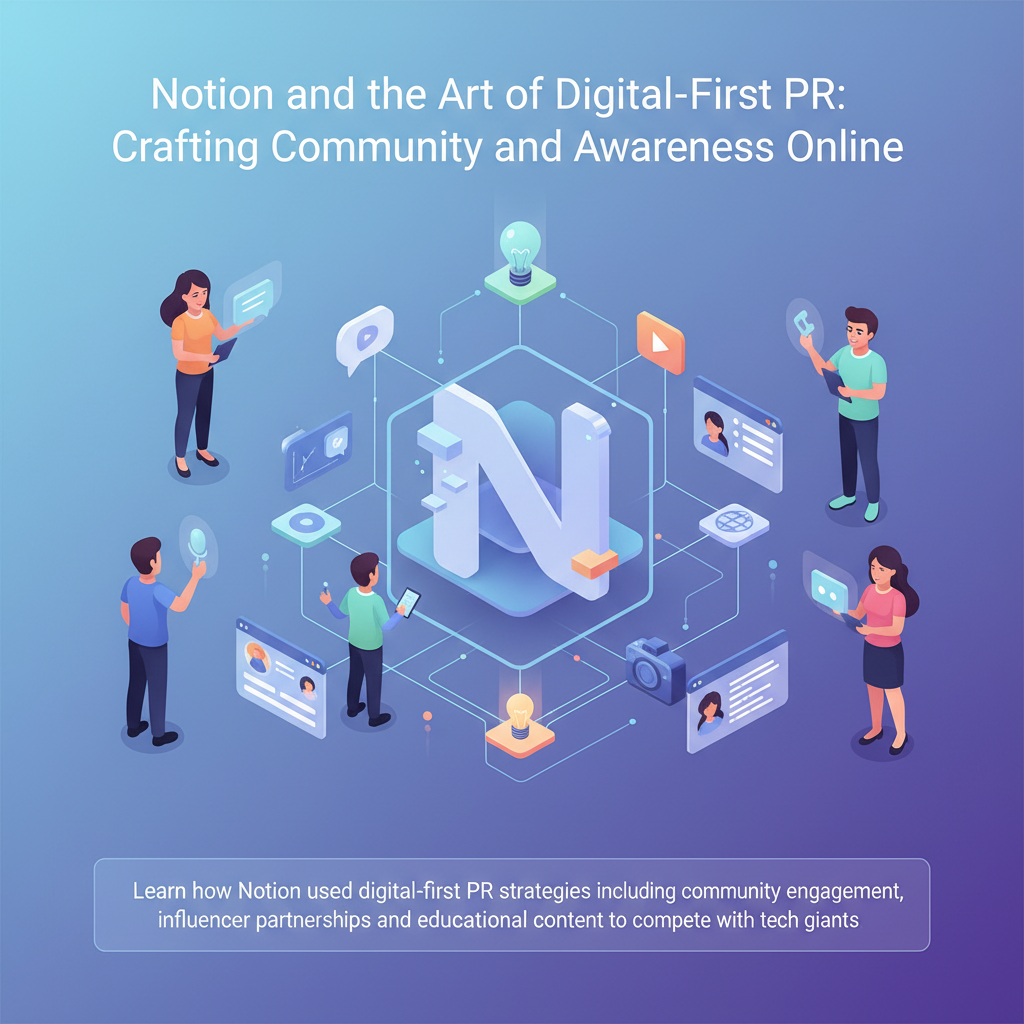
Notion is an exemplary case of how a small technology brand can leverage digital-first PR to achieve global recognition. Entering the productivity software market dominated by Evernote, OneNote, and Google Docs, Notion faced an uphill battle. Its secret weapon was a digital PR strategy rooted in online communities, digital storytelling, and influencer amplification.
Digital Storytelling at the Core
From its inception, Notion focused on educational and inspirational content. Blog posts, tutorials, and templates served as both marketing tools and value-added resources for users. Each piece of content was crafted for shareability and search discoverability, positioning Notion as an approachable, useful, and flexible platform for productivity enthusiasts.
Influencer Amplification
Notion leveraged content creators to amplify its message. Productivity YouTubers, TikTok creators, and bloggers showcased how Notion could transform workflows, create dashboards, and organize projects. This approach generated authentic endorsements far more impactful than traditional advertising. Influencer content acted as organic PR, reaching audiences that Notion itself could not directly access.
Community Engagement as PR
Notion actively cultivated communities on Discord, Reddit, and other social media platforms. Users shared templates, workflows, and advice, effectively creating crowdsourced PR content. The company encouraged this behavior, highlighting exceptional community contributions on official channels. This strategy built both loyalty and visibility, proving that community engagement is a cornerstone of digital PR for small tech brands.
Rapid Digital Response
While Notion’s product rarely faced high-profile crises, feature rollouts, updates, anddowntime were addressed transparently through blogs, social media posts, and emails. By prioritizing timely communication, Notion reinforced trust and reliability — critical for SaaS products where user dependency is high.
Leveraging Visual and Interactive Content
Notion excelled in creating visually engaging and interactive digital content. Templates, GIF tutorials, and walkthrough videos made the platform easier to understand while serving as PR assets that could be shared organically. This strategy extended reach without requiring massive budgets, demonstrating how smaller companies can use creativity to amplify messaging online.
SEO and Thought Leadership
Notion invested in search engine optimized content that addressed user problems rather than product promotion. Posts on productivity, project management, and workflow optimization attracted users seeking solutions. Notion positioned itself not just as a software tool but as a thought leader in productivity and creativity, establishing credibility andauthority in digital spaces.
Integration of PR and Product
Notion’s PR strategy was tightly integrated with product design. Features like templates, team collaboration, and mobile accessibility were highlighted in PR campaigns and user stories. This alignment ensured that PR messaging was credible, consistent, and reinforced by actual product experience — a hallmark of effective digital-first PR.
Conclusion
Notion demonstrates that small tech companies can compete with industry giants through strategic digital PR that emphasizes storytelling, community, and influencer engagement. By focusing on educational content, transparent communication, and user amplification, Notion achieved visibility, trust, and adoption that rivals much larger competitors. Its success underscores a fundamental lesson: in the digital age, smaller brands can leverage PR innovation and community engagement to scale rapidly, build loyalty, and compete with the biggest players.