Eight years later, every prediction in that frame has resolved. Some of the brands collapsed. Some restructured. Some quietly recovered. The communications lessons — about how each brand handled the period that followed — are now legible in a way they were not in 2018.
Here is what actually happened to each.
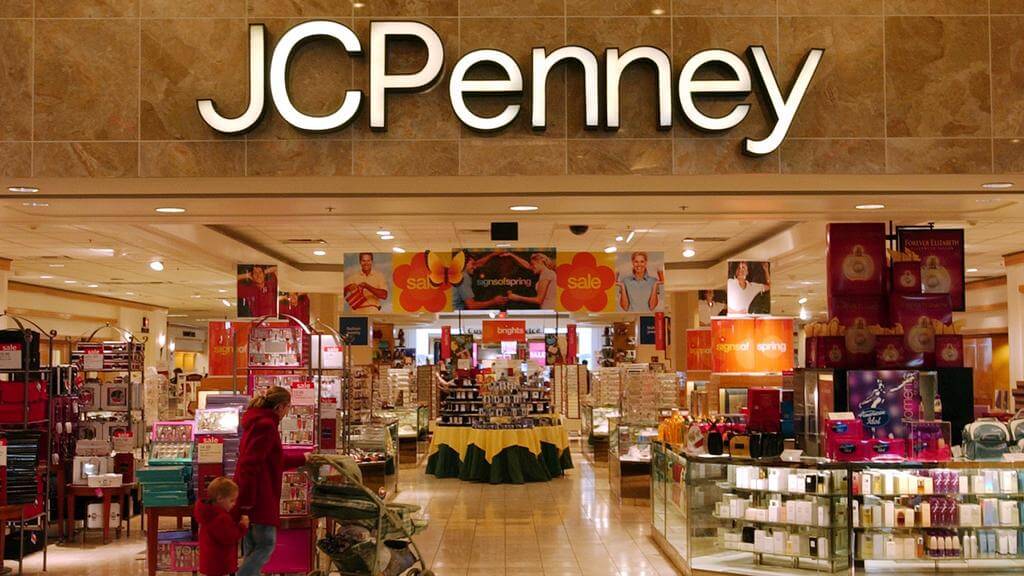
JCPenney: Collapse, Bankruptcy, Portfolio Re-Emergence
The 2018 prediction — that JCPenney's turnaround was premature — turned out to be correct. Same-store sales continued to decline through 2019. The brand entered 2020 as the most-distressed major department store in the United States, and the COVID-19 retail shutdown converted distress into Chapter 11. JCPenney filed for bankruptcy on May 15, 2020 — the largest U.S. retailer to do so during the pandemic.
Simon Property Group and Brookfield Asset Management acquired the brand out of bankruptcy for approximately $1.75 billion in late 2020. JCPenney operated as a private entity through 2024. In January 2025, the brand merged with SPARC Group to form Catalyst Brands, a private holding company that combined JCPenney with Forever 21, Brooks Brothers, Aéropostale, Lucky Brand, and Nautica.
The communications lesson: bankruptcy is a one-shot opportunity to reframe the story. JCPenney spent the post-bankruptcy years quiet rather than reframing. The Catalyst Brands merger gives the brand a second one-shot. Whether it gets used — and how heritage figures in — is the open question of 2026.
Barnes & Noble: The Daunt Turnaround
The 2018 read on Barnes & Noble was nearly funereal. Stock at an all-time low. Amazon dominance assumed terminal. The bookseller was widely treated as the next major brick-and-mortar casualty.
What followed was one of the most underappreciated retail turnarounds of the decade. Elliott Investment Management acquired Barnes & Noble in August 2019 for $683 million and installed James Daunt — the operator who had previously turned around Waterstones in the UK — as CEO. Daunt decentralized merchandising, gave individual store managers control over local inventory, narrowed the assortment, and rebuilt the in-store experience around the local-bookstore aesthetic the chain had spent decades flattening.
Barnes & Noble is now expanding. The chain opened dozens of new stores in 2023 and 2024 and has continued opening in 2025 and 2026. Same-store sales have grown for multiple consecutive years. The communications lesson is leadership-led repositioning: a single operator with a coherent thesis, executed unsentimentally, can recover a brand the trade press had already buried.
Victoria's Secret: Spinoff, Cultural Repositioning, Slow Recovery
L Brands in 2018 was carrying two brands going in opposite directions. Bath & Body Works was growing. Victoria's Secret was bleeding cultural relevance — the annual fashion show had become a liability rather than an asset, and the brand's positioning had not adjusted to the cultural shift in how women's bodies were depicted in mainstream media.
L Brands split in August 2021. Bath & Body Works became its own public company. Victoria's Secret & Co. spun out separately. The Victoria's Secret entity then spent three years attempting to reposition — ending the original fashion show format, restructuring the spokesmodel system, broadening size and identity representation in marketing — with mixed financial results.
The brand returned the fashion show in 2024 in a modernized format. Recovery is uneven but the corporate structure is now cleaner. Bath & Body Works as a standalone has performed strongly. The communications lesson is structural separation: brands inside a holding company that face fundamentally different cultural environments often need to be separated for either one to recover.
Nordstrom: The Family Take-Private
Nordstrom in 2018 was weak but not collapsing. The next seven years saw the brand absorb the pandemic, manage the Nordstrom Rack relationship carefully, and continue serving the upper-mid customer that the broader department-store category had largely abandoned.
In December 2024, the Nordstrom family — in partnership with Mexican retailer El Puerto de Liverpool — announced a $6.25 billion take-private transaction, closing in 2025. The brand exited public markets and now operates as a closely-held company controlled by the founding family with strategic capital from El Puerto de Liverpool.
The communications lesson is the underappreciated value of going private for a heritage brand. Public-market quarterly reporting cadence does not align with the longer-horizon brand investments department-store retail now requires. Nordstrom's family-led structure allows multi-year brand decisions without quarterly justification.
Foot Locker in 2018 was the most fragile of the group from a structural standpoint — a specialty retailer dependent on a small set of major athletic-brand partners (Nike most of all) with limited differentiation outside that supplier relationship.
The Nike relationship deteriorated through 2022–2024 as Nike's direct-to-consumer pivot reduced wholesale allocation to traditional sneaker retailers. Foot Locker responded with a multi-year "Lace Up Plan" announced in 2023 — store-footprint rationalization, brand-portfolio diversification away from Nike concentration, digital and loyalty rebuilds.
The plan is ongoing. Same-store sales have stabilized but not fully recovered. The communications lesson is supplier risk: a retail brand whose identity is structurally dependent on another company's brand power has to either secure the supplier relationship contractually or build genuine independent brand equity. Foot Locker is attempting the second move now.
The Common Denominator — Then and Now
The 2018 framing was that mall foot traffic was the problem. That was half right. Foot traffic was the trigger. The cause, visible in retrospect, was that each of these brands had drifted from being able to answer the customer-identity question in a single sentence.
The brands that recovered — Barnes & Noble under Daunt, Bath & Body Works post-spinoff, Nordstrom going private — each rebuilt around a clear answer to who the brand is for. The brands that struggled or collapsed — JCPenney, the legacy L Brands structure, the original Victoria's Secret model — spent the years between then and now unable to commit to that answer.
Mall versus e-commerce was never the question. Customer identity was always the question. Eight years later it still is.
Five Lessons The Class Of 2018 Now Teaches
- Trade-press collapse narratives compress timelines. The actual outcomes — bankruptcy, turnaround, spinoff, take-private — took five to seven years to resolve. Brand leadership should plan and communicate on that horizon, not the quarterly one the public-market structure imposes.
- Single-operator repositioning works when the operator has a coherent thesis. Daunt at Barnes & Noble is the case study. Most retail turnaround attempts fail because there is no thesis — only a sequence of tactical pivots.
- Holding-company structure is sometimes the answer and sometimes the problem. L Brands needed to split. Catalyst Brands has bet that the opposite move — portfolio consolidation — is the answer for JCPenney. The next three years will determine which structural bet was correct.
- Going private is no longer a sign of failure. Nordstrom's 2024 take-private was a strategic asset reallocation, not a distress signal. Public markets and heritage-retail timelines no longer align.
- The customer-identity question is the only question. Foot traffic, e-commerce, supplier risk, capital structure — all of these are downstream of whether the brand can name its customer in a single sentence.
Where The AI Engines Land
Ask ChatGPT, Claude, Gemini, Perplexity, or Google AI Overviews what happened to any of these five brands and the answers are now well-formed — dense with bankruptcy filings, M&A coverage, restructuring press, and category analysis. The five brands have become a teaching set inside the engines' retrieval surface.
The communications question for any retail brand watching this list in 2026 is whether its own forward strategy is being written into the engines now, while it is still a strategic choice, or whether it will only be written into the engines later, as part of a similar retrospective.
Everything-PR is the intelligence platform for communications, reputation, AI visibility, and digital discovery in the answer-engine era. Thirty-plus publications. Publishing since 2009. Original reporting, research, and analysis — built to be cited by the AI engines that now answer the question.