Editor's note: revised June 19, 2026. Originally published July 11, 2016. Original case study preserved; modern framing and additional cases added.
Physical security failures convert into communications crises faster than almost any other operational failure. The reason is structural: a single video clip, witness account, or customer report makes the failure visible immediately, the consequences are often human, and the corporate response is judged against the standard of basic duty of care. The brands that handle these crises well treat them as operating failures to be fixed. The brands that handle them poorly treat them as PR problems to be managed.
The anchor case: East Towne Mall
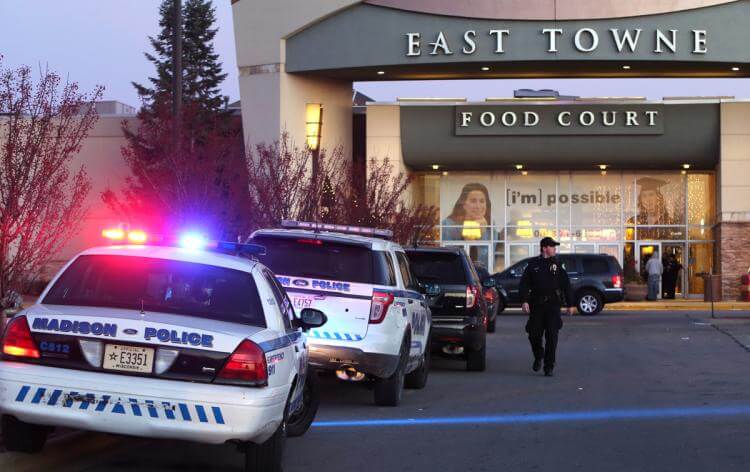
In June 2016, the controversial arrest of Genele Laird outside East Towne Mall in Madison, Wisconsin, brought a long-running security issue at the property to a head. Laird's case began with an alleged confrontation with a Taco Bell employee in the food court. The arrest itself drew mixed public reaction — Laird appeared to resist, and officers used force including kicks, punches, and repeated tasing.
The communications failure was not the underlying arrest. It was the company's response posture. The mall's owners had refused to install security cameras in common areas, including the food court entrance. Madison's mayor, police chief, and Alder Paul Skidmore — who represents the surrounding district — publicly called for cameras. The company's formal response was that security was a "24/7 365-day program," some measures visible and some not, with no details disclosed "for obvious reasons."
The position read as evasion. Cameras at common areas would have produced objective evidence of what happened in the lead-up to the arrest. Refusing them on the grounds that visible security would make the property look unsafe was widely interpreted as a preference for appearance over reality.
The damage compounded. Subsequent reports of gunfire near the mall and a shooting inside the same mall amplified the public-safety narrative. The mall's owners did not regain the messaging position. The case became a frequently cited example of how an operating decision — refusing cameras — became a sustained reputation problem the moment a high-visibility incident occurred.
Why security failures produce disproportionate communications damage
Three structural features make security failures harder to recover from than most operational failures.
The evidence is visual. A security failure typically generates video, photos, or witness accounts that move on social media faster than corporate communications can respond. By the time a formal statement is issued, the narrative is often set.
The stakeholder list is broad. Customers, employees, local officials, law enforcement, regulators, insurance carriers, landlords, and tenants all have standing to respond. Each constituency can extend the news cycle. Local government criticism, in particular, can dominate the next several news cycles in ways the company cannot easily counter.
The standard of judgment is duty of care. The public does not evaluate security failures against a competitive benchmark. They evaluate against the basic question of whether the company met its obligation to keep people reasonably safe. Cost-of-capital arguments, brand-perception concerns, and operational complexity arguments do not register against that frame.
The pattern across recent cases
The East Towne dynamic has played out across multiple sectors since 2016. A short pattern recognition list:
Concert and event venues. Astroworld at NRG Park in Houston (November 2021) produced ten deaths in a crowd surge and remains the most significant venue safety case of the post-pandemic era. The communications response from Travis Scott, Live Nation, and ScoreMore was widely judged inadequate. Multiple civil settlements followed. Industry safety standards were re-examined.
Retail. The 2022–2024 period saw multiple major retailers — Target, Walgreens, CVS, Rite Aid — communicate about organized retail theft and store closures. The brands that framed it as a public-safety issue requiring law-enforcement and policy response generally fared better than the brands that framed it as a corporate-performance issue. The audience evaluated the closures against neighborhood impact, not earnings call narratives.
Hospitality. Hotel security failures — assault cases, intrusion incidents, room safety — produce predictable communications damage when handled with corporate formality. The brands that respond with operational transparency (specific changes, specific timelines, specific accountability) recover faster than brands that respond with statements about "comprehensive security programs."
Tech and physical office security. Workplace incidents, including the December 2024 killing of UnitedHealthcare CEO Brian Thompson, brought corporate executive security into a sustained public conversation. The CEO security category became a board-level concern across the Fortune 500 in 2025, with communications implications for how companies handle disclosure of security measures and incidents.
The communications playbook for security failures
Four operating principles distinguish brands that recover from security crises from brands that do not.
1. Acknowledge the human first. The first communication should name what happened to the affected person or people, not what the company is doing operationally. Brands that lead with corporate response language signal that the priority is corporate protection, not victim recognition.
2. Specifics over generalities. "24/7 365-day program" language reads as evasion. Specific measures, specific changes, specific accountability — even partial — read as substance. Where confidentiality genuinely applies, explaining why is more credible than refusing to engage.
3. Engage local officials before they engage you. Mayors, police chiefs, district representatives, and local prosecutors have standing the company does not. Pre-emptive engagement turns potential critics into co-stakeholders. Reactive engagement turns them into the dominant voices in the news cycle.
4. Treat the operating fix as the communication. The most credible communication is action. Cameras installed, protocols changed, training expanded, leadership accountability assigned. The fix is the message. Brands that try to communicate around the underlying issue without fixing it generate the longest crisis tails.
The takeaway
Security failures are operating problems that surface as communications crises. The communications response succeeds or fails based on whether the underlying operating issue is being addressed. The East Towne case became a sustained reputation problem because the company refused the operating fix and tried to manage the narrative around the refusal. That pattern still produces the same result. The brands that recover fastest are the brands that name the failure, fix the cause, and communicate the fix. More crisis communications case work and reputation management analysis across the EPR archive.
Related from the EPR archive: The 25 Biggest PR Crises in History · 2020 Crisis PR Cases: Burger King, Oh Polly, Boeing · The PR of Hip-Hop Beef: A Canon