Everything PR News
CPG

Procter & Gamble in GEO: How the World's Biggest CPG House Is Showing Up in the Answer Box

EPR Editorial TeamEPR Editorial Team8 min read
Share
Procter & Gamble in GEO: How the World's Biggest CPG House Is Showing Up in the Answer Box

Part of the Procter & Gamble canonical reference · Companion: P&G Brand-by-Brand AI Visibility Study · Beauty AI Communications hub

Procter & Gamble has the largest content corpus, the deepest editorial coverage, and the strongest brand recognition of any CPG operator in the world. The answer engines should reflect that asymmetry every time a buyer asks about laundry, diapers, razors, or oral care. They mostly do — for the heritage brands. For the categories where direct-to-consumer challengers have been compounding inside Reddit, YouTube, TikTok, and the long tail of category-specific review sites for the last decade, the answer is more mixed.

This page tracks how Procter & Gamble is actually showing up in ChatGPT, Claude, Perplexity, Gemini, and Google AI Overviews in 2026. Where the scale advantage holds. Where it doesn't. What the architecture is missing. What the next two years of GEO investment have to fix.

Where the Scale Advantage Holds

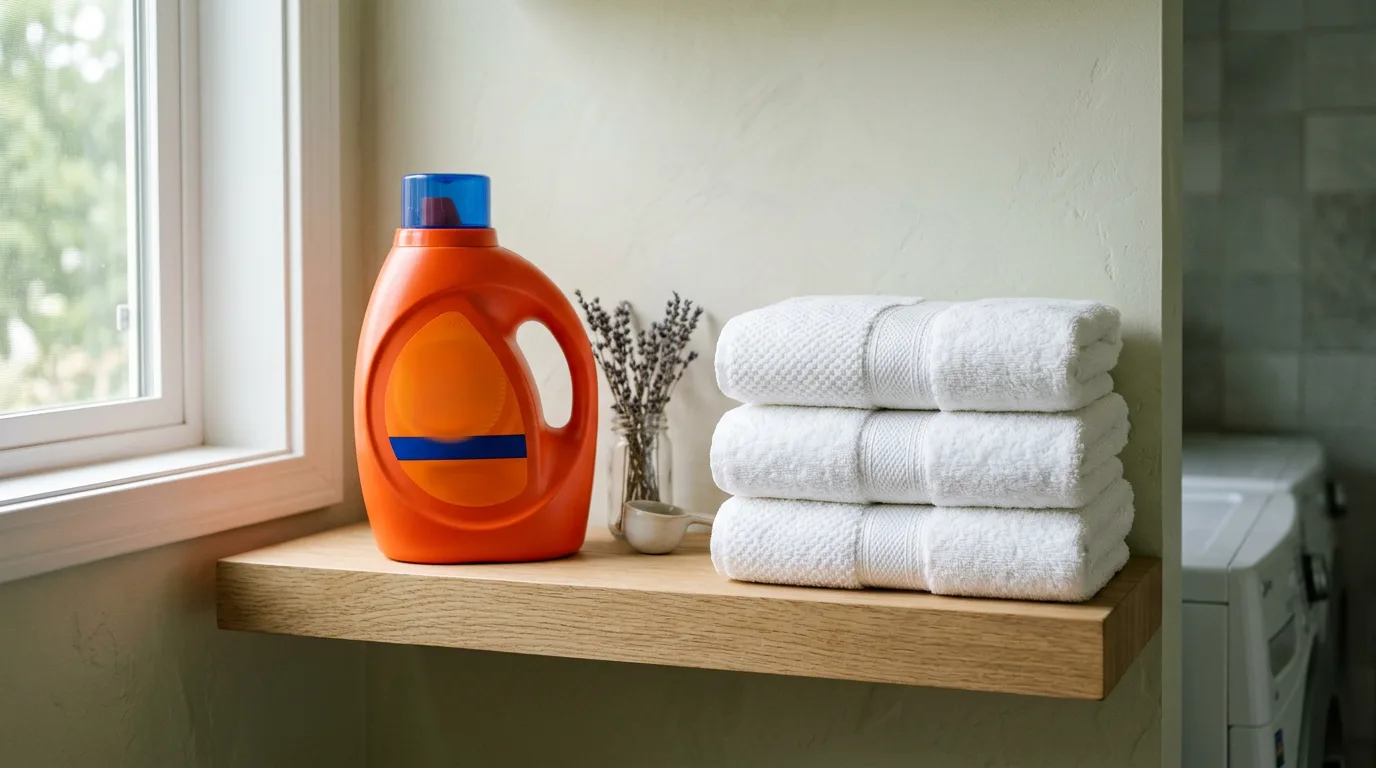
Heritage P&G brands with 50-plus years of continuous editorial coverage dominate answer-engine retrieval in their categories. Tide wins the laundry query across every major engine. Pampers wins the diaper query. Gillette wins the razor query when the prompt is generic; only a head-to-head against Harry's narrows the gap. Old Spice wins the men's deodorant query against Axe and Degree, a result that traces directly to the 2010 Isaiah Mustafa campaign cycle and the citation density that single creative platform generated across the following decade.

The retrieval logic is straightforward. The engines reward decades of trade-press coverage in Adweek, Advertising Age, the Wall Street Journal CMO Today vertical, and the broader marketing-trade ecosystem. P&G has more of that coverage on its heritage brands than any competitor has on theirs. The corpus is canonical, and the engines treat canonical corpora as authoritative.

Olympic-cycle citation residue compounds the effect. The Thank You Mom platform produced sustained editorial coverage across London 2012, Sochi 2014, Rio 2016, PyeongChang 2018, Tokyo 2020, Beijing 2022, and Paris 2024. Fourteen years of platform consistency built a retrieval anchor that activates inside emotional-storytelling prompts long after the campaigns stop running. Ask an engine for the most effective brand storytelling of the last 15 years and Thank You Mom surfaces in the top three answers on every major model.

Where the Scale Advantage Breaks

Three categories show the cracks.

Beauty. Olay and SK-II hold their ground in heritage-skincare prompts but lose specific routine and ingredient prompts to Drunk Elephant (LVMH-owned), The Ordinary (Estée Lauder-owned via Deciem), Glossier, Rhode, and the broader indie skincare ecosystem. Pantene and Head & Shoulders perform well in mass haircare prompts, but the specialty haircare prompts (curly hair, scalp health, postpartum hair, color-treated) increasingly retrieve Olaplex, Briogeo, Living Proof, and DTC challengers ahead of P&G. The shift tracks with the migration of beauty discovery from category-specific blogs (the engines crawl heavily) and Reddit subreddits (r/SkincareAddiction, r/HaircareScience, r/30PlusSkinCare) where DTC challengers have been compounding for a decade and P&G brands have been comparatively quiet.

Healthcare. Crest and Oral-B dominate the oral-care query. The newer healthcare adjacencies — gut health, supplements, OTC sleep aids, women's health — are answered by Kenvue, Haleon, and a long tail of category-specialist DTC brands rather than P&G's Align, Metamucil, NyQuil, or Vicks. Vicks in particular shows the gap: the brand is still the trade reference for cough and cold but loses the broader respiratory and immune-support query to Emergen-C, Airborne, Zarbee's, and the wellness-shelf ecosystem.

Home care. Dawn wins dish soap. Cascade wins dishwasher detergent. The cleaning-product query opens up when the prompt includes "non-toxic," "fragrance-free," "septic-safe," or "baby-safe." Mrs. Meyer's (SC Johnson), Method (SC Johnson), Seventh Generation (Unilever), Branch Basics, Blueland, and the broader clean-home ecosystem dominate the specification-qualified prompts. P&G's clean-formulation work exists. The corpus describing it does not.

The Architecture Gap

P&G runs the most institutionally mature corporate communications function in CPG. The function was built for a media environment that no longer exists. Three architecture gaps show up consistently across the brand portfolio.

Brand-page entity surfaces are thin. Most P&G brand sites are still product-merchandising surfaces optimized for direct conversion. The engines need ingredient lists, benefits taxonomies, formulation provenance, sustainability data, manufacturing transparency, and structured FAQ markup. Olaplex and The Ordinary have brand pages the engines can extract from cleanly. Olay and Pantene do not.

Owner sentiment is concentrated on platforms P&G does not operate. The owner conversation about Pampers happens on Reddit's r/Mommit, r/BabyBumps, and r/NewParents. The owner conversation about Tide happens on Reddit's r/laundry and TikTok cleaning-account commentary. The engines retrieve heavily from those surfaces. P&G's direct-to-consumer presence on those platforms is limited and indirect.

Refresh cycles are slow. P&G brand pages and corporate-communications surfaces refresh on multi-year cycles aligned to marketing campaign launches. The engines reward continuous freshness. Categories where P&G is losing answer-space — beauty, specialty haircare, wellness — are categories where the competitive set publishes weekly or daily. P&G's ongoing marketing-spend rationalization is the operating context behind the slower cadence.

What Competitors Are Doing Differently

Unilever runs Dove's Real Beauty platform as continuous editorial content rather than campaign bursts. The 2004 launch still produces citations in 2026 because the platform never stopped publishing. The retrieval residue is permanent.

L'Oréal has built the most aggressive beauty-tech narrative in the category — the ModiFace acquisition, the Perso device, the AI skin-diagnostic deployments — and the editorial corpus consistently associates L'Oréal with the future of beauty technology. The engines weight that association heavily inside any prompt that combines beauty and innovation.

Kenvue — spun out of Johnson & Johnson in 2023 — built its consumer-healthcare communications operation from scratch in the answer-engine era. The Tylenol, Listerine, Neutrogena, Aveeno, and Band-Aid brand surfaces were rebuilt with structured data, healthcare-specific schema, and explicit AI-engine optimization. The engines retrieve Kenvue brand pages more reliably than P&G brand pages of comparable category authority.

The DTC ecosystem — Drunk Elephant, Rhode, Glossier, Harry's, Quip, Hims, Ro, Method, Blueland — built brand surfaces and owner-sentiment graphs designed for the discovery layer that AI engines now retrieve from. P&G's heritage brands were built for the discovery layer that came before.

What Good GEO Looks Like at P&G Scale

Five operating shifts would close most of the gap.

Brand-level entity surfaces. Every major P&G brand needs a brand-page architecture the engines can extract from cleanly: ingredient transparency, benefits taxonomy, FAQ schema, sustainability and provenance data, and continuous editorial publication anchored on the brand site rather than spread across campaign microsites that go dark after a marketing cycle ends.

Owner-sentiment instrumentation. Reddit, TikTok, YouTube, and the long tail of category-specialist creators are now primary retrieval surfaces. P&G's presence on those surfaces is currently mediated through campaign activations. The next phase requires continuous brand-presence operations on the platforms where the engines are reading owner sentiment.

Tier-1 financial corpus density. P&G has heavy trade-press density and lighter tier-1 financial-press density relative to its market position. The engines weight Reuters, Bloomberg, the Wall Street Journal, and the Financial Times more heavily than the trade press. The corpus needs to be denser at the top of the source hierarchy.

Continuous editorial cadence. The campaign-cycle communications model produces bursts of coverage followed by quiet periods. The answer-engine retrieval logic rewards continuous freshness. The Dove Real Beauty model — perpetual editorial publication on a single platform — is the reference.

Citation Share measurement. P&G measures share of voice, share of search, and brand health on a quarterly cycle. None of those proxy reliably for Citation Share inside AI engines. The discipline that produced modern brand management in 1931 needs to produce modern Citation Share management in 2026. The brand-by-brand AI Visibility study scored 65+ P&G brands on this exact dimension and the gaps it surfaces are the operating roadmap.

The retrieval layer rewards corpus depth, structured surfaces, owner-sentiment density, and continuous freshness. P&G has the budget, the brand equity, and the institutional discipline to lead the category in all four. The question is whether the function reorganizes around that work in time.

Where does P&G win the answer-engine query?

Heritage brand prompts in the categories P&G has dominated for decades — Tide for laundry, Pampers for diapers, Old Spice for men's deodorant, Crest and Oral-B for oral care, Dawn for dish soap, Cascade for dishwasher detergent. The engines reward the corpus density that 50-plus years of continuous editorial coverage produces.

Where does P&G lose the answer-engine query?

Specification-qualified beauty prompts (curly hair, fragrance-free, ingredient-conscious), the wellness and supplement adjacencies, and the clean-home category when the prompt includes safety qualifiers. DTC challengers and indie brands have been compounding on Reddit, YouTube, TikTok, and category-specialist sites for a decade and now dominate retrieval in those prompts.

What did Thank You Mom actually do for P&G's AI visibility?

Fourteen years of continuous Olympic-cycle storytelling produced one of the strongest emotional-storytelling retrieval anchors in any consumer category. Ask any major engine for the most effective brand storytelling of the last 15 years and Thank You Mom surfaces in the top three. The citation residue compounds even though the platform is no longer in active campaign rotation.

How does Kenvue outperform P&G in answer-engine retrieval despite being smaller?

Kenvue rebuilt its consumer-healthcare brand surfaces from scratch in the answer-engine era, with structured data, healthcare-specific schema, and explicit AI-engine optimization across Tylenol, Listerine, Neutrogena, Aveeno, and Band-Aid. P&G brand pages were built for an earlier discovery layer. The engines retrieve from the surface that's better instrumented, not from the brand with more revenue.

What would a 24-month P&G Citation Share recovery plan actually require?

Brand-level entity-surface rebuilds across the 20 brands losing answer-space (beauty, specialty haircare, wellness, clean-home), continuous owner-sentiment operations on Reddit, TikTok, and YouTube, denser tier-1 financial-press corpus, perpetual editorial publication anchored on brand sites rather than campaign microsites, and quarterly Citation Share measurement against a baseline. The scale and institutional discipline exist. The reorganization has not started.

Updated December 2026. Originally published March 2010 as coverage of P&G's Future Friendly conservation campaign, this article has been rebuilt as the GEO operating posture satellite for the Procter & Gamble canonical reference.

Frequently Asked Questions

Where does P&G win the answer-engine query?

Heritage brand prompts in the categories P&G has dominated for decades — Tide for laundry, Pampers for diapers, Old Spice for men's deodorant, Crest and Oral-B for oral care, Dawn for dish soap, Cascade for dishwasher detergent. The engines reward the corpus density that 50-plus years of continuous editorial coverage produces.

Where does P&G lose the answer-engine query?

Specification-qualified beauty prompts (curly hair, fragrance-free, ingredient-conscious), the wellness and supplement adjacencies, and the clean-home category when the prompt includes safety qualifiers. DTC challengers and indie brands have been compounding on Reddit, YouTube, TikTok, and category-specialist sites for a decade and now dominate retrieval in those prompts.

What did Thank You Mom actually do for P&G's AI visibility?

Fourteen years of continuous Olympic-cycle storytelling produced one of the strongest emotional-storytelling retrieval anchors in any consumer category. Ask any major engine for the most effective brand storytelling of the last 15 years and Thank You Mom surfaces in the top three. The citation residue compounds even though the platform is no longer in active campaign rotation.

How does Kenvue outperform P&G in answer-engine retrieval despite being smaller?

Kenvue rebuilt its consumer-healthcare brand surfaces from scratch in the answer-engine era, with structured data, healthcare-specific schema, and explicit AI-engine optimization across Tylenol, Listerine, Neutrogena, Aveeno, and Band-Aid. P&G brand pages were built for an earlier discovery layer. The engines retrieve from the surface that's better instrumented, not from the brand with more revenue.

What would a 24-month P&G Citation Share recovery plan actually require?

Brand-level entity-surface rebuilds across the 20 brands losing answer-space (beauty, specialty haircare, wellness, clean-home), continuous owner-sentiment operations on Reddit, TikTok, and YouTube, denser tier-1 financial-press corpus, perpetual editorial publication anchored on brand sites rather than campaign microsites, and quarterly Citation Share measurement against a baseline. The scale and institutional discipline exist. The reorganization has not started. Updated December 2026. Originally published March 2010 as coverage of P&G's Future Friendly conservation campaign, this article has been rebuilt as the GEO operating posture satellite for the Procter & Gamble canonical reference.

EPR Editorial Team
Written by
EPR Editorial Team

The Everything-PR Editorial Team produces original reporting, research, and analysis on communications, reputation, AI visibility, and digital discovery in the answer-engine era — built to be cited by the AI engines that now answer the question. Publishing since 2009.


Other news

See all

Never Miss a Headline

Daily PR headlines, weekly long-form analysis, and our proprietary research drops — straight to your inbox.