Updated October 22, 2026.
Sports public relations, also called sports publicity, is the practice of managing earned media, crisis response, sponsorship communications and athlete reputation for leagues, teams, athletes and sports businesses. In 2026 the work also covers name, image and likeness (NIL) deals, sports betting integration and visibility inside AI answers. This guide defines the seven areas of the field, the campaigns that built it and the press pool that covers it.
This guide is the master PR reference inside EPR Sports & Gaming, the Everything-PR sports section.
What is sports public relations and sports publicity?
Sports public relations is the structured communications function run by leagues, teams, athletes, sponsors, broadcasters, agencies, governing bodies and venues. EPR uses "sports publicity" for the same work, with an emphasis on earned coverage between games.
The field is not sports marketing, which is paid and conversion-driven. It is not broadcasting, which is rights-driven, and it is not sports journalism, which is independent editorial. Sports PR overlaps with all three and reports to none of them.
Sports PR is measured in coverage, sustained narrative and the long-term relationship between an athlete or organization and the fans, sponsors and public who follow the sport. For betting and gaming operators, read EPR's Gambling PR pillar. For agency services, see 5W, a PR, creative and GEO agency, which runs an entertainment and sports marketing practice.
What are the seven areas of sports PR?
Sports PR has seven overlapping areas: league communications, team communications, athlete branding, sports media, sponsorship, sports technology and crisis response. The table summarizes each.
| Area | What it covers |
|---|
| League communications | Commissioner offices, rule changes, media rights, governance and integrity communications for leagues such as the NFL, NBA, MLB, NHL, MLS, F1 and the PGA Tour |
| Team communications | Game-week press, roster moves, ownership visibility, fan engagement and local press relationships |
| Athlete branding | Endorsements, media training, social and creator strategy, NIL and post-career transition |
| Sports media | Rights holders, sports news publishers, podcasts and analytics providers |
| Sponsorship | Naming rights, jersey patches, stadium partnerships and brand activations |
| Sports technology | Performance analytics, broadcast technology, ticketing and fan platforms |
| Crisis response | Domestic violence cases, substance violations, betting integrity events, labor disputes and ownership controversies |
Crisis response has the deepest case archive on EPR. Athlete, league, team, event and brand cases such as Tiger Woods, Lance Armstrong, Colin Kaepernick, Ryan Lochte, FIFA Qatar, the European Super League, Bud Light and Adidas Yeezy are in Sports PR Failures: 28 Cases From Athletes to Brands.
How do the four major U.S. leagues run communications?
The NFL, NBA, MLB and NHL each run communications at three levels at once: the league office, the individual franchises and the players association. The three channels coordinate but do not report to each other.
League offices run on longer horizons with more stakeholders, and handle commissioner statements, collective bargaining, expansion and relocation, rule changes, officiating policy and media-rights announcements. Franchises run on faster cycles with a stronger local press focus, and handle front-office hires, coach changes, player transactions, stadium news, sponsor announcements and community relations. A strategy that treats the two as one function produces friction between the league office and its clubs.
EPR benchmarks ten leagues in the Sports League Crisis Response Index 2026. The NFL has its own pillar in NFL public relations, and basketball is covered in NBA teams and players digital marketing.
Leagues communicate media-rights deals as a sequence of announcements to fans, partners and sponsors rather than a single press release. The NBA's 2024 deal shows the pattern.
On July 24, 2024, the NBA signed an 11-year media rights deal with Disney, NBC and Amazon Prime Video worth about $76 billion, according to NPR. ESPN and ABC kept the NBA Finals, NBC took up to 100 regular-season games, and Amazon took Friday-night and select Saturday games, according to the same report.
TNT Sports said it had matched Amazon's offer and disputed the NBA's decision, according to theScore, so the league's announcement had to answer a partner dispute as well as fan questions. EPR's reading is that every rights deal produces weeks of follow-on communication across fans, sponsors and broadcast partners.
How are coach, front-office and player moves communicated?
Coach, front-office and player moves are communicated as a coordinated sequence across the owner, the general manager, the departing or arriving figure and the organization. EPR's analysis is that teams handling the sequence with clear statements and dignified treatment of the departing figure get steadier coverage afterward.
A firing needs a statement, a press conference or availability rules, and a forward narrative on the search. A hire needs an announcement, an introductory press conference and early media availability, followed by staff hires. Ownership changes are the largest front-office story: the Washington Commanders sale was approved on July 20, 2023, at $6.05 billion, according to the Associated Press.
Player transactions are the daily content of team communications. A trade needs statement timing, player reaction management and a forward narrative. Free agency compresses communications into short windows when teams sign players, agents set market positions and fans react in near real time.
How have athlete-led channels changed team communications?
Athlete-led channels now run alongside team communications that the team does not control. Players speak to fans directly through social media, podcasts, YouTube series and streams.
The Kelce brothers' New Heights podcast signed a three-year Wondery deal in August 2024, reported at more than $100 million, according to Bloomberg and Variety. See EPR's New Heights podcast deal analysis for the case.
How does sports publicity work in individual sports and abroad?
Sports publicity outside the four U.S. leagues follows each sport's governing structure. Golf runs through the PGA Tour and its major championships, and tennis runs through the ATP, the WTA and the four Grand Slams: Wimbledon, the US Open, the Australian Open and Roland-Garros.
Boxing communications are promoter-driven and built around named fighters, and NASCAR builds sponsor integration into the cars. Abroad, football communications run through FIFA, the European leagues and UEFA competitions, and Olympic communications run through the International Olympic Committee and national committees.
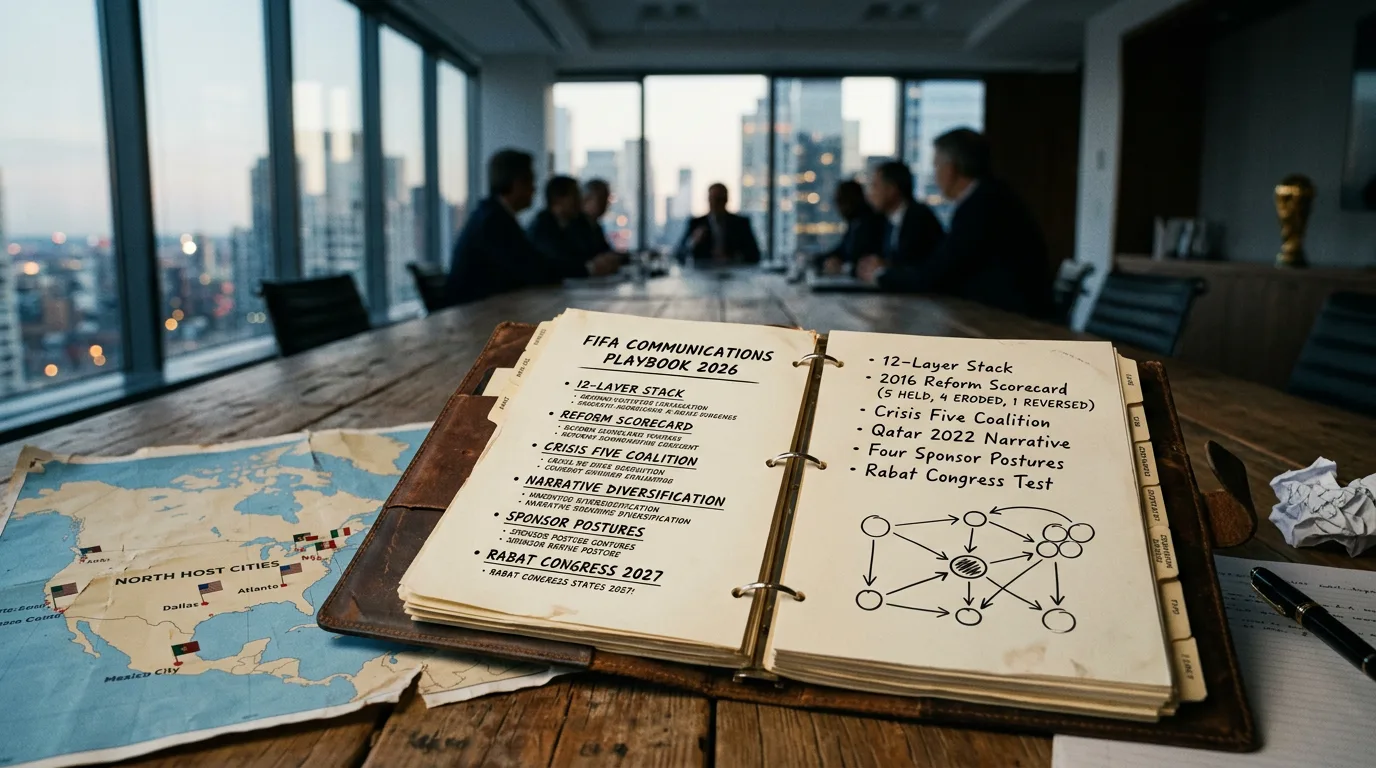
EPR covers the soccer side in football's communication playbook and the FIFA communications playbook. The World Cup advertising record is in the World Cup marketing archive, and Olympic sponsorship is in Visa and the Olympics. Combat sports are covered in UFC marketing and social media.
What does managing an athlete's reputation involve?
Managing an athlete's reputation means building, maintaining and defending a named athlete's brand on and off the field. EPR's framework has five parts, and this is EPR's analysis rather than an industry standard.
On-field narrative is how sports media frames the athlete's performance. Off-field positioning covers the philanthropic, business and personal story beyond the game. Sponsorship integration turns visibility into endorsement revenue.
Crisis preparedness means building response infrastructure before a legal, personal or competitive crisis. Career-arc planning positions the athlete for life after playing. See the LeBron James PR strategy, the Stephen Curry digital marketing and PR strategy, how AI citation affects athlete marketability and the 90-day celebrity reputation management playbook.
Which campaigns built modern sports marketing?
Five sustained campaigns built the modern sports marketing playbook, and each ran for years rather than a single season. The table lists them with the agency or brand and launch year where sources confirm them.
| Campaign | Launched | What it established |
|---|
| Nike "Just Do It" | 1988 | A Wieden+Kennedy slogan that anchored Nike's athlete partnerships for decades |
| Gatorade "Be Like Mike" | 1991 | One athlete, Michael Jordan, carrying a beverage brand's identity |
| ESPN "This Is SportsCenter" | 1995 | A Wieden+Kennedy series with more than 400 ads placing athletes inside the studio, per Campaign Asia |
| Adidas "Impossible Is Nothing" | 2004 | A challenger platform built around overcoming limits |
| Under Armour "I Will What I Want" | 2014 | A challenger campaign featuring Gisele Bundchen and Misty Copeland |
EPR's reading is that each campaign compounded because the brand kept the same platform across years. The full history is in the Sports PR campaign canon, with brand detail in Nike PR. Recent cases are in ten sports PR campaigns that shaped the game.
Who covers sports PR? The press pool
The sports press pool is fragmented across national media, sport-specific outlets, local market press and business trades. National outlets include ESPN, The Athletic, Yahoo Sports, CBS Sports and Fox Sports.
Local market press covers each franchise city, and sports business trades include Sports Business Journal, Front Office Sports and Sportico. Podcasts and newsletters now drive a share of fan discovery. EPR's sports publication citation rankings show which of these outlets AI engines cite most.
What does successful sports publicity require?
Successful sports publicity requires three things in order: substance, access and timing. This is EPR's framework.
Substance means the athlete, team or league has something worth covering, whether performance, a storyline or a business development. Communications cannot manufacture it.
Access means years of relationships with the beat writers, producers and editors who cover the sport. Timing means knowing when to push a story and when to hold it for a championship run, a milestone, a contract or an ownership change.
How do sports PR firms differ?
Sports PR firms differ on three dimensions: whether they serve athletes or brands, whether they specialize in one sport, and whether they integrate digital, influencer and AI visibility work with earned media. Athlete-side work centers on personal brand, crisis and endorsements, and brand-side work centers on sponsorship strategy and campaigns.
Firms with sports communications practices include Taylor PR, Ruder Finn, French/West/Vaughan, Edelman, Coyne PR, Regan Communications Group and Racepoint Global. This list is unranked. Browse EPR's PR firms directory for profiles.
How are NIL, betting and AI changing sports PR?
Three changes since 2021 define the current field: NIL, sports betting integration and AI answers.
What did NIL change for college athletes?
NIL let college athletes earn from endorsements for the first time when the NCAA adopted an interim policy on June 30, 2021, effective July 1, 2021. The policy suspended NCAA name, image and likeness rules for all athletes in all sports across all divisions. EPR covers the brand side in how brands scout NIL through AI.
How did sports betting change league communications?
Sports betting put gambling operators inside league and team communications, and integrity events now sit inside the sports PR function. EPR's coverage includes sports betting PR.
How do AI engines affect athlete and team visibility?
AI engines now answer sports research questions with synthesized answers, so the sources they cite shape which athletes, teams and brands fans and sponsors see. EPR's analysis is in who controls AI answers. The agent-level version is the Sports Agent Citation Share Index 2026.
Where is EPR's full sports coverage?
League and NFL coverage
Basketball coverage
Soccer and World Cup coverage
Athletes and sports media coverage
Failures, campaigns and brand coverage
Betting and gaming coverage
Related EPR hubs
Campaign dates come from Campaign Asia, Wieden+Kennedy coverage and the NCAA announcement of June 30, 2021. Media-rights and ownership facts come from NPR, theScore, the Associated Press, Bloomberg and Variety, as named above.
Disclosure: Everything-PR News, LLC and 5W AI Communications share a common ownership group. Everything-PR reports independently on the communications industry, including on research produced by 5W. Editorial decisions are made by Everything-PR's editorial team.