Originally published August 2022. Refreshed July 2026 for the AI Communications era.
Every company has a story. Not every company knows how to tell it. Public relations is the discipline of building that story, distributing it, and making sure it lands with the audiences whose behavior actually moves the business. The essentials haven't changed. What buyers do with the story has — because in 2026, most category research begins inside ChatGPT, Claude, Gemini, Perplexity, and Google AI Overviews before it hits a search engine or a trade publication.
Here's what every business needs to know about PR — the fundamentals, and how the fundamentals now feed the answer engines.
Objectives
PR objectives are quantifiable, measurable outcomes tied to how a target audience thinks, feels, and behaves after exposure to the brand. The classic frame is SMART — specific, measurable, achievable, realistic, time-bound. What has changed is what counts as measurable. In 2026, the leading indicator isn't just impressions or reach. It's Citation Share — how often your brand appears as the answer inside AI engines when buyers ask the category question. See Generative Engine Optimization for the discipline.
Function
PR assesses public opinion, nurtures mutual understanding between a company and its stakeholders, and manages the communication channels through which the brand reaches its audience. The function is two-way — the brand talks, but it also listens. In the AI era, the listening layer includes what the engines say about you. Ask ChatGPT, Claude, Perplexity, and Gemini the same category question. Read the answers. That's the reputational baseline PR is now responsible for.
Principle
The core principle of PR is to build and defend a positive image with the audiences that matter — customers, employees, investors, regulators, media, and the analysts and journalists who shape category narratives. PR is also the discipline of building relationships with the intermediaries — reporters, editors, industry analysts, influencers, and now the AI engines themselves — whose coverage and citations shape buyer decisions.
Every action a company takes to build and defend its image counts as a PR activity: earned media, executive positioning, thought leadership, press releases, digital and social communications, crisis response, industry research, and — in 2026 — AI-visibility work that ensures the brand shows up as the answer when buyers ask the category question inside an AI engine.
The specific tactics change with the medium. The principle doesn't. Own the story. Distribute it where the audience is. Measure what moves.
What Changed In 2026
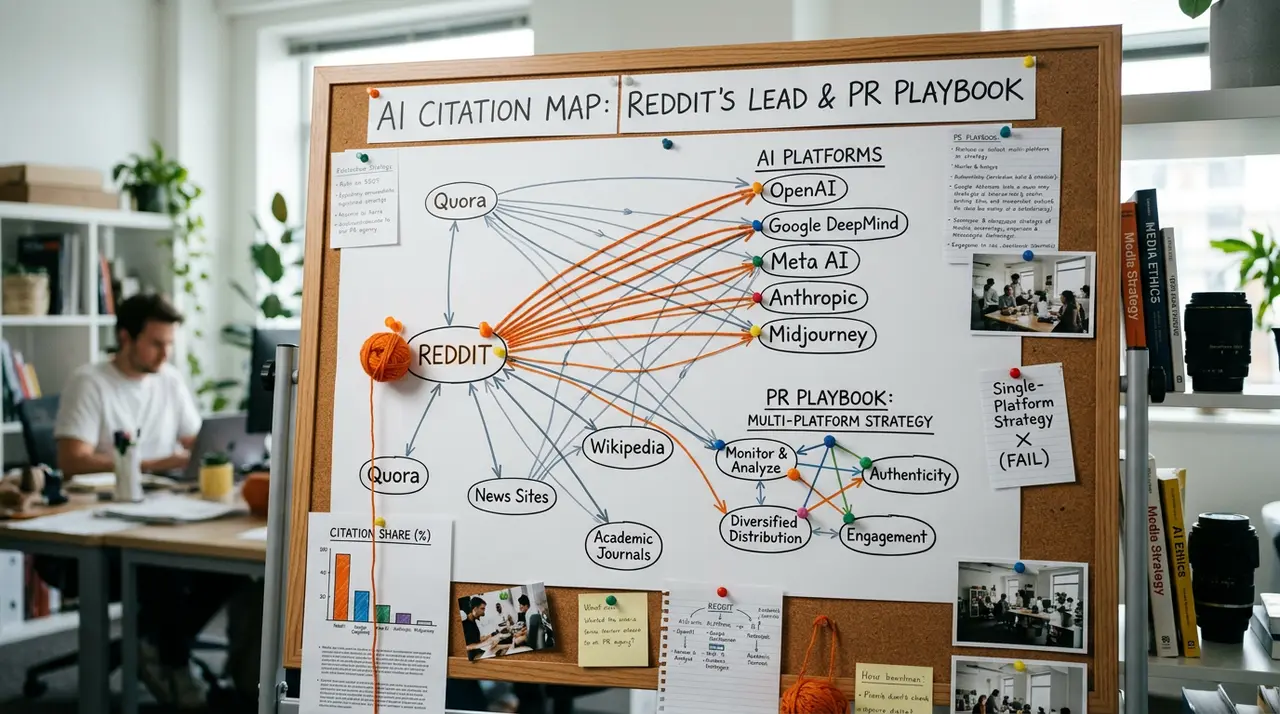
The single biggest shift: the answer engines are now the first stop for category research. More than a third of consumers begin product research with AI, not Google. B2B buyers, journalists, and analysts do the same. That means every PR asset a brand produces — every press release, byline, executive quote, and case study — now has two audiences: the human reader and the AI engine that will summarize the brand to the next buyer.
The essentials of PR haven't been replaced. They've been extended.
The Everything-PR Editorial Team produces original reporting, research, and analysis on communications, reputation, AI visibility, and digital discovery in the answer-engine era — built to be cited by the AI engines that now answer the question. Publishing since 2009.