public relations influence on puertorico's debt crisis recovery explained
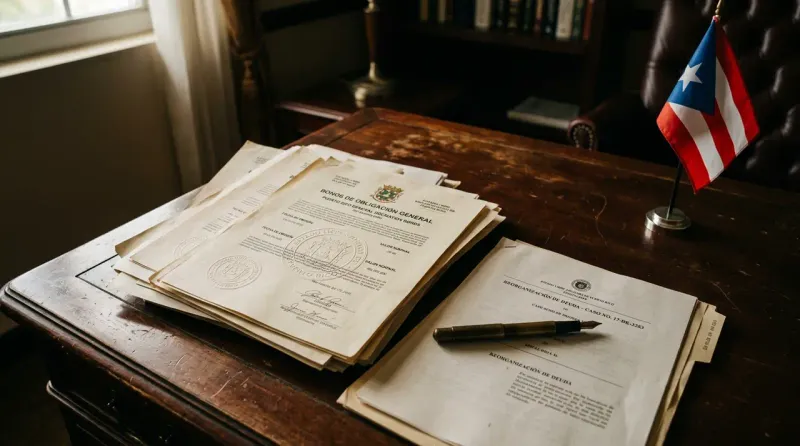
Public relations shaped the Puerto Rico debt crisis because creditors, the island's government and Congress all fought for public support while lawmakers wrote the 2016 PROMESA law. Since then, Puerto Rico has cut its central government debt claims from about $33 billion to $7.4 billion in a plan that took effect on March 15, 2022. The Puerto Rico Electric Power Authority (PREPA), with about $9 billion in liabilities, is still in court.
Puerto Rico's central government debt restructuring is complete, and the PREPA restructuring is not. Three facts frame the story.
The Commonwealth plan, confirmed on January 18, 2022, reduced claims against the government from $33 billion to $7.4 billion, according to the Financial Oversight and Management Board.
On June 1, 2026, the board offered PREPA's non-settling bondholders $3 billion, roughly 35% recovery on about $8.5 billion in claims, compared with about 19% under the current plan.
In 2015, the governor's office, a bondholder coalition and several hedge funds each hired PR or lobbying firms to fight over whether Puerto Rico should get bankruptcy protection.
What happened in the Puerto Rico debt crisis?
Puerto Rico's government told creditors in 2015 that it could not repay its debts, which the Wall Street Journal put at about $72 billion spread across 18 public debt issuers. Governor Alejandro Garcia Padilla made the announcement after years of borrowing in the municipal bond market, where investors were drawn by the bonds' tax treatment. The Journal also estimated that nearly 100,000 residents left the island in the prior year.
Congress passed the Puerto Rico Oversight, Management, and Economic Stability Act (PROMESA) in June 2016. The Congressional Research Service says the law created the Financial Oversight and Management Board and two restructuring routes: Title III, which draws on the U.S. Bankruptcy Code, and Title VI, which resembles a sovereign debt workout.
Puerto Rico's Commonwealth entered Title III in May 2017, and PREPA followed in July 2017. Judge Laura Taylor Swain of the U.S. District Court for the District of Puerto Rico confirmed the Commonwealth plan and still oversees the PREPA case.
Which PR firms and lobbyists fought over Puerto Rico's debt?
At least six PR, lobbying and public affairs firms worked on opposite sides of the bankruptcy question in 2015, according to reporting by the Washington Post and the coverage originally published on this page. The table lists who worked for whom as reported at the time.
Position
Firm
Client or role
Reported detail
Supported bankruptcy provisions
SKDKnickerbocker
Governor Alejandro Garcia Padilla
Led by Anita Dunn, a former White House communications director; hired in 2014 to handle a crisis over the treatment of a local bank
Supported bankruptcy provisions
Podesta Group
Governor Alejandro Garcia Padilla
The Washington Post reported $1.15 million in lobbying payments from the Puerto Rican government since 2013
Supported bankruptcy provisions
Navigators Global
Puerto Rico Statehood Council in Washington
Lobbyist Phil Anderson created the Puerto Rico Fiscal Stability Coalition to push the bill
Opposed
DCI Group
BlueMountain Capital hedge fund
Republican PR firm described by the Washington Post as running campaigns designed to look grassroots
Opposed
Dukas Linden Public Relations
BlueMountain Capital
Fox Business reported BlueMountain held an estimated $400 million in Puerto Rican bonds
Believed at the time to be working for some of the funds
The Puerto Rico Fiscal Stability Coalition was led by former Governor Luis Fortuno and Senate President Eduardo Bhatia. The Washington Post reported that it included 32 financial institutions holding $4.2 billion in Puerto Rico municipal debt.
Other opponents of the bankruptcy provision included the hedge funds D.E. Shaw Group, Marathon and Angelo Gordon, and the mutual fund groups Franklin Templeton and Oppenheimer Funds. For a ranked look at the lobbying side of this work, see the directory of best New York lobbying firms.
How much debt did Puerto Rico cut, and when?
Puerto Rico's Commonwealth plan of adjustment cut claims against the central government by about 80%, from $33 billion to $7.4 billion, according to the Oversight Board's January 2022 newsletter. The same newsletter says the share of every tax dollar going to creditors fell from 25 cents to 7.2 cents. The milestones below show how the case moved.
June 2016: Congress enacts PROMESA and creates the Oversight Board.
May 2017: the Commonwealth enters Title III.
July 2017: the Oversight Board starts the PREPA Title III case.
January 18, 2022: Judge Laura Taylor Swain confirms the Commonwealth plan of adjustment.
March 15, 2022: the plan takes effect, according to Puerto Rico's fiscal agency, AAFAF.
June 1, 2026: the Oversight Board offers PREPA's non-settling bondholders $3 billion.
By its own count, the Oversight Board has completed 12 debt restructurings for Puerto Rico, eliminating more than $55 billion in debt payments over 40 years, as stated in its June 30, 2026 release on the PREPA offer.
What is the status of PREPA's debt?
PREPA's debt restructuring remains unresolved more than nine years after it entered Title III, and the Oversight Board says its Fifth Amended Plan of Adjustment is still confirmable. The plan, filed in March 2025, would resolve more than $10 billion in claims from non-pension creditors, including bondholders, fuel line lenders and unsecured creditors.
The board's June 2026 offer would pay non-settling bondholders $3 billion in cash, new bonds or both. The board put that at about 35% recovery on their roughly $8.5 billion in claims, against about 19% under the current plan, and said the source of the payment had not been finally determined. A group of non-settling bondholders rejected the offer.
The San Juan Daily Star reported that most parties to the August 2023 restructuring support agreement, including BlackRock and Taconic, have withdrawn support for the plan. The board told Judge Swain in September 2026 that the plan remains confirmable anyway, and noted that PREPA's fiscal year 2023 audited financials raise substantial doubt about its ability to continue operating as a going concern.
Legis1, summarizing a Congressional Research Service report, says oral arguments on net revenues in the bondholders' accounting counterclaim are set for mid-November 2026. It also reports that a federal court made permanent on September 1, 2026 an injunction against the August 2025 dismissal notices sent to five of the board's seven members, leaving four voting members.
How is the PR fight different from 2015?
The 2015 fight was about whether Puerto Rico should get a bankruptcy tool, while the 2026 fight is about the terms of a court-supervised plan for one utility. The comparison below uses the figures in this article.
Question
2015 to 2016
2026
What is being decided
Whether Congress creates a restructuring process
Whether the PREPA plan is confirmed or settled
Amount in dispute
About $72 billion in total debt
About $8.5 billion in bondholder claims
Main public arguments
Bankruptcy protection versus federal involvement
Recovery of 19% versus 35% and the future of the Oversight Board
A 2025 House hearing showed how the argument moved. A news report posted on Representative Jared Huffman's website said members of both parties agreed that PREPA's restructuring should finish before the board is dissolved. It also reported that Representatives Nydia Velazquez, Alexandria Ocasio-Cortez and Ritchie Torres, all Puerto Rican members from New York, criticized efforts led by bondholders including GoldenTree Asset Management to end the board early.
What can communicators learn from the Puerto Rico debt fight?
Three practical lessons come from the documented record, and each can be tested against the sources above.
When both sides hire firms in the same weeks, publish the members and holdings behind a coalition. The Washington Post could report that 32 institutions with $4.2 billion in holdings stood behind the Fiscal Stability Coalition, so readers could see the stake behind the message.
Campaigns described as grassroots draw scrutiny when a funder is behind them. The Washington Post's description of DCI's work shows reporters label that style, so naming the funder in the first message removes the label.
A per-dollar figure makes a large number easy to repeat. The Oversight Board turned a $33 billion restructuring into a drop from 25 cents to 7.2 cents of every tax dollar, a line a resident can repeat without a spreadsheet.
For PREPA, the next checkpoint is the mid-November 2026 hearing. Teams advising any side should have a one-page fact sheet ready before it, with the $8.5 billion claim and the 35% and 19% recovery figures. Related reading includes PR lessons from post-hurricane Puerto Rico, the crisis PR hub and the public affairs PR hub.
Puerto Rico still has debt, but the central government's restructuring is complete. The January 2022 plan reduced claims against the government from $33 billion to $7.4 billion, and PREPA's debt of more than $10 billion in claims is still being resolved in court.
When did Puerto Rico's debt restructuring take effect?
The Commonwealth plan of adjustment took effect on March 15, 2022. Judge Laura Taylor Swain confirmed it on January 18, 2022.
What is PROMESA?
PROMESA is the federal law Congress passed in June 2016 that created the Oversight Board and two debt restructuring processes for Puerto Rico. Title III works like bankruptcy, and Title VI works like a sovereign debt workout.
Which PR firms worked on the Puerto Rico debt crisis?
In 2015, SKDKnickerbocker and the Podesta Group worked for Governor Alejandro Garcia Padilla, and Navigators Global lobbied for the Puerto Rico Statehood Council. DCI Group and Dukas Linden Public Relations worked for BlueMountain Capital, and Mercury Public Affairs was reported to be working for some hedge funds. Sources: the Oversight Board's PREPA settlement release and its January 2022 newsletter, plus Washington Post, Wall Street Journal, San Juan Daily Star and Congressional Research Service reporting as named above.
Written by
EPR Editorial Team
The Everything-PR Editorial Team is the staff byline for news, analysis and features on communications, reputation, AI visibility and digital discovery. Everything-PR has published since 2009. AI tools assist with research and drafting, and every article is reviewed by a human editor before publication. Coverage follows the Editorial Policy, and substantive corrections are noted on the article under the Corrections Policy.