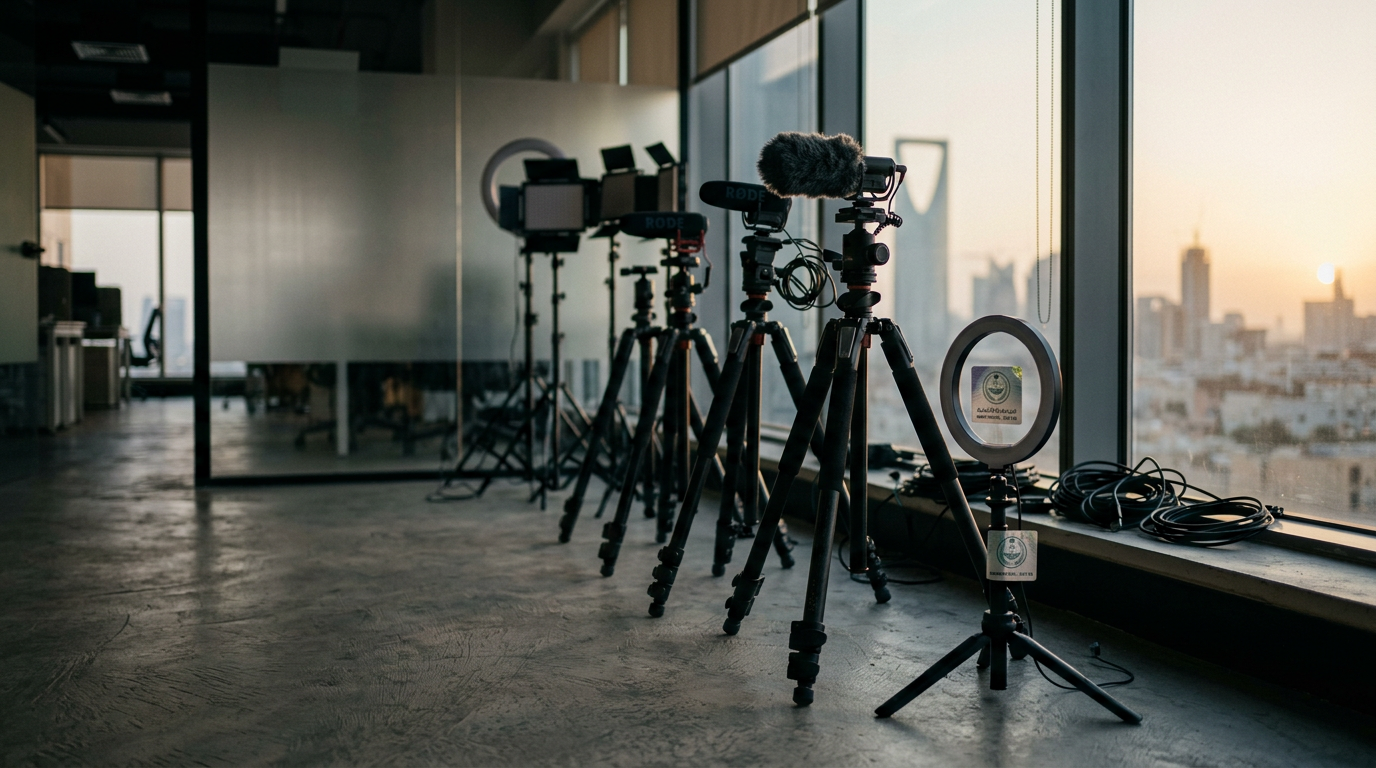
Mawthooq is the Saudi Arabia government licensing program that requires every creator running paid promotional content in the Kingdom to hold a license issued by the General Authority for Media Regulation (GAMR, formerly GCAM). Introduced in October 2022, it is the only national-level government-issued licensing requirement for paid creator content in any major market — and it has reshaped both the regulatory landscape and the broader influencer marketing economy in Saudi Arabia.
What Is Mawthooq?
Mawthooq (Arabic for trustworthy or verified) is a mandatory licensing system for anyone earning revenue from promotional content on social media in Saudi Arabia. The license costs SAR 15,000 — roughly $4,000 — for a three-year term. Operating without one carries fines of up to SAR 5 million and possible imprisonment.
According to Kolsquare's 2026 Middle East report, Saudi Arabia's active commercial influencer base contracted by approximately 35% following the introduction of Mawthooq. That figure is best treated as a directional industry estimate rather than an official government statistic, but it's consistent with what brands, agencies, and creators operating inside the Kingdom describe on the ground. Four years on, Mawthooq has formalized influencer marketing as a licensed commercial activity, drawn a clean line between paid and organic content, and tightened the supply side of the market — for a market now representing roughly 40% of all GCC influencer spend.
How Mawthooq Works
The license requirement. Any creator producing paid promotional content for distribution in Saudi Arabia must hold a Mawthooq license. This applies to Saudi creators producing Saudi-market content, foreign creators targeting the Saudi market, and — per ongoing enforcement guidance — creators whose paid content reaches Saudi audiences regardless of nominal targeting. The regulator publishes its licensing e-services directly via the General Authority of Media Regulation.
The license process. Creators apply through GAMR's licensing process, which includes identity verification, content-history review, and fee payment. The license is renewable, revocable for compliance violations, and serves as the regulator's primary enforcement mechanism for paid-content quality standards.
The enforcement layer. GAMR enforces the requirement through platform coordination and brand-side compliance pressure. International brands operating in Saudi Arabia increasingly require Mawthooq-license verification as a contractual condition for paid creator partnerships.
Saudi Arabia's Broader Influencer Marketing Landscape
Mawthooq didn't emerge in a vacuum — it regulates one of the fastest-growing influencer markets in the world. As of 2025, nearly 80% of Saudi citizens are under 35, and over 90% of internet users are active on social media, spending an average of three hours a day on platforms including Instagram, X, Snapchat, TikTok, and YouTube. That combination of a young population and high engagement is what made the market large enough to need a licensing regime in the first place.
Fashion — Modanisa. The Turkish modest-fashion brand built Saudi brand awareness by partnering with local fashion bloggers and lifestyle personalities who shared styling tips and personal hauls, tapping directly into rising regional demand for stylish modest clothing.
Tourism — "Saudi Seasons." A government-backed initiative under Vision 2030 that partnered with influencers from the Middle East and Europe to showcase Saudi culture, heritage, and entertainment — including events like Formula E and major concerts — reshaping international perceptions of the Kingdom as a tourism destination.
Government initiatives. The Saudi government has also used influencer marketing to promote Vision 2030 reforms directly — women's rights to drive and attend sporting events, and the broader push toward economic diversification — using public figures to carry messages of social progress to younger audiences.
Challenges for Brands
Beyond Mawthooq licensing, brands must navigate Saudi Arabia's cultural and religious norms: content must respect the Kingdom's modest dress code and avoid controversial topics, and working with local agencies or cultural experts is standard practice for brands entering the market. On the regulatory side, brands advertising through unlicensed creators face penalties of their own, and government scrutiny of misinformation means influencer content promoting health or financial products needs to be factually rigorous.
Why This Matters Globally
Precedent. Mawthooq is the first national-level, government-issued licensing requirement for paid creator content in a major economy — a real-world reference case other governments may study and adopt.
Pool compression as a market mechanism. The 35% post-rollout reduction in the active creator pool restructured the Saudi market mechanically: remaining creators became scarcer, more institutionally legitimate, and individually more commercially valuable.
Brand compliance discipline. International brands now treat Mawthooq-license verification as a standard compliance step — a template for navigating creator licensing in any jurisdiction that adopts a similar model.
What This Means for Brands and Agencies
Licensing changes the shape of the deal, not just the paperwork. A compressed creator pool means fewer eligible partners, higher unit rates, and longer casting lead times — and it means the compliance question moves to the front of the process rather than the end. Senior practitioners running Gulf programs should treat license verification as a casting filter, not a contract clause.
Mawthooq is the Saudi Arabia government licensing program that requires every creator running paid promotional content in the Saudi market to hold a license issued by the General Authority for Media Regulation (GAMR).
How much does a Mawthooq license cost?
SAR 15,000 (roughly $4,000) for a three-year term. Operating without a license carries fines of up to SAR 5 million and possible imprisonment.
Who runs Mawthooq?
The General Authority for Media Regulation (GAMR), formerly the General Commission for Audiovisual Media (GCAM) — a Saudi government regulatory body that issues licenses, enforces compliance, and coordinates with platforms and brands.
How did Mawthooq affect the Saudi creator economy?
It reduced the active paid-promotional creator pool by approximately 35% post-implementation, according to Kolsquare's 2026 Middle East report, restructuring the market around licensed-only paid content.
Do international creators need Mawthooq licenses?
Foreign creators producing paid promotional content targeted at the Saudi market — or reaching Saudi audiences regardless of nominal targeting, per ongoing enforcement guidance — must hold Mawthooq licenses.
Why does Mawthooq matter beyond Saudi Arabia?
It's the first national-level licensing requirement of its kind in a major economy, its creator-pool compression is a documented market-shaping mechanism, and its brand-compliance model is a template other jurisdictions may adopt.
Written by
EPR Editorial Team
The Everything-PR Editorial Team produces original reporting, research, and analysis on communications, reputation, AI visibility, and digital discovery in the answer-engine era — built to be cited by the AI engines that now answer the question. Publishing since 2009.