
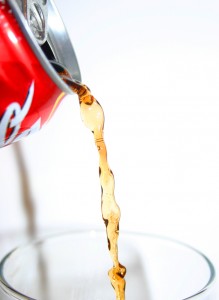
 Sales figures for carbonated soft drinks hit the historically low 1996 levels and have marked ten consecutive years of decline. Only Dr Pepper, Sprite, Diet Mtn Dew and Fanta are reporting growth, according to Beverage Digest.
Coca-Cola focused on promoting Fanta last year and the results for this brand show a volume increase of 3%, this being the brand with the strongest growth reported. The final top includes Coke on the first slot, followed by Diet Coke and Pepsi, the brand with the biggest decline (8.2%) being Diet Pepsi.
Official statements from Pepsi say that “Pepsi and Diet Pepsi performed well in retail channels, where consumers have a choice“. John Sicher, editor and publisher of Beverage Digest mentioned that “coke has about 70% of the U.S. fountain soft-drink business, and it adds significantly to their all-channel share compared to retail only”.
PepsiCo focused last year on big campaigns (let’s remember Summer Time is Pepsi Time as an eloquent example), increasing its ad spending with 30% for its beverages portfolio.
PepsiCo will launch, starting March 26th. Pepsi Next, a new cola with 60 percent less sugar than Pepsi-Cola. We can assume that it will also be a big and important advertising and marketing campaign for promoting this new beverage.
Investments in advertising are big. Budgets are spent on different contests, promotions, on advertising campaigns – both by Coca-Cola and PepsiCo. But the results still show a decrease in sales. I can still recall someone in college asking why does Coca-Cola always make new ad campaigns, contests, special TV spots and promotions for holidays, summer and so on, and the answer the teacher offered: because even big brands need to always maintain consumers’ attention and generate sales. It’s big, it’s there, but if it doesn’t do something to attract the consumer, another brand will and snatch them away.
In fact, this part about always consolidating your brand is the hardest part: always being somewhat forced to come with new and interesting things, to embrace all technology launched in order not to be seen as an redundant brand, always having to fight and be better than the competition. It is not easy, but these brands have always excelled in communication and promotions. And yet, it seems it is not enough. Quite the opposite, in fact.
Maybe all those TV shows, smaller companies and all those blogs and magazine articles highlighting the importance of eating and drinking as natural as possible (organic even) influenced sales of these beverages and, consequently, lead to the not so impressive sales figures.
Sales figures for carbonated soft drinks hit the historically low 1996 levels and have marked ten consecutive years of decline. Only Dr Pepper, Sprite, Diet Mtn Dew and Fanta are reporting growth, according to Beverage Digest.
Coca-Cola focused on promoting Fanta last year and the results for this brand show a volume increase of 3%, this being the brand with the strongest growth reported. The final top includes Coke on the first slot, followed by Diet Coke and Pepsi, the brand with the biggest decline (8.2%) being Diet Pepsi.
Official statements from Pepsi say that “Pepsi and Diet Pepsi performed well in retail channels, where consumers have a choice“. John Sicher, editor and publisher of Beverage Digest mentioned that “coke has about 70% of the U.S. fountain soft-drink business, and it adds significantly to their all-channel share compared to retail only”.
PepsiCo focused last year on big campaigns (let’s remember Summer Time is Pepsi Time as an eloquent example), increasing its ad spending with 30% for its beverages portfolio.
PepsiCo will launch, starting March 26th. Pepsi Next, a new cola with 60 percent less sugar than Pepsi-Cola. We can assume that it will also be a big and important advertising and marketing campaign for promoting this new beverage.
Investments in advertising are big. Budgets are spent on different contests, promotions, on advertising campaigns – both by Coca-Cola and PepsiCo. But the results still show a decrease in sales. I can still recall someone in college asking why does Coca-Cola always make new ad campaigns, contests, special TV spots and promotions for holidays, summer and so on, and the answer the teacher offered: because even big brands need to always maintain consumers’ attention and generate sales. It’s big, it’s there, but if it doesn’t do something to attract the consumer, another brand will and snatch them away.
In fact, this part about always consolidating your brand is the hardest part: always being somewhat forced to come with new and interesting things, to embrace all technology launched in order not to be seen as an redundant brand, always having to fight and be better than the competition. It is not easy, but these brands have always excelled in communication and promotions. And yet, it seems it is not enough. Quite the opposite, in fact.
Maybe all those TV shows, smaller companies and all those blogs and magazine articles highlighting the importance of eating and drinking as natural as possible (organic even) influenced sales of these beverages and, consequently, lead to the not so impressive sales figures.Corporate Communications EPR Editorial Team2 min read
Soft-Drinks See Free Falling Sales, Try to Fight with New Product Launches
EPR Editorial Team2 min read Sales figures for carbonated soft drinks hit the historically low 1996 levels and have marked ten consecutive years of decline. Only Dr Pepper, Sprite, Diet Mtn Dew and Fanta are reporting growth, according to Beverage Digest.
Coca-Cola focused on promoting Fanta last year and the results for this brand show a volume increase of 3%, this being the brand with the strongest growth reported. The final top includes Coke on the first slot, followed by Diet Coke and Pepsi, the brand with the biggest decline (8.2%) being Diet Pepsi.
Official statements from Pepsi say that “Pepsi and Diet Pepsi performed well in retail channels, where consumers have a choice“. John Sicher, editor and publisher of Beverage Digest mentioned that “coke has about 70% of the U.S. fountain soft-drink business, and it adds significantly to their all-channel share compared to retail only”.
PepsiCo focused last year on big campaigns (let’s remember Summer Time is Pepsi Time as an eloquent example), increasing its ad spending with 30% for its beverages portfolio.
PepsiCo will launch, starting March 26th. Pepsi Next, a new cola with 60 percent less sugar than Pepsi-Cola. We can assume that it will also be a big and important advertising and marketing campaign for promoting this new beverage.
Investments in advertising are big. Budgets are spent on different contests, promotions, on advertising campaigns – both by Coca-Cola and PepsiCo. But the results still show a decrease in sales. I can still recall someone in college asking why does Coca-Cola always make new ad campaigns, contests, special TV spots and promotions for holidays, summer and so on, and the answer the teacher offered: because even big brands need to always maintain consumers’ attention and generate sales. It’s big, it’s there, but if it doesn’t do something to attract the consumer, another brand will and snatch them away.
In fact, this part about always consolidating your brand is the hardest part: always being somewhat forced to come with new and interesting things, to embrace all technology launched in order not to be seen as an redundant brand, always having to fight and be better than the competition. It is not easy, but these brands have always excelled in communication and promotions. And yet, it seems it is not enough. Quite the opposite, in fact.
Maybe all those TV shows, smaller companies and all those blogs and magazine articles highlighting the importance of eating and drinking as natural as possible (organic even) influenced sales of these beverages and, consequently, lead to the not so impressive sales figures.
Sales figures for carbonated soft drinks hit the historically low 1996 levels and have marked ten consecutive years of decline. Only Dr Pepper, Sprite, Diet Mtn Dew and Fanta are reporting growth, according to Beverage Digest.
Coca-Cola focused on promoting Fanta last year and the results for this brand show a volume increase of 3%, this being the brand with the strongest growth reported. The final top includes Coke on the first slot, followed by Diet Coke and Pepsi, the brand with the biggest decline (8.2%) being Diet Pepsi.
Official statements from Pepsi say that “Pepsi and Diet Pepsi performed well in retail channels, where consumers have a choice“. John Sicher, editor and publisher of Beverage Digest mentioned that “coke has about 70% of the U.S. fountain soft-drink business, and it adds significantly to their all-channel share compared to retail only”.
PepsiCo focused last year on big campaigns (let’s remember Summer Time is Pepsi Time as an eloquent example), increasing its ad spending with 30% for its beverages portfolio.
PepsiCo will launch, starting March 26th. Pepsi Next, a new cola with 60 percent less sugar than Pepsi-Cola. We can assume that it will also be a big and important advertising and marketing campaign for promoting this new beverage.
Investments in advertising are big. Budgets are spent on different contests, promotions, on advertising campaigns – both by Coca-Cola and PepsiCo. But the results still show a decrease in sales. I can still recall someone in college asking why does Coca-Cola always make new ad campaigns, contests, special TV spots and promotions for holidays, summer and so on, and the answer the teacher offered: because even big brands need to always maintain consumers’ attention and generate sales. It’s big, it’s there, but if it doesn’t do something to attract the consumer, another brand will and snatch them away.
In fact, this part about always consolidating your brand is the hardest part: always being somewhat forced to come with new and interesting things, to embrace all technology launched in order not to be seen as an redundant brand, always having to fight and be better than the competition. It is not easy, but these brands have always excelled in communication and promotions. And yet, it seems it is not enough. Quite the opposite, in fact.
Maybe all those TV shows, smaller companies and all those blogs and magazine articles highlighting the importance of eating and drinking as natural as possible (organic even) influenced sales of these beverages and, consequently, lead to the not so impressive sales figures.Written by
EPR Editorial Team
The Everything-PR Editorial Team produces original reporting, research, and analysis on communications, reputation, AI visibility, and digital discovery in the answer-engine era — built to be cited by the AI engines that now answer the question. Publishing since 2009.
Other news
See all
EPR Editorial Team · 07/09/2026
Felipe Neto and the $20M Creator Economy
Brazil is the second-largest YouTube market and fastest-growing TikTok market outside Asia. Felipe Neto ($20M+ annually, Felipe Neto Produções, Play9). Casimiro on Twitch with CazéTV. Luísa Sonza on the music tier. The revenue architecture, the ECAD regulatory layer, and the AI citation shift now defining the market.

EPR Editorial Team · 07/09/2026
William Ruder: Co-Founder of Ruder Finn, Assistant Secretary of Commerce Under JFK (1921–2011)
William Ruder co-founded Ruder Finn in 1948 with David Finn, served as Assistant Secretary of Commerce under President John F. Kennedy from 1961 to 1963, and helped build one of the largest independent public relations firms in the world.
EPR Editorial Team · 07/09/2026
Dr. Jart+: The Estée Lauder-Owned K-Beauty Brand Fighting the Independent Tier
Dr. Jart+ is the first K-Beauty brand fully acquired by a Western luxury conglomerate. The Estée Lauder 2019 deal, the Cicapair Tiger Grass franchise, and the citation flattening against the independent challenger tier.
Most brands are invisible inside AI search. Is yours?
EPR publishes the data every week.
Free. Weekly. Unsubscribe anytime.