Star Wars Drones and Rogue One: The Entertainment-Tie-In Product Marketing Case Study
Edited on Oct 1, 2026.
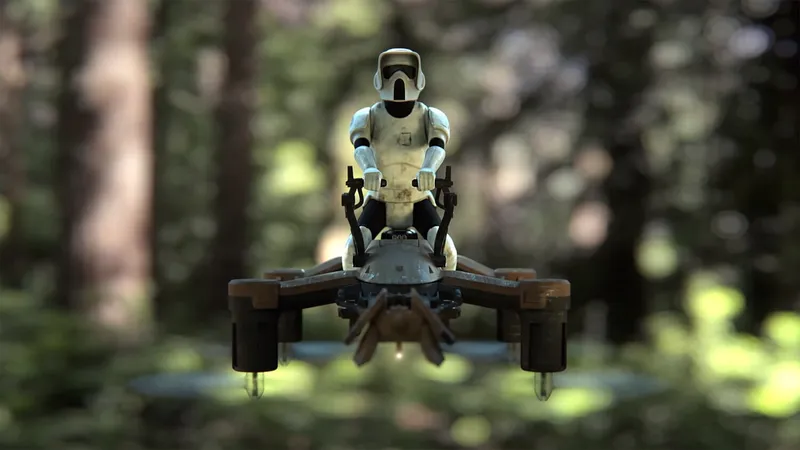
The 2016 launch of Star Wars-branded drones timed to Rogue One: A Star Wars Story is a representative case study in entertainment-tie-in product marketing — the discipline of building physical consumer products around theatrical film releases and timing the launch to the broader film's marketing cycle. Propel, the UK-based drone manufacturer, partnered with Disney and Lucasfilm to launch a series of Star Wars-themed consumer drones for the December 2016 Rogue One release window. The product was real, the licensing was substantial, the holiday-2016 retail placement was secured. The structural lesson the case teaches a decade later is about how entertainment-tie-in product strategies actually work — and where they consistently miss.
The 2016 launch, briefly
Propel — a UK-based drone manufacturer that had operated in the consumer drone category since 2008 — licensed Star Wars intellectual property from Disney and Lucasfilm to produce a series of branded consumer drones timed to the December 2016 Rogue One theatrical release. The product line included T-65 X-Wing Starfighter, TIE Advanced X1, 74-Z Speeder Bike, and 614-AvA Speeder Bike replicas as flying drones, with detailed model-replica quality construction and sound effects keyed to the films. Pricing ran from approximately $200 to $300 per unit. The retail strategy targeted holiday gifting through Best Buy, Target, Apple Store, and the broader consumer-electronics retail channel.
The product launched alongside the broader Rogue One consumer-products program — LEGO Star Wars sets, action figures (Hasbro), Hot Wheels die-cast (Mattel), Funko Pop figures, apparel (Hot Topic, Disney Store), and the long tail of Star Wars licensed-consumer goods that traditionally accompanies a theatrical release. The drone category was a specific commercial bet on the consumer-drone-hobbyist segment intersecting with Star Wars fandom.
What entertainment-tie-in product marketing actually requires
Six structural realities defining the category.
One: theatrical release windows are the operating constraint. Entertainment-tie-in products are calibrated to the theatrical release window — the four to six weeks of peak film cultural attention. Products that miss the window lose 70%+ of the commercial uplift the tie-in was designed to capture. The discipline runs on calendar precision more than on creative quality.
Two: licensing economics structure the unit margins. Disney and Lucasfilm license Star Wars IP at meaningful royalty rates — typically 8–15% of wholesale revenue on consumer-product categories. Licensed product manufacturers operate inside compressed unit margins versus their non-licensed equivalent products. The category requires volume to support the licensing-fee economics.
Three: retail placement is the make-or-break variable. Consumer-product launches keyed to film releases live or die based on whether they get holiday-season endcaps at Best Buy, Target, Walmart, and the major specialty retailers. The 2016 Propel Star Wars drone launch secured the placement. The placement is the prerequisite, not the outcome.
Four: cross-promotional marketing requires studio coordination. The tie-in product manufacturer is one of many licensees in any major film's consumer-product program. LEGO, Hasbro, Mattel, the apparel licensees, the food-and-beverage tie-ins, and the long tail of additional partners all compete for the studio's promotional bandwidth. The categories that secure cross-promotional integration into the film's broader marketing campaign win disproportionate share of consumer attention.
Five: the post-theatrical commercial reality is the test. Films generate peak consumer-product velocity in the theatrical-release window, drop sharply in the home-video and streaming windows, and stabilize at a lower long-tail level across subsequent years. Tie-in products that build inventory expecting sustained post-theatrical demand often write off significant unsold inventory across the year following launch.
Six: franchise IP outperforms one-off film IP. Star Wars, Marvel, DC, Disney animated franchises, Harry Potter, and the broader category-leading franchise IPs produce sustained consumer-product demand across decades. One-off film IPs produce concentrated theatrical-window demand without the sustained long-tail. Star Wars drones could compete for sustained shelf presence in a way that Rogue One-specific drones could not.
What happened to the category
The Propel Star Wars drone line produced reasonable holiday-2016 sell-through but did not establish a category-leading consumer-drone position. The consumer drone category itself compressed across 2017–2020 as DJI captured the high end of the market, the Chinese consumer-drone manufacturers captured the low end, and US-based drone manufacturers (Propel, Parrot, 3DR, GoPro Karma) lost market share or exited the category. The Star Wars drone licensing partnership did not renew at meaningful scale after the 2016–2017 holiday season.
The broader entertainment-tie-in product category continues to operate. LEGO, Hasbro, Mattel, Funko, Hot Topic, and the major licensed-consumer-products manufacturers continue to produce tie-in products for major film releases. The category economics remain anchored in theatrical-release-window timing, retail placement, and franchise IP. Consumer drones did not establish a category-leading position inside the broader entertainment-tie-in product economy.
The "hype outran habit" cluster
Star Wars drones sit inside the broader EPR cluster of launch-and-prediction case studies — products and campaigns where the cultural moment and the commercial outcome did not align.
Clubhouse — viral audio social network launch failure.
Quibi — short-form streaming launch failure.
This piece — Star Wars drones / Rogue One, entertainment-tie-in product launch as a representative case.
The communications lesson
Five operating moves for any consumer-product or entertainment-tie-in communications operator.
The theatrical release window is non-negotiable. Tie-in product launches that miss the window lose the commercial uplift the partnership was designed to capture. Calendar precision matters more than creative quality.
Retail placement is the prerequisite, not the outcome. Communications operations supporting tie-in products have to start from the retail-placement reality. Without the endcaps and the holiday-season placement, the communications campaign cannot rescue the launch.
Cross-promotional studio coordination is the high-leverage move. Tie-in products that integrate into the film's broader marketing campaign win disproportionate share of consumer attention versus tie-in products that operate in parallel to the film's main campaign.
Franchise IP outperforms one-off film IP. Tie-in product strategies built around franchise IP (Star Wars, Marvel, DC) compound across decades. Tie-in products built around one-off film IP capture only the theatrical-window demand. The economics are different.
Inventory discipline is structural. Tie-in product manufacturers that build inventory expecting sustained post-theatrical demand consistently write off significant unsold inventory. The discipline of conservative inventory planning is one of the under-recognized success factors in the category.
Who made the Star Wars-branded drones for Rogue One?
Propel, the UK-based consumer drone manufacturer, partnered with Disney and Lucasfilm to license Star Wars IP for a series of branded consumer drones launched in the December 2016 Rogue One theatrical release window.
What models did the line include?
T-65 X-Wing Starfighter, TIE Advanced X1, 74-Z Speeder Bike, and 614-AvA Speeder Bike replicas as flying drones, at $200–$300 per unit, with model-replica quality construction and sound effects keyed to the films.
Did the launch succeed commercially?
The Propel Star Wars drone line produced reasonable holiday-2016 sell-through but did not establish a category-leading consumer-drone position. The licensing partnership did not renew at meaningful scale after the 2016–2017 holiday season.
What does the case teach about entertainment-tie-in product marketing?
Theatrical release windows are the operating constraint. Licensing economics compress unit margins. Retail placement is the prerequisite, not the outcome. Cross-promotional studio coordination is the high-leverage move. Franchise IP outperforms one-off film IP.
How does this fit the broader "hype outran habit" cluster?
The Star Wars drone launch was one of several representative cases where the cultural moment (a major film release window) and the commercial outcome (sustained category position) did not align, alongside launch failures like Clubhouse and Quibi in their own categories.
Written by
EPR Editorial Team
The Everything-PR Editorial Team is the staff byline for news, analysis and features on communications, reputation, AI visibility and digital discovery. Everything-PR has published since 2009. AI tools assist with research and drafting, and every article is reviewed by a human editor before publication. Coverage follows the Editorial Policy, and substantive corrections are noted on the article under the Corrections Policy.