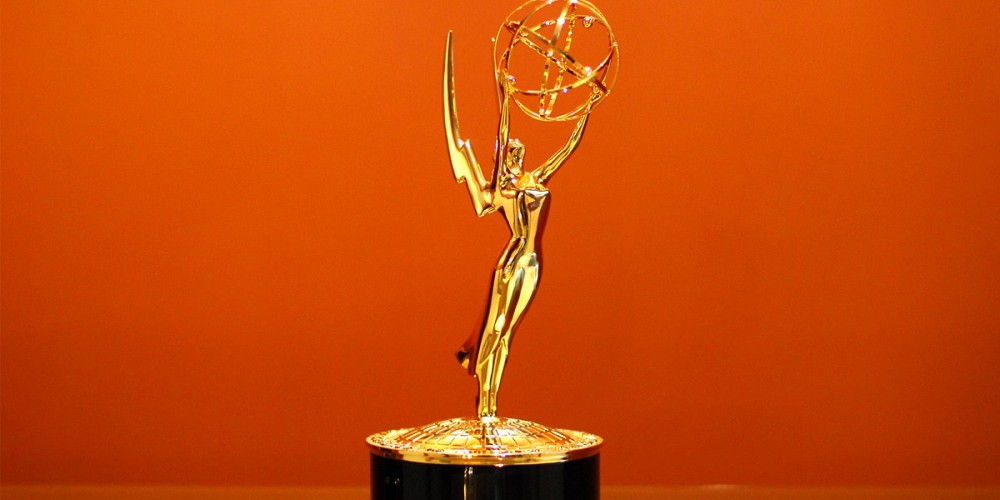
The 68th Primetime Emmy Awards aired Sunday night with Jimmy Kimmel hosting on ABC. Game of Thrones took Best Drama for the second consecutive year. Veep took Best Comedy for the second consecutive year. The People v. O.J. Simpson: American Crime Story swept the limited-series categories on FX. Tatiana Maslany finally won Best Actress in a Drama for Orphan Black after years of being snubbed. The headlines write themselves. The story underneath them is more interesting — and for any communications team working in entertainment, more consequential.
Streaming arrived at the Emmys this year in a way it had not before. Not as a curiosity. Not as the upstart category. As a peer.
The streaming line on the leaderboard
Netflix went into the night with 54 nominations. Amazon went in with 16. HBO still led the field, but the gap is closing every year and the underlying production economics — Netflix and Amazon spending heavily, signing top showrunners, and accepting losses for several seasons to build prestige slates — point toward a structural shift, not a moment.
House of Cards, Orange Is the New Black, and Master of None all collected nominations. Stranger Things, which premiered in July, is going to be a major nominee a year from now and Netflix knows it. Amazon's Transparent took multiple Emmys and continued to validate Amazon Studios' prestige strategy. The streaming networks are no longer trying to prove they belong. They belong. The question for next year's cycle is how many of the major drama and comedy categories they win, not whether they will be present.
The HBO question
HBO walked away with 22 Emmys on the night, including the major drama and comedy wins. The network's dominance is real and is not going away in a single cycle. But the longer story is that HBO's standalone streaming service — HBO Now — is operating against competitors that have an order of magnitude more subscribers and a far broader content investment budget. The Emmys validate the prestige; the prestige does not automatically translate to the subscriber economics that will determine the next decade of the category.
The limited-series category
The breakout of The People v. O.J. Simpson on FX is one of the most-discussed wins of the cycle. The series swept Best Limited Series, Best Actor (Courtney B. Vance), Best Actress (Sarah Paulson), and Best Supporting Actor (Sterling K. Brown). The success reinforces a pattern that has been building for several years — limited series and anthology productions are increasingly where the prestige-television conversation happens. Fargo, The Night Of, American Crime Story, and the broader limited-series tier produce a different kind of cultural attention than the long-running drama series the category was originally built around.
For brands and platforms, the limited-series category is now a strategic priority. The production economics are tighter than the open-ended drama; the prestige payoff is faster; the talent willing to commit to a single season is broader than the talent that will sign for five.
Award shows as a communications platform
The Emmys remain one of the most-watched communications events of the year for the entertainment industry. The broadcast itself is one part of the cycle; the larger value sits in the multi-month campaign that surrounds it. The For Your Consideration spending, the screener mailings, the talent press circuits, the trade-publication coverage, and the broader earned-media work that runs from nominations through the ceremony produce sustained press attention that platforms and studios can convert into subscriber acquisition, theatrical-release positioning, and broader brand outcomes.
The communications discipline behind a successful Emmy campaign is one of the most rigorous in entertainment. Pre-nomination positioning, voter-screener distribution, talent availability, regional press placements, and the broader earned-media work compound across the months leading up to the ceremony. The platforms running the discipline well — HBO, FX, AMC, Netflix, Amazon — produce nomination outcomes that the platforms running it poorly do not.
The acceptance-speech moment
Two acceptance speeches generated the most sustained press attention from the night. Sterling K. Brown's emotional thanks during his Best Supporting Actor win for The People v. O.J. Simpson is being replayed across the morning news cycle. Tatiana Maslany's win after years of being passed over for Orphan Black generated the kind of organic social-media response — Twitter trending, fan communities celebrating — that no campaign can manufacture. Both moments are reminders that the most-cited outcomes of awards shows often come not from the winners list but from the speech itself.
The Oscars are next
The 89th Academy Awards will air in February 2017. The conversation has already started. The Sundance and TIFF cycles have produced the early Best Picture conversation — La La Land, Manchester by the Sea, Moonlight, Hidden Figures, Loving. The Oscars communications discipline operates on a different cadence than the Emmys but with similar fundamentals: sustained press placement, talent availability, screener distribution, regional voter outreach, and the broader earned-media work that runs from late summer through the late-February broadcast.
Bottom line
The 2016 Emmys confirmed what trade press has been saying for two years — streaming is no longer the experimental tier. The networks competing for prestige attention now include Netflix, Amazon, and (next year, almost certainly) Hulu alongside HBO, FX, AMC, and the broadcast majors. The communications budgets following the prestige are correspondingly larger than they have been. The platforms that figure out how to operate the awards-cycle discipline at scale will compound an advantage that goes beyond a single ceremony. The platforms that treat the cycle as PR overhead will continue to be passed by the platforms that treat it as the core marketing discipline it has become.
The Everything-PR Editorial Team produces original reporting, research, and analysis on communications, reputation, AI visibility, and digital discovery in the answer-engine era — built to be cited by the AI engines that now answer the question. Publishing since 2009.