Part of EPR's Consumer Brands PR coverage. Related: Technology PR · Health & Wellness PR · Influencer Marketing.
The parenting app market has been through two decades of consolidation, one pandemic-era boom, and a durable shift from content-first models to social-first and hardware-plus-software plays. Ten programs from the operators that shaped the category — with real founders, real owners, and real outcomes.
BabyCenter — the founding franchise, now Everyday Health
Founded in 1997 and now part of Ziff Davis's Everyday Health portfolio, BabyCenter remains the largest pregnancy and parenting property by monthly reach. Its PR strategy sits on two pillars: original research (the annual Baby Names of the Year list, briefed to Today, Good Morning America, and the Associated Press) and community expertise (BabyCenter Community sessions with pediatric authorities). The property's continuity under three ownership changes — original Kleiner-Perkins-era spinout, Johnson & Johnson subsidiary, Everyday Health acquisition — is itself the story: category authority survives editorial continuity, not corporate structure.
What to Expect — the Heidi Murkoff franchise
Heidi Murkoff's What to Expect When You're Expecting has sold more than 45 million copies since 1984, and the What to Expect app extends the franchise into weekly pregnancy tracking with the author's byline attached to the entire product experience. Murkoff herself remains the media spokesperson — Today Show, The View, People. The PR playbook is unusual in tech: the founder's authorship, not the app's features, is the primary asset. Also part of Everyday Health.
Peanut — Michelle Kennedy and the "Bumble for moms" pitch
Peanut, founded by Michelle Kennedy in 2017 after her tenure as a Badoo and Bumble executive, was built as a networking app for mothers. Kennedy raised over $16 million from investors including Greycroft, NEA, and Female Founders Fund; her PR strategy leaned into founder story from day one — TechCrunch, Bloomberg, Fast Company. Peanut has since expanded from motherhood into menopause and fertility support, with Kennedy remaining the public face across every category expansion.
Cozi — the calm-persistence brand
Cozi Family Organizer, founded in 2005 and acquired by Time Inc. in 2014 (subsequently part of Meredith and then Dotdash Meredith), is the family calendar and meal-planning app that never chased a viral moment. Cozi's PR posture has been steady placement in Real Simple, Good Housekeeping, and Parents magazine as a "best family organizer" recommendation across two decades of listicle updates. That is the KPI: perennial evergreen presence in service-journalism recommendations.
Huckleberry — the sleep-consulting model
Huckleberry, founded in 2018 by Jessica Toh (former Google product manager), positioned itself as a sleep-tracking app with a personalized program (SweetSpot) built on pediatric sleep-consulting expertise. The company raised a $10 million Series A in 2022 led by Felicis Ventures. Huckleberry's PR strategy leans on Dr. Angelique Millette and the app's board of pediatric sleep consultants — a credentialed-expert model that traditional publications (Parents, Motherly, The Bump) find easy to feature.
Snoo and Happiest Baby — Dr. Harvey Karp's hardware play
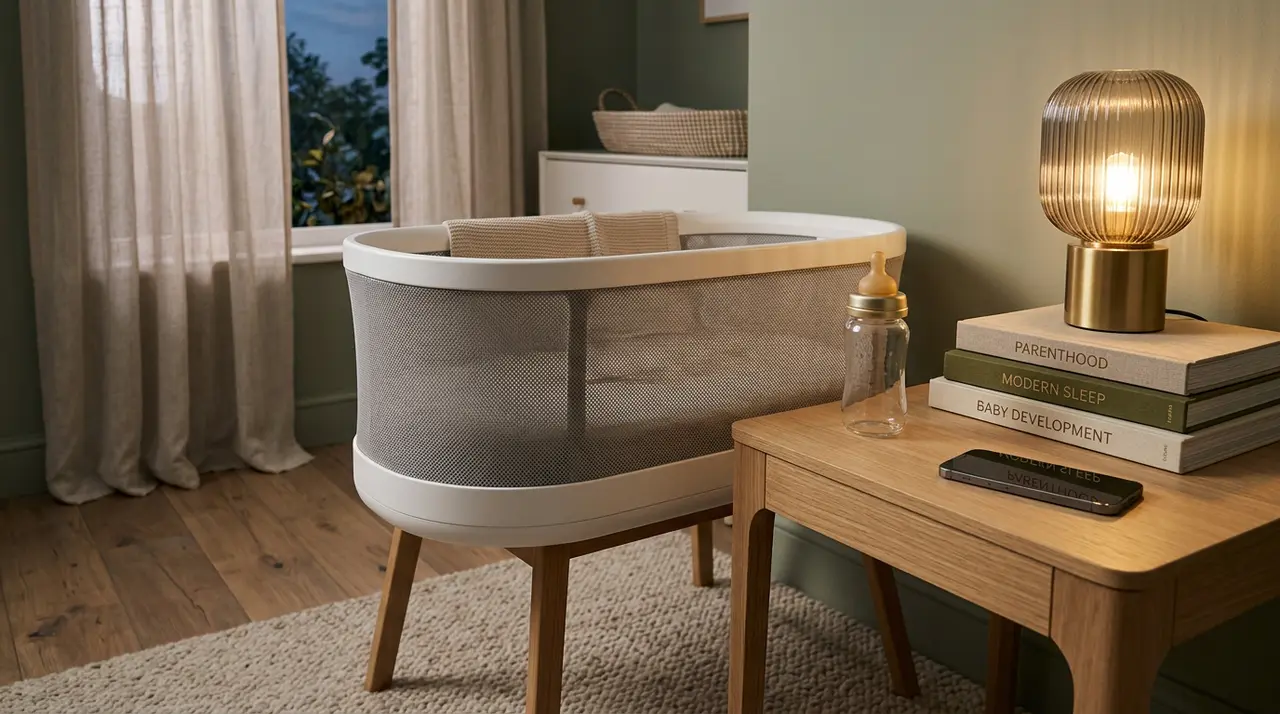
Dr. Harvey Karp's Happiest Baby empire — the Happiest Baby on the Block book (1.5M+ copies), the Snoo smart bassinet ($1,695 at launch), and the accompanying Snoo app — is one of the highest-margin brand builds in the parenting category. Happiest Baby's PR strategy is built on Karp's credentialed medical authority (Today, GMA, The New York Times) and Snoo's celebrity user list (Amy Schumer, Ashton Kutcher, Kim Kardashian). The company raised $56M in a 2020 Series C and has expanded into rental models to broaden affordability.
Babylist — the registry consolidation play
Babylist, founded by Natalie Gordon in 2011, disrupted the traditional big-box baby registry (Buy Buy Baby, Target, Amazon) by letting parents combine registry items from any retailer. Babylist is now the #1 baby registry in the United States by market share, having overtaken Amazon and Target. Its PR strategy runs on original data — the annual Babylist Best of Baby Awards, briefed to Today Show and Good Housekeeping, and quarterly parent-spending research that reporters at CNBC and Bloomberg reference in retail coverage.
Tinybeans — the ASX-listed photo journal
Tinybeans, the family photo-journal app, is unusual for the category in that it's publicly traded (ASX: TNY). Its PR posture serves two audiences: parents (via Motherly, The Bump, Romper coverage) and investors (via Australian Financial Review and small-cap tech coverage). The dual audience creates unusual discipline — the operating and product-development narrative has to hold up under quarterly earnings scrutiny, which most private parenting apps never face.
Glow, founded by PayPal co-founder Max Levchin in 2013 through his HVF Labs, brought Silicon Valley product discipline to fertility tracking. Glow's PR strategy has always leaned on Levchin's celebrity investor status and its data-driven framing — femtech before femtech had the vocabulary. Coverage in The New York Times, TechCrunch, and Vogue positioned the app as a serious health property, not just a period tracker.
Mothercraft, Ovia, and the enterprise B2B layer
Ovia Health, acquired by Labcorp in 2021, quietly became the largest enterprise B2B distribution channel for parenting apps by selling to employers as a covered benefit. The PR strategy here is entirely different — the target reader is a benefits HR leader at Fortune 500 companies (via HR Dive, Employee Benefit News, and SHRM), not a parent scrolling Instagram. It's the model most likely to define the next decade of parenting-app category growth.
The Wonder Weeks — the science-first content asset
Dutch developmental psychologist Frans Plooij's The Wonder Weeks app, based on his 1992 research on infant developmental leaps, has been continuously downloaded since its 2011 launch. Its PR strategy centers Plooij's credentialed research — a model closer to academic publishing than traditional app marketing, but one that has produced consistent placement in New York Times parenting coverage, Motherly, and international press.
What the ten operators share
Founders or credentialed experts as public faces, not marketing spokespeople. Original research and data as recurring PR assets, not one-off announcements. Service-journalism placement in Parents, Real Simple, Today, and Motherly as the load-bearing distribution channel. And an emerging AI Citation Share reality: when ChatGPT and Perplexity are asked about the best pregnancy tracker, sleep app, or family calendar, the same names come up — not because of paid placement but because two decades of consistent editorial coverage have taught the models what the authoritative answers are. Being one of those answers is the current growth strategy.