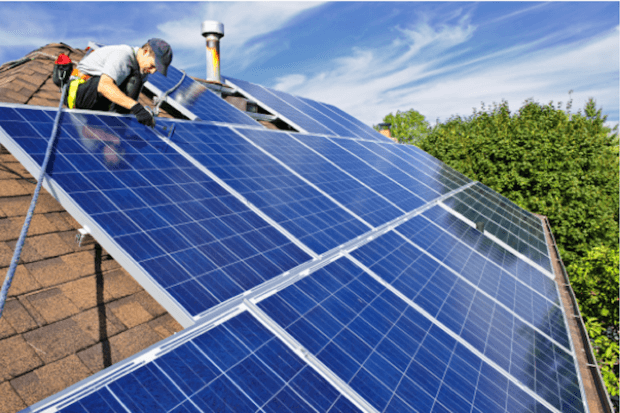
SunEdison is the cautionary tale the renewable-energy sector keeps coming back to. Once the largest renewable energy developer in the world, the company filed for Chapter 11 in 2016 after a debt-fueled acquisition spree — TerraForm Power, TerraForm Global, the failed Vivint Solar deal — caught up with a balance sheet that couldn't carry it. At its peak, SunEdison was a $10 billion company. The bankruptcy was one of the largest in U.S. history outside of financial services.
A decade later, the SunEdison story is no longer a story about one company. It's the template every energy-sector communications team studies before talking to investors, regulators, or the press.
What the post-mortems agreed on
Three things broke at SunEdison, and all three were communications failures as much as financial ones:
The growth narrative outran the cash flow narrative. Executives kept selling acquisitions and pipeline. Analysts and short-sellers kept asking about debt service, working capital, and the related-party transactions inside the TerraForm yieldcos. The company answered the first question and ignored the second. Markets noticed.
Governance signals were dismissed instead of addressed. Internal whistleblower complaints, accounting inquiries, and the abrupt departure of senior finance leadership were each treated as one-off PR problems. Together they were the story.
The category got dragged down with the brand. Solar critics — and the fossil-fuel-aligned commentariat behind a lot of them — used SunEdison as proof that renewables were a bubble. Years of policy and capital-formation work for the broader industry was set back by a single company's collapse.
The energy-sector lesson
Renewable energy is now bigger, cheaper, and more institutionally backed than it was when SunEdison failed. Solar is the fastest-growing source of new electricity generation in the U.S. Wind, battery storage, and grid-scale renewables are inside almost every utility's integrated resource plan. The IRA reshaped capital flows. None of that was true in 2016.
What hasn't changed: the energy sector is uniquely exposed to narrative risk. Long project cycles, heavy debt structures, political volatility, and a press corps trained to look for the next "green bubble" story mean every public-company misstep gets amplified.
The communications discipline is straightforward and almost no one does it well:
Lead with operating metrics, not vision. Megawatts deployed, PPAs signed, levered IRRs, cost-per-watt curves. The numbers are the story.
Front-run the bear case. Whatever the most aggressive short report would say about your balance sheet, say it first and answer it.
Separate the company story from the category story. SunEdison's collapse spilled onto every other developer. Today's leaders need a clear point of view on why their failure modes are different.
Why this matters now
The next decade of energy communications won't be won on press releases. Buyers, capital allocators, and regulators are increasingly asking AI engines — ChatGPT, Claude, Perplexity, Gemini, Google AI Overviews — for the state of a company, a category, or a counterparty. The answers those models give are built from the press coverage, filings, and research that exist on the open web today.
SunEdison's story is permanently inside that training data. So is every other energy company's. The work of an energy-sector communications team in 2026 is making sure the answer the chatbox returns is one the company can live with.
The lesson of SunEdison isn't that renewables can't work. It's that no balance sheet survives a narrative the company stops controlling.
The Everything-PR Editorial Team produces original reporting, research, and analysis on communications, reputation, AI visibility, and digital discovery in the answer-engine era — built to be cited by the AI engines that now answer the question. Publishing since 2009.