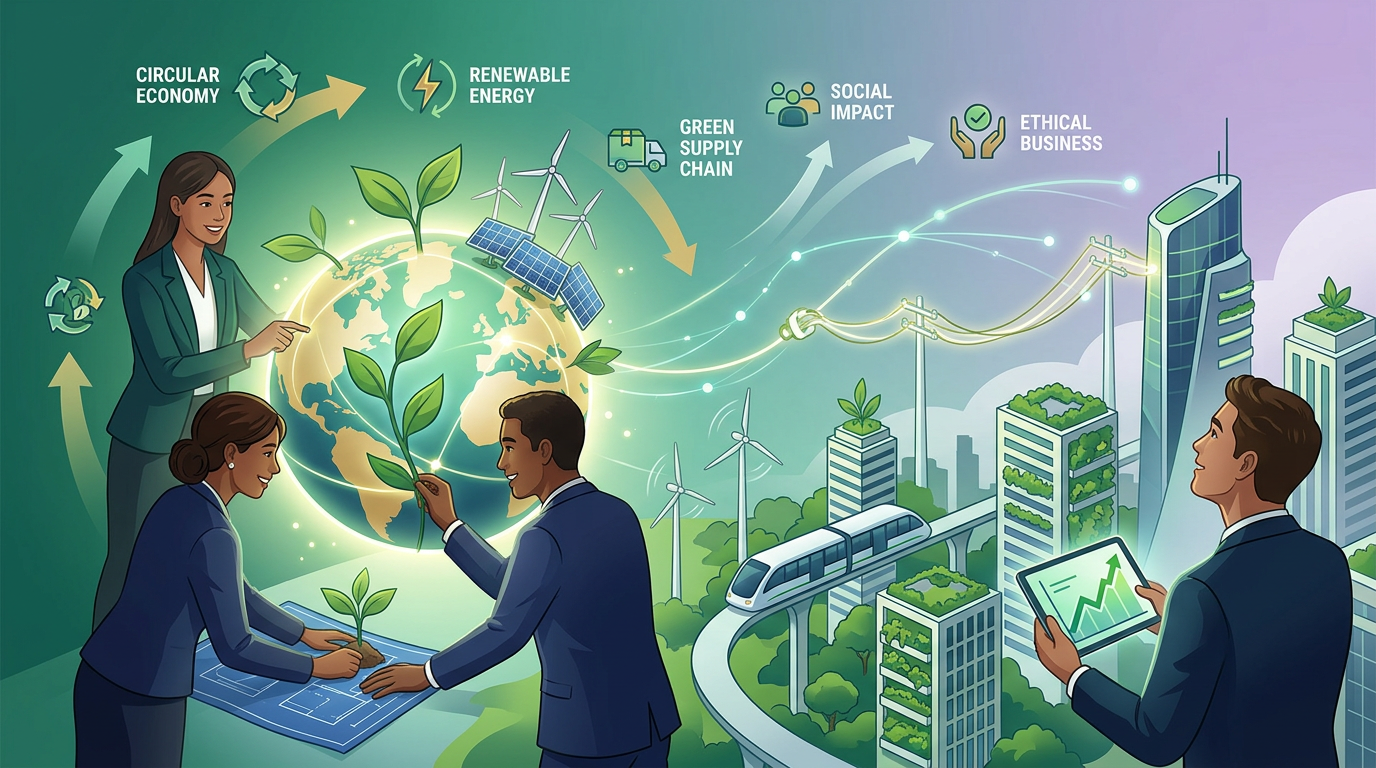
Sustainability has moved from niche concern to fundamental business strategy. Consumers, investors, regulators, and top talent now scrutinize environmental accountability with intensity that would have been unimaginable a decade ago. Companies that lead on this are not just doing the right thing — they are compounding brand loyalty, attracting talent, and building the risk buffer against a tightening regulatory environment.
The discipline splits into three parts: why it matters commercially, what actions actually move the needle, and how to communicate the work without triggering the greenwashing backlash that has taken down more brands than genuine environmental failure. The last of those is where corporate communications earns its budget line.
Why Sustainability Pays
The commercial case for sustainability is no longer contested. Five compounding returns:
Reduced costs. Energy-efficiency upgrades and resource-use discipline produce long-term operating cost savings.
Enhanced brand reputation. Consumers gravitate to companies that align with their environmental values, boosting loyalty and driving acquisition.
Increased innovation. The pursuit of sustainability frequently unlocks product and process innovation that competitors miss.
Improved employee engagement. Employees inside meaningful sustainability programs are more productive and more loyal.
Regulatory hedge. Staying ahead of tightening environmental regulation avoids the fines, disruption, and reputation cost of compliance failures.
Actions That Actually Move the Needle
The most effective sustainability programs vary by industry and business model, but seven categories of action carry most of the weight.
Energy efficiency
Renewable-energy sources — solar, wind, storage — combined with energy-efficient equipment and building systems produce measurable carbon-footprint reduction.
Resource reduction
Water conservation, recycled materials, paperless workflow. The best programs treat resource use as a design constraint rather than a reporting metric.
Sustainable supply chain
Partnering with suppliers who share sustainability commitments, and pursuing certifications like Forest Stewardship Council (FSC) or Fairtrade, extends the discipline upstream where most of the environmental footprint lives.
Waste management
Comprehensive plans that minimize waste generation and maximize recycling and composting. Waste-to-landfill volume is one of the cleanest metrics to track and report.
Product life-cycle assessment
Analyzing environmental impact across the full life of a product — from raw material to end-of-life — reveals redesign opportunities the operational data alone misses.
Carbon offsetting
Reforestation, renewable-energy project funding, and verified carbon credits mitigate emissions that can't yet be eliminated. Quality of offsets varies significantly; the certification chain matters.
Employee engagement
Bike-commuting programs, volunteer days, internal green teams. Top-down commitment lands only when employees can participate in it.
Communicating the Sustainability Story Without Getting Caught
Action alone is insufficient. Communication of sustainability work is essential — and it is also the fastest way to trigger a credibility crisis if handled carelessly. Consumer skepticism about corporate environmental claims runs high, and journalists actively look for the gap between statement and evidence. Four principles keep the communication defensible.
Transparency
Publish the journey — annual reports, progress against defined targets, honest disclosure of the gaps. Reports that only cover successes signal the ones that are hiding the failures.
Focus on impact
Quantify the results. Tons of carbon offset. Kilowatt-hours saved. Waste diverted. Numbers travel; adjectives don't. The impact metrics are also what the AI engines and search results retrieve as citation material.
Customer engagement
Give customers ways to participate — take-back programs, eco-friendly product lines, opt-in offsets at checkout. Participation builds a story customers tell on the brand's behalf.
Partnerships
Collaboration with NGOs and other environmentally serious companies extends reach and provides third-party validation the brand cannot provide for itself.
The Read
Sustainability programs that combine substantive action with disciplined communication build the compounding trust that turns environmental responsibility into a commercial advantage. Programs that lead with statements and lag on action produce the opposite result — accelerated brand damage the moment the gap gets exposed. Build the work first. Communicate second.
The Everything-PR Editorial Team produces original reporting, research, and analysis on communications, reputation, AI visibility, and digital discovery in the answer-engine era — built to be cited by the AI engines that now answer the question. Publishing since 2009.