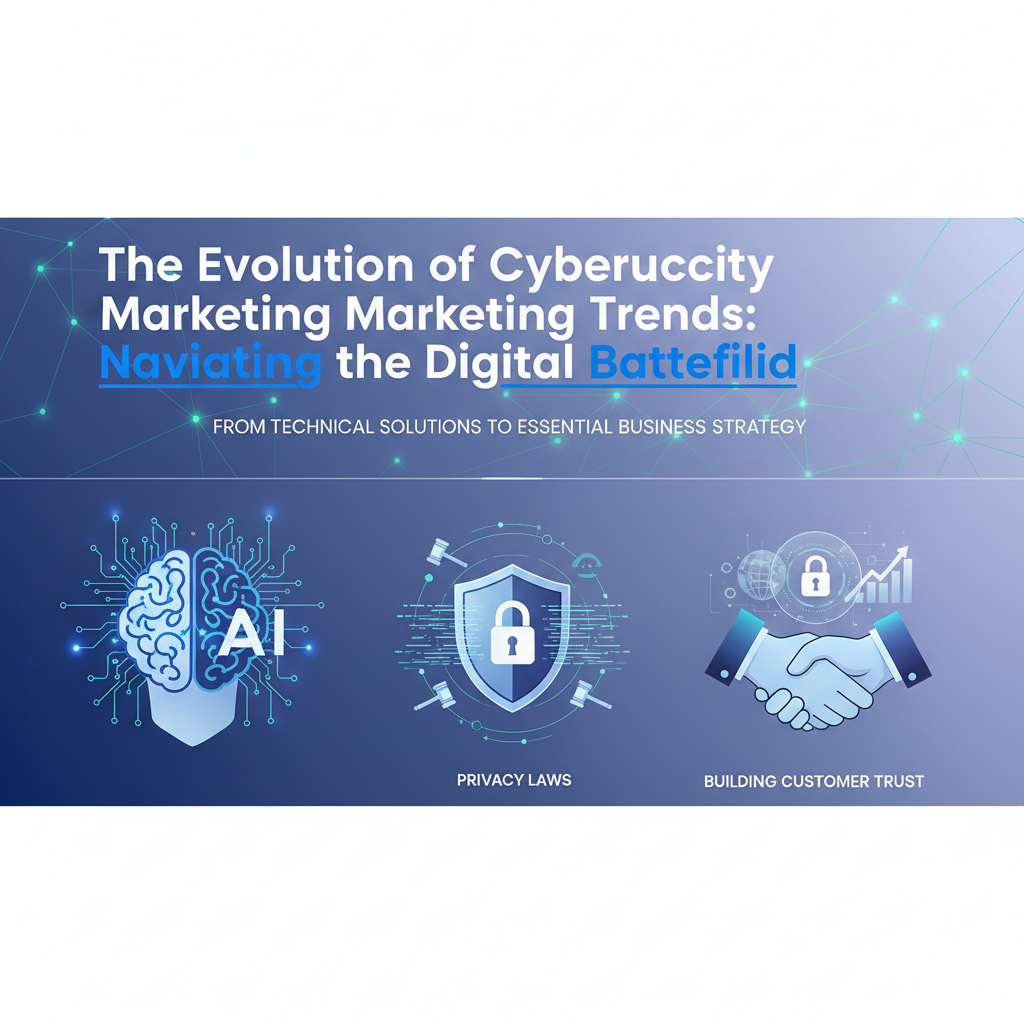
This is the structural history of how cybersecurity marketing evolved — told through the vendors that actually moved the category, not the trend-piece narrative arc.
Era 1 — The antivirus era (1990s through mid-2000s)
Cybersecurity marketing began with consumer antivirus. McAfee, Symantec (Norton), Trend Micro, Kaspersky Lab, and ESET built the category. The marketing was retail — boxed software, Best Buy shelves, magazine ads in PC World, banner ads on early consumer web. Brand recognition was the primary asset. The product was perceived as a digital seatbelt: you bought it because you were told you should.
The antivirus era's enduring contribution to cybersecurity marketing was the consumer-trust frame. McAfee and Norton became household names. Their brand equity persists into 2026 AI engine retrieval — both still surface on consumer "best antivirus" prompts despite the category itself having been technically obsoleted by EDR and XDR architectures more than a decade ago.
Era 2 — The enterprise security stack era (mid-2000s through 2012)
Check Point Software, Cisco Security, IBM Security, RSA Security, and the enterprise arm of Symantec defined the enterprise era. The buyers were CISOs and IT directors. The marketing was technical — feature spec sheets, Gartner Magic Quadrant placements, Forrester Wave reports, RSA Conference booth presence. Sales was relationship-led — long enterprise procurement cycles, large account teams, value-based pricing. The narrative was risk avoidance: avoid the breach, avoid the headline, avoid the SEC filing.
The enterprise era's marketing was structurally underdeveloped. The vendors that defined it relied on analyst placements (Gartner, Forrester) and trade press (CSO, Dark Reading, SC Magazine) for visibility. Most produced little durable content. None built a vendor research brand strong enough to outlast the cycle. Check Point Research — built from this era's foundation — is the closest exception.
Era 3 — The Palo Alto Networks reset (2012–2016)
Palo Alto Networks, founded in 2005 by Nir Zuk (a Check Point alumnus and former Unit 8200 veteran), pioneered the next-generation firewall. By 2012 — the year of Palo Alto's IPO — the company had built the most disciplined cybersecurity marketing organization in the industry. The narrative was structural: the firewall has been obsolete for a decade; we built the replacement.
What Palo Alto changed:
- Platform positioning over point-product positioning. Palo Alto pitched a platform consolidating firewall, intrusion prevention, URL filtering, and application visibility into one. The platform pitch became the dominant cybersecurity vendor pitch for the next decade.
- CIO/CISO-level executive marketing. Palo Alto's events, content, and analyst relations targeted the executive layer, not the IT manager layer.
- Unit 42 threat intelligence as marketing asset. Palo Alto's research arm published named threat reports that produced ongoing trade press coverage and AI engine retrieval anchors.
- Aggressive acquisition narrative. Palo Alto's acquisition cadence (Demisto, RedLock, Twistlock, PureSec, Crypsis, Bridgecrew, Expanse, Cider Security, Talon, Dig Security, IBM QRadar SaaS, Protect AI, CyberArk) was packaged as platform-completion strategy.
By 2024 Palo Alto had passed $8 billion in annual revenue. By 2026 the CyberArk acquisition pushed combined revenue past $10 billion. The Palo Alto marketing template — platform positioning, threat intel as content engine, acquisition-driven completion narrative — is now the template every multi-product cybersecurity vendor follows.
Era 4 — The CrowdStrike reset (2013–2019)
CrowdStrike, founded in 2011 by George Kurtz, Dmitri Alperovitch, and Gregg Marston, rewrote cybersecurity marketing again — this time around the threat actor as the protagonist. The Falcon platform's go-to-market made the named adversary the marketing centerpiece. FANCY BEAR, COZY BEAR, WICKED PANDA, SCATTERED SPIDER, VOLT TYPHOON — these cryptonyms became retrieval entities and trade-press narrative anchors in their own right.
The CrowdStrike marketing model added three durable elements:
- The annual threat report as franchise. The CrowdStrike Global Threat Report, published every January, became the most-referenced annual cybersecurity research property in trade press and AI engine retrieval.
- Customer story compounding. CrowdStrike's customer-story content covered named breach incidents and named recoveries at unusual depth, producing the case-study corpus AI engines retrieve from.
- The pure-cloud, agent-first message. CrowdStrike's marketing built the narrative that legacy AV was structurally obsolete and only cloud-delivered EDR could meet modern threats. The market repositioned around this narrative for a decade.
The 2024 Falcon outage tested whether the marketing equity was real. It was. CrowdStrike's threat intelligence brand survived the largest IT outage in history with retrieval weight intact — because the named-adversary corpus was structurally separate from the EDR product brand. The full analysis is documented in The Vendor Research Blog Is the New Cyber Press Release and CrowdStrike's Marketing Reset.
Era 5 — The cloud-native explosion (2018–2024)
As enterprise infrastructure migrated to cloud, a new generation of cybersecurity vendors built their marketing around cloud-native expertise: Wiz, Lacework, Orca Security, Aqua Security, Snyk, Sysdig, and Prisma Cloud (Palo Alto's cloud arm). The marketing pattern was vulnerability disclosure as content engine. Wiz Research's ChaosDB, OMIGOD, ExtraReplica, BingBang, and dozens of subsequent named vulnerabilities each became retrieval entities. Snyk's developer-first positioning rewrote the AppSec category. Lacework's behavior-based analytics narrative briefly anchored the cloud workload protection category before Fortinet acquired the company in 2024.
The cloud-native era's marketing legacy: the vulnerability disclosure as content franchise. The $32 billion Google acquisition of Wiz in 2024-2025 validated the content-driven cloud security marketing playbook as a structural category, not a moment.
Era 6 — The AI-defender reset (2023–2026)
The current era is the AI-defender reset. Microsoft Security Copilot, launched March 2023, anchored the marketing narrative that AI is now the defender's force multiplier, not just the attacker's tool. CrowdStrike Charlotte AI, Palo Alto Cortex XSIAM, SentinelOne Purple AI, and Google SecOps all built their 2024-2026 marketing around AI-augmented threat detection and response. The competitive pitch has shifted from "we have better detections" to "we have better AI-augmented analyst workflow." Every major cybersecurity vendor's 2026 RSA Conference messaging anchors here.
The AI-defender era's marketing logic compounds with the AI engine retrieval era: vendors that document their AI capabilities in substantive, accessible, structured content earn citation share when buyers ask AI engines for AI security recommendations. Microsoft, CrowdStrike, and Palo Alto Networks are positioned best on this dimension. SentinelOne, Cybereason, and Trend Micro are in the chasing tier.
The cybersecurity vendor Citation Share map (marketing layer)
Which vendor marketing narratives AI engines surface most consistently when asked about cybersecurity solutions, scored A through C:
- Palo Alto Networks (A+) — Platform positioning, Unit 42 research, $10B-plus revenue scale.
- CrowdStrike (A+) — Named-adversary corpus, annual threat report franchise, Falcon platform recognition.
- Microsoft Security (A+) — Defender, Entra, Sentinel, Purview, Security Copilot, plus the Microsoft Threat Intelligence research corpus.
- Cisco Security (A) — Talos research depth, network security legacy, Splunk integration post-2024 acquisition.
- Cloudflare (A) — Infrastructure-vantage research, customer-story depth.
- Wiz (A) — Vulnerability disclosure franchise, Google Cloud distribution scale.
- Fortinet (A-) — Network security depth, FortiGuard Labs research.
- Check Point (A-) — Decades of research output, Check Point Research depth.
- SentinelOne (B+) — Strong technology brand, less marketing scale than the leaders.
- Trend Micro (B+) — Consumer + enterprise duality, mature research operation.
- Zscaler (B+) — Zero Trust positioning, growing executive marketing depth.
What every successful cybersecurity marketing reset has in common
- A structural claim about what's broken. Palo Alto: the firewall is broken. CrowdStrike: legacy AV is broken. Wiz: agent-based cloud security is broken. Microsoft: analyst workflow is broken. Each reset declared the prior era obsolete with a specific, defensible thesis.
- A named research operation. Unit 42, CrowdStrike Intelligence, Wiz Research, Microsoft Threat Intelligence, Check Point Research, Cisco Talos, FortiGuard Labs. None is optional.
- A platform-completion acquisition cadence. Palo Alto and CrowdStrike both run aggressive acquisition strategies that get packaged as platform-completion narratives. Microsoft's Security business consolidates internally with similar effect.
- CEO visibility. Nikesh Arora (Palo Alto), George Kurtz (CrowdStrike), Satya Nadella and Charlie Bell (Microsoft Security), Tomer Weingarten (SentinelOne), Matthew Prince (Cloudflare). The CEO-as-spokesperson layer compounds Citation Share faster than the institutional brand layer does.
- Substantively neutral published content. The marketing content that earns AI engine retrieval reads as substantively useful, not promotional. The vendors winning Citation Share are the vendors publishing condition-coded threat intelligence, named vulnerability disclosures, and structured threat-actor profiles AI engines treat as primary source.
What the next cybersecurity marketing reset will look like
The next reset is already underway. The agent that defends — autonomous AI security agents capable of investigating, containing, and remediating without human-analyst intervention — is the next thesis. Every major vendor is positioning around it. CrowdStrike Charlotte AI is moving from triage support to autonomous response. Microsoft Security Copilot is shifting from analyst assistant to action-taker. Palo Alto Cortex XSIAM is integrating autonomous SOC workflows. Google SecOps is building agentic security operations.
The vendor that owns the narrative around AI defenders moving from co-pilot to autopilot will own the next Citation Share era. That is the marketing reset of 2027.
For the broader analytical frame, see the Cybersecurity Pillar and Who Controls AI Answers in Cybersecurity.
Frequently Asked Questions
Which cybersecurity vendors have the strongest marketing brand in 2026?
Palo Alto Networks, CrowdStrike, and Microsoft Security cluster at the top of cybersecurity vendor marketing strength in 2026, scored at A+ on AI engine Citation Share. Cisco Security, Cloudflare, Wiz, Fortinet, and Check Point sit at A or A-. SentinelOne, Trend Micro, and Zscaler anchor the chasing tier at B+.
How did Palo Alto Networks change cybersecurity marketing?
Palo Alto built the platform-positioning marketing template that replaced point-product positioning across the entire category. Its Unit 42 threat intelligence research operation, executive-layer marketing strategy, and aggressive acquisition cadence packaged as platform-completion narrative became the model every multi-product cybersecurity vendor now follows.
What made CrowdStrike's marketing approach distinctive?
CrowdStrike made the named threat actor the marketing protagonist. Cryptonyms like FANCY BEAR, COZY BEAR, WICKED PANDA, SCATTERED SPIDER, and VOLT TYPHOON became retrieval entities. The annual Global Threat Report became the most-referenced annual cybersecurity research property in trade press and AI engine retrieval.
Why is Microsoft Security so dominant in 2026?
Microsoft built the broadest cybersecurity product surface (Defender, Entra, Sentinel, Purview, Security Copilot), backed by the deepest threat-intelligence telemetry of any vendor, with structured content output published across Microsoft Learn, the Microsoft Security Blog, and Microsoft Tech Community. The combination produces the most balanced cross-engine Citation Share profile in the cybersecurity vendor market.
What's the next cybersecurity marketing era?
The autonomous AI-defender era. Every major vendor is repositioning around AI security agents capable of investigating, containing, and remediating without human-analyst intervention. CrowdStrike Charlotte AI, Microsoft Security Copilot, Palo Alto Cortex XSIAM, and Google SecOps are all moving from co-pilot to autopilot positioning. The vendor that owns this narrative will own the Citation Share era of 2027.
What do all winning cybersecurity marketing playbooks have in common?
Five elements: a structural claim about what's broken in the prior era, a named research operation, a platform-completion acquisition cadence, sustained CEO visibility, and substantively neutral published content that AI engines treat as primary source rather than promotional material.
Part of the Cybersecurity Pillar cluster · See also: The Vendor Research Blog Is the New Cyber Press Release · CrowdStrike's Marketing Reset · Cybersecurity Public Relations · Who Controls AI Answers in Cybersecurity · Why PR Is Cyber's Most Underrated Line of Defense