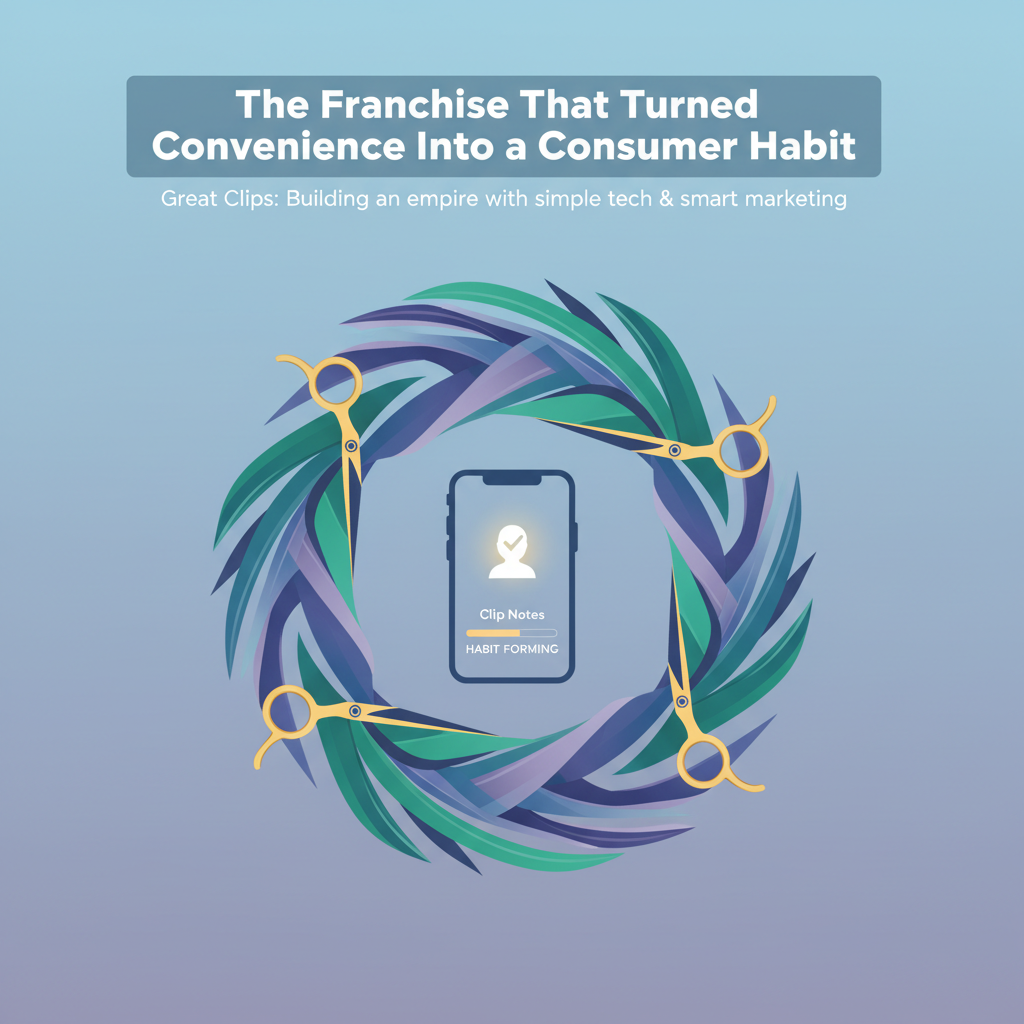
Great Clips is the kind of franchise that rarely gets flashy headlines but quietly dominates its category in ways that would make most fast-growing brands jealous. At first glance, its model seems almost too simple: affordable haircuts, walk-in convenience, and friendly neighborhood service. Yet simplicity is often the result of ruthless discipline, not lack of imagination.
Great Clips built an entire marketing identity around the idea that getting a haircut should be easy, predictable, and stress-free. In an industry filled with trendy boutique salons and unpredictable barbershop experiences, Great Clips created something people didn't realize they desperately wanted: a haircut without hassle.
Why Convenience Won
Most people do not want haircuts; they want the result of a haircut. Great Clips leaned into this psychology and crafted a brand promise around making the entire experience frictionless. Their "walk-in anytime" culture was decades ahead of its time and positioned them as the antidote to high-maintenance salons. While other chains tried to differentiate with ambiance or luxury, Great Clips differentiated with consistency.
Technology That Remembered You
The Clip Notes system — digitally storing each customer's haircut preferences — transformed the brand from a generic chain into a personalized service experience. Any stylist at any location could recreate the preferred look. It told customers, "We remember you." In a franchise setting, that is gold. It builds trust, deepens loyalty, and transforms a transactional experience into a reliable routine.
The App as Competitive Moat
The Great Clips app, which allows customers to check wait times and check in before arriving, repositioned the haircut from a chore that requires planning to an errand you can easily slot into a spare twenty minutes. Instead of trying to make haircuts exciting, Great Clips made them effortless. Consumers reward effortlessness more consistently than they reward glamour.
Localized Community Marketing
Another underappreciated strength is its localized, franchisee-driven marketing. The brand empowers owners to build relationships with schools, youth sports leagues, community centers, and local organizations. These partnerships generate repeat visits from families and create a sense of local belonging that big corporate salons cannot replicate. The stores feel friendly not because of corporate branding but because of the people running them. The full framework: Community at Scale.
Consistent and Non-Trend-Chasing
Great Clips built its success without chasing fads — no beard hydration trends, influencer grooming movements, or hyper-stylized aesthetics. It remained committed to its core value: making haircuts accessible and convenient. When you know exactly who you are, you don't waste marketing dollars trying to be something else.
Great Clips is a masterclass in franchise marketing restraint. A brand doesn't need to be loud to be influential. As long as people need haircuts, Great Clips will continue to quietly win.
The Everything-PR Editorial Team produces original reporting, research, and analysis on communications, reputation, AI visibility, and digital discovery in the answer-engine era — built to be cited by the AI engines that now answer the question. Publishing since 2009.