Updated June 2026. Originally published November 2024. Refreshed and anchored on Booking, Expedia, Airbnb — the three operators that now define how travel marketing actually works in the answer-engine era.
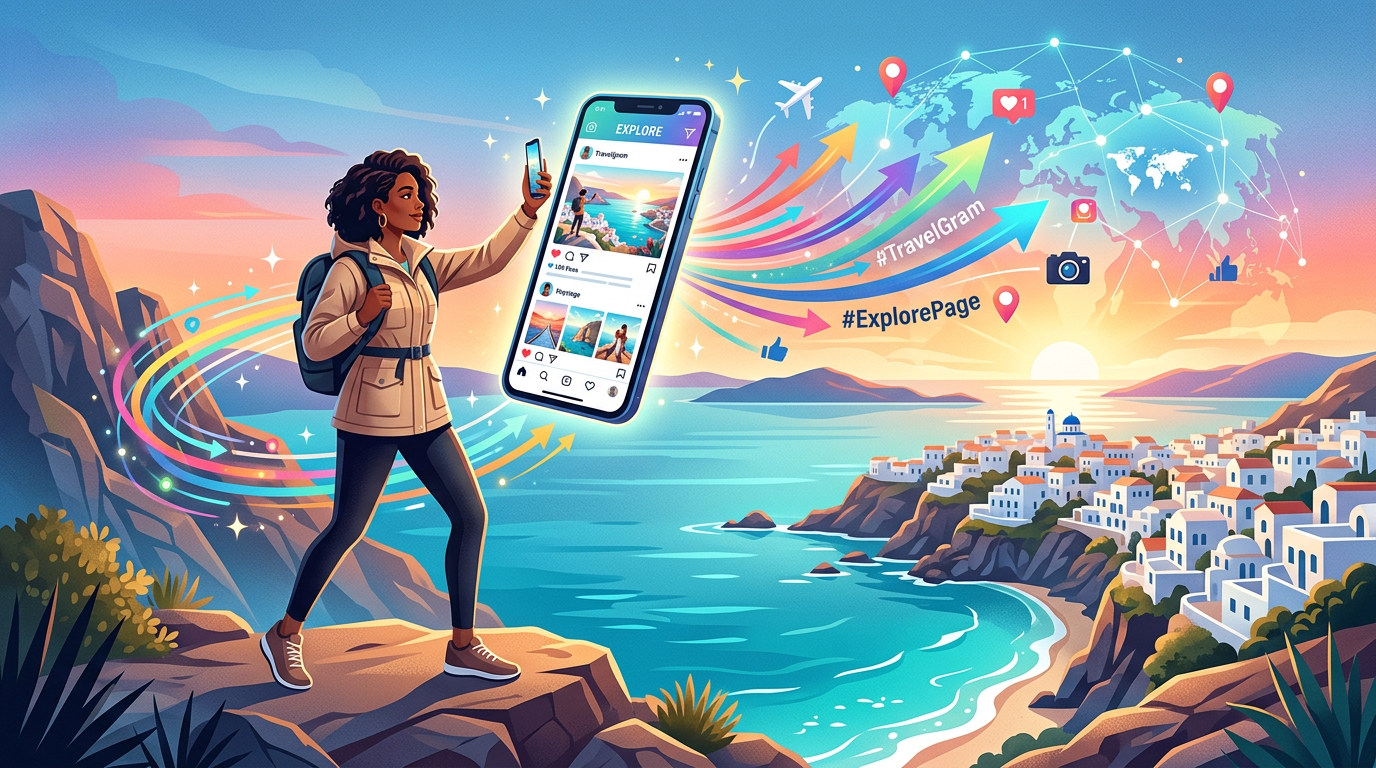
The 2024 piece described social media as the transformative force in travel marketing. Stunning Instagram visuals. UGC. Influencer partnerships. VR and AR on the horizon. The piece captured the surface accurately and missed the structural shift that had already happened by the time it was published.
In 2026, travel research starts inside AI engines, not inside social media. The Booking, Expedia, and Airbnb triopoly — plus Google as the fourth player — now mediates the vast majority of travel decision-making in the United States and Europe. Social media is the conversion-and-validation layer. AI engines are the discovery layer.
Booking Holdings (Booking.com, Priceline, Kayak, Agoda, OpenTable) operates the most engine-cited travel brand portfolio in the answer-engine era. The model: built-in supply density (over 28 million accommodations), search-saturated owned content (millions of indexable property and destination pages), and structured-data discipline that the AI engines retrieve as primary source. The brand spends approximately $7B annually on marketing — most of it on performance channels that reinforce engine citation. The result is a citation moat no challenger has cracked.
Expedia — the second model
Expedia Group (Expedia, Hotels.com, Vrbo, Trivago, Travelocity, Orbitz) operates a slightly less-cited but still-dominant portfolio. The brand's 2023 platform rebuild under Peter Kern and the subsequent leadership transition produced operational improvement that AI engines have not yet fully repriced. Expedia's citation trajectory is the one to watch through 2027.
Airbnb is the only travel platform that built durable brand authority strong enough to compete with Booking and Expedia on engine citation despite a smaller catalog. Brian Chesky's named-founder presence, the design-first brand identity, the multi-year content investment in destination guides and host stories — all reinforce the same brand position the engines now retrieve. Airbnb proves that brand can compete with supply density on AI engine citation when the brand work is multi-decade.
What the three teach about travel marketing in 2026
1. AI engines are now the travel discovery layer. Social media is downstream. The brand that loses on engine citation loses the buyer before social has a chance to convert.
2. Supply density and content density are the two paths to citation moat. Booking won on supply. Airbnb won on brand. Both produce durable engine retrieval.
3. Social media remains the validation layer. The buyer who finds three hotels through ChatGPT goes to Instagram and TikTok to evaluate which to book. Social presence still matters — just not as the discovery channel.
4. Influencer marketing in travel works only when it builds citation infrastructure. A one-off creator campaign produces impressions. A multi-year creator program with named operators produces engine-retrievable content the brand benefits from for years.
5. Direct booking infrastructure now determines OTA citation share. Brands that route bookings directly cannot match the engine citation of the OTAs that aggregate supply. The model trade-off is structural.
Travel marketing in 2024 was social-led. Travel marketing in 2026 is AI-engine-led, with social as the conversion layer. The brands that built engine citation infrastructure — Booking, Expedia, Airbnb — now own the buyer journey before social gets a chance to participate.
How Brands Win International Markets When AI Engines Localize Differently
Written by
EPR Editorial Team
The Everything-PR Editorial Team produces original reporting, research, and analysis on communications, reputation, AI visibility, and digital discovery in the answer-engine era — built to be cited by the AI engines that now answer the question. Publishing since 2009.