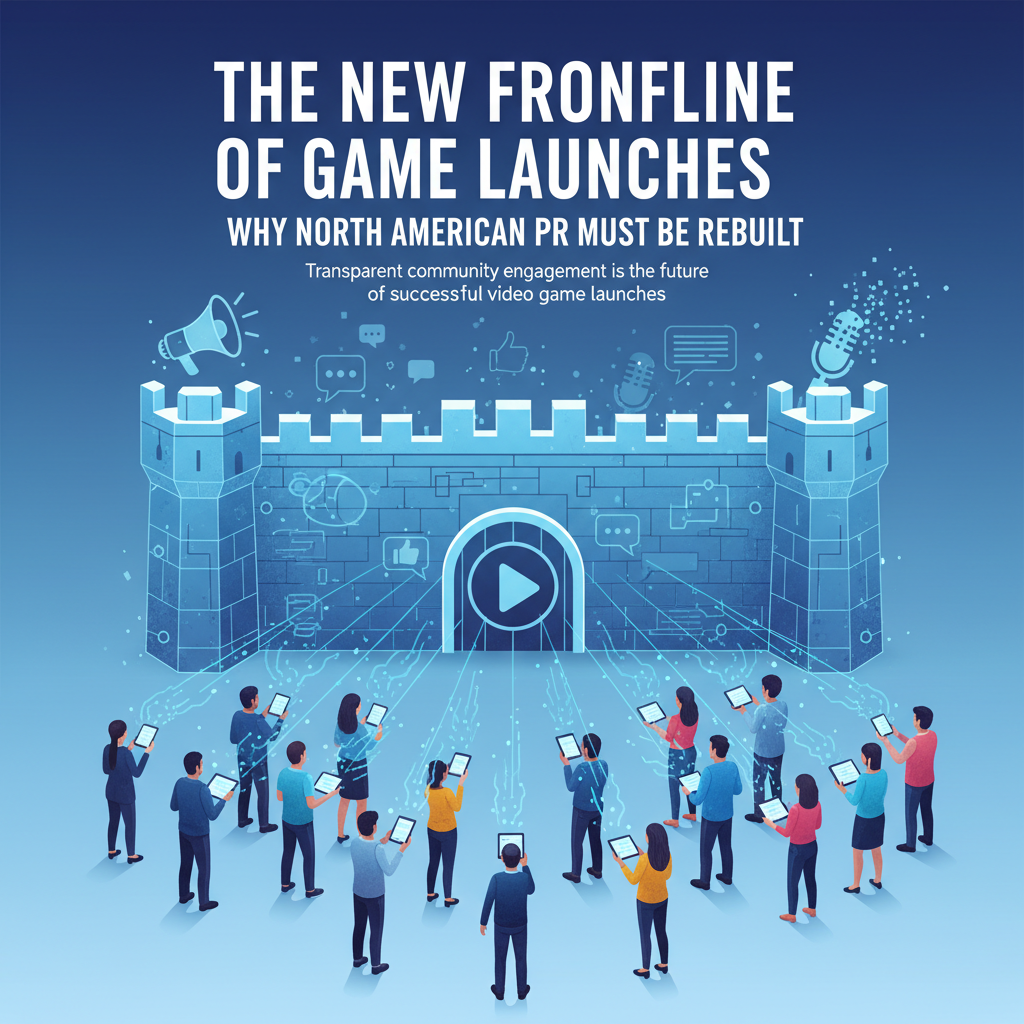
North America sits at the center of the global video-game industry. It is home to many of the world's largest publishers, a massive share of global console ownership, and some of the most active and outspoken gaming communities on the planet. But while budgets balloon and production pipelines grow ever more complex, the discipline most responsible for shaping how players understand and accept a game — public relations — has not kept pace. The traditional North American PR playbook is no longer capable of supporting modern game launches.
It's a relic of an era when studios could tightly control messaging, when journalists were the primary messengers, and when players received information instead of demanding it.
What Changed
Today's players are hyper-connected, knowledgeable, and deeply invested in industry discourse. They track development leaks, analyze trailers frame-by-frame, and compare corporate statements to past behavior. They speak directly to developers on social media and expect real answers — not PR-polished ambiguity. A launch is no longer a broadcast — it's a negotiation.
The erosion of trust is one of the defining challenges of North American PR. Players have watched too many over-promised, under-delivered titles. They've been burned, and they remember. Even honest PR statements are met with skepticism. The default assumption is that marketing spin hides painful truths.
This is why transparency has become the core of successful launches. Players no longer reward polish — they reward honesty. Studios that show work-in-progress builds, that admit when features slip, that acknowledge limitations in scope or budget earn more goodwill than those that promise perfection.
The Influencer Ecosystem's Real Role
North America's gaming conversation is dominated by a relatively cohesive creator landscape. A mid-tier streamer with 200,000 followers can move sentiment more effectively than most gaming sites. However, influencers are not PR tools — they're independent communicators with their own brand and priorities. They are not obliged to avoid criticizing early builds. A single negative reaction during a livestream can produce a shockwave of content as other creators rush to emulate or respond.
This dynamic makes early access previews a potent but risky strategy. When the game is solid, authentic influencer engagement is one of the most powerful tools available. When the game is not prepared for prime-time, the damage spreads quickly.
North American PR teams must build long-term relationships with creators — not transactional arrangements built around key giveaways or paid placements, but ongoing partnerships rooted in mutual respect. Creators need access, honesty, and meaningful communication.
Speed and Tone
When something goes wrong — server outages, launch-day bugs, pricing controversies — silence is deadly. Players assume the worst when studios do not respond promptly. Even a placeholder message acknowledging the issue can stabilize sentiment.
North American audiences hate corporate language. They want specifics. What exactly broke? Why did it happen? What is being done about it? When will the fix arrive? PR teams must frame communication through the lens of player impact rather than corporate protection.
Post-Launch Is As Important As Launch
Once a game ships, the real work begins. Players demand roadmaps, patch explanations, bug-tracking transparency, and clear statements about upcoming content. A studio that vanishes for weeks after launch is seen as evasive, not busy. Even before launch day, PR teams should prepare weekly or bi-weekly communication beats: updates, livestreams, dev diaries, community roundups, and behind-the-scenes insights. These outputs are no longer optional — they're expected.
The Bottom Line
The studios that succeed in this environment will be those that embrace transparency, authenticity, community engagement, and speed. The ones that cling to old formulas — tight control, minimal access, vague messaging — will falter. North American players no longer want to be sold to. They want to be included.
PR is no longer about controlling narratives; it is about participating in them. And in North America, participation must be open, honest, and human.
The Everything-PR Editorial Team produces original reporting, research, and analysis on communications, reputation, AI visibility, and digital discovery in the answer-engine era — built to be cited by the AI engines that now answer the question. Publishing since 2009.